
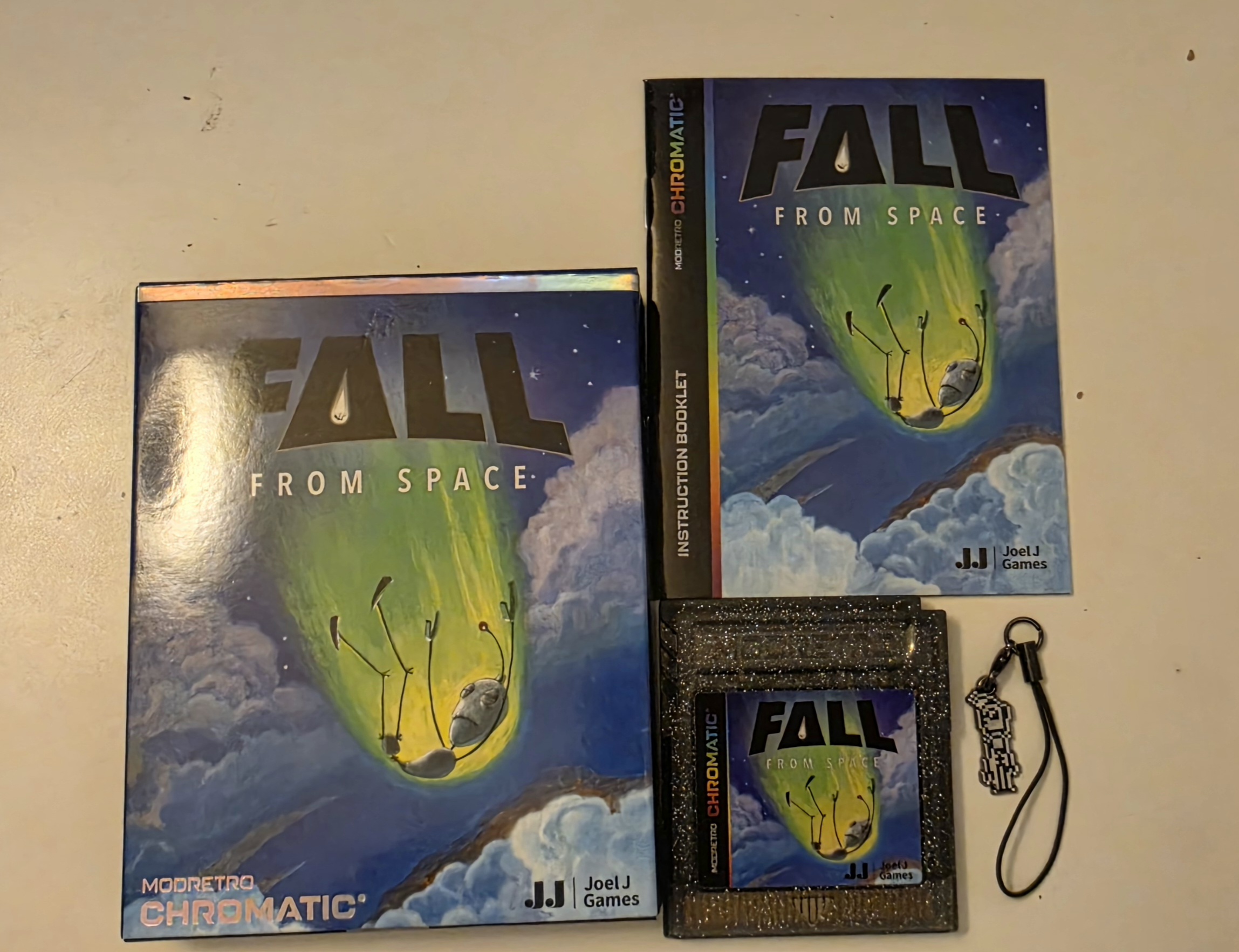
The story found in Fall From Space begins with a dramatic crash, as you step into the metallic chassis of Milton, a lone robot who wakes up stranded on a mysterious alien planet after literally falling from deep space.
Deprived of his memories and completely isolated, Milton must explore his surroundings to uncover the truth behind his sudden descent. The initial mystery quickly expands into a much grander narrative tapestry inspired by classic sci-fi works and 90s-era computer RPGs like the original Fallout.
As Milton uncovers clues, the scope of his quest broadens from surviving a single world to navigating an entire interconnected solar system full of off-world settlements, dense cities, and hidden outposts. Instead of a linear path, players are treated to a deeply atmospheric, branching story heavily influenced by choices the player makes. Quests feature multiple outcomes, and interacting with the diverse cast of characters requires balancing dialogue-based persuasion against aggressive intimidation tactics.
What truly elevates the narrative structure is a built-in karma system that physically shapes the world around you based on your moral choices. Your decisions ripple throughout the solar system, dictating how factions view Milton and altering character arcs permanently. This thoughtful dynamic leads to multiple distinct endings—including complex secret conclusions—ensuring that Milton’s journey for answers feels entirely personalized to your specific playstyle.

In terms of design, the game seamlessly marries the non-linear freedom of an open-world Action RPG with side-scrolling Metroidvania-style platforming. Players actively pilot Milton through a vast overworld map to discover hidden zones and settlements, which then shift perspectives into side-scrolling, explorable sandbox stages.
Progression is deeply rewarding, requiring you to hunt down vital character upgrades that systematically boost your armor, energy reserves, attack power, and physical mobility. The combat mechanics and environmental traversal require sharp reflexes and precise planning. Milton must continuously fight off or cleverly evade hostile alien creatures while tackling hazardous platforming gauntlets across distinct planetary biomes, such as the lush forests of Urthona.
While the fundamental combat loop remains relatively straightforward, the introduction of unique planetary gravity mechanics and diverse sub-quests keeps the core gameplay loop feeling remarkably fresh over its 7-to-10 hours it takes to complete.
True to its modern development timeline, the title introduces substantial quality-of-life improvements rarely seen in the 90s, most notably its full save-anywhere support and multiple dedicated save slots. Players can freely step away from the massive quest at a moment’s notice without losing hard-earned progress. Furthermore, the addition of unlockable modifiers and native support for the legacy Game Boy Printer® accessory injects a delightful sense of playful authenticity into the overall loop.

Visually, the pixel art design is an absolute masterclass in working within rigid retro limitations. Every world in the solar system feels visually distinct, shifting seamlessly from bustling urban storefronts to desolate, barren alien wastelands. The level backgrounds are rich with environmental storytelling, utilizing meticulous sprite layering to give a genuine sense of depth and scale that stretches far beyond the resolution constraints of an 8-bit display.
The character and enemy sprites are expertly crafted, featuring highly expressive animations that bring Milton and his alien counterparts to life. Jarman’s exceptional talent as a pixel artist shines brightest during the cinematic cutscenes, which utilize sharp contrast and stylized compositions to deliver dramatic story beats. The visual package is anchored by an incredible planetary optics system, which dynamically alters color palettes to evoke a distinct mood for each new planet you touch down on.
To cater directly to handheld collectors, the developer included built-in visual filters that can be toggled straight from the in-game menu. Players can instantly swap the native Game Boy Color aesthetics for a classic DMG “pea soup” green hue, a crisp Game Boy Pocket style, or a stark black-and-white look. This attention to visual detail mirrors the gorgeous physical presentation, which boasts custom box art painted by legendary Pokémon Trading Card Game illustrator Mitsuhiro Arita.

When loaded onto actual physical hardware, the technical stability of the engine is nothing short of extraordinary. Built to run natively on genuine Game Boy architecture, the game maintains a remarkably steady framerate even when rendering dense overworld areas or navigating cluttered platforming sections.
Input registration is instantaneous, which is absolutely critical given the tight jumping tolerances and fast-moving hazards encountered during late-game exploration.
Sprite flickering, while present, is handled with immaculate care. Thanks to highly optimized object pooling and clean background data management, screen tearing and disappearing sprites are kept rather minimal.
Transitions between the top-down overworld map, isometric areas, and the side-scrolling stages load flawlessly without any systemic stuttering or jarring delays.
While a handful of minor, non-breaking bugs are present in the complex quest-tracking system, they fail to detract from the sheer technical achievement on display. The cartridge runs flawlessly across a diverse family of hardware, proving perfectly compatible with original Game Boy Color systems, the Analogue Pocket, and of course ModRetro’s own flagship Chromatic console. It stands as definitive proof of what modern optimization techniques can achieve on legacy hardware.

The sound design acts as the emotional heartbeat of the entire sci-fi odyssey. The game features a brilliant, fully original chiptune soundtrack composed by the renowned retro music artist Beatscribe. Utilizing the system’s limited sound chips to their absolute limits, the music seamlessly transitions from eerie, isolated synth melodies in outer space to bouncy, upbeat compositions when entering populated trading outposts. The sound effects hit hard and are responsive, providing essential acoustic feedback that enhances the precision of the gameplay. Laser blasts, mechanical steps, and enemy impacts sound appropriately heavy, giving Milton’s movements a satisfying sense of physical weight.
Furthermore, the music plays a pivotal role in establishing the unique atmosphere of every planetary ecosystem. Each location’s audio themes perfectly mirror its visual aesthetic, helping to make the vast solar system feel like a living, breathing reality inside a tiny plastic cartridge.

Ultimately, this title stands as an undeniable triumph for solo game development and a crown jewel for the modern homebrew community. By cramming a legitimate open-world Action RPG with deep branching narratives onto a Gameboy cartridge format, it achieves the impossible. It respects the intelligence of its audience, delivering a rich mechanical sandbox without ever relying on superficial novelty or unfair retro difficulty traps.
The premium physical release distributed by ModRetro further cements the game’s status as a must-own collector’s item. Packaged with a detailed, full-color 20-page instruction manual and a custom character charm, the physical presentation honors the golden era of unboxing a brand-new cartridge.
Whether you are exploring its vast solar system on a vintage handheld or experiencing it via the ModRetro Chromatic, Milton’s journey is an unforgettable ride. It successfully captures the pure magic of childhood wonder while introducing sophisticated mechanics that retro gamers could only dream of decades ago. This is hands down one of the best games to ever come out for the Gameboy line of handhelds and I highly recommend anyone looking for a unique experience on the go, pick it up!

In addition to writing articles, Ryan Byers also creates content for his YouTube channel called "Obscure Games and Consoles", collects video games, and dabbles in video game development.