
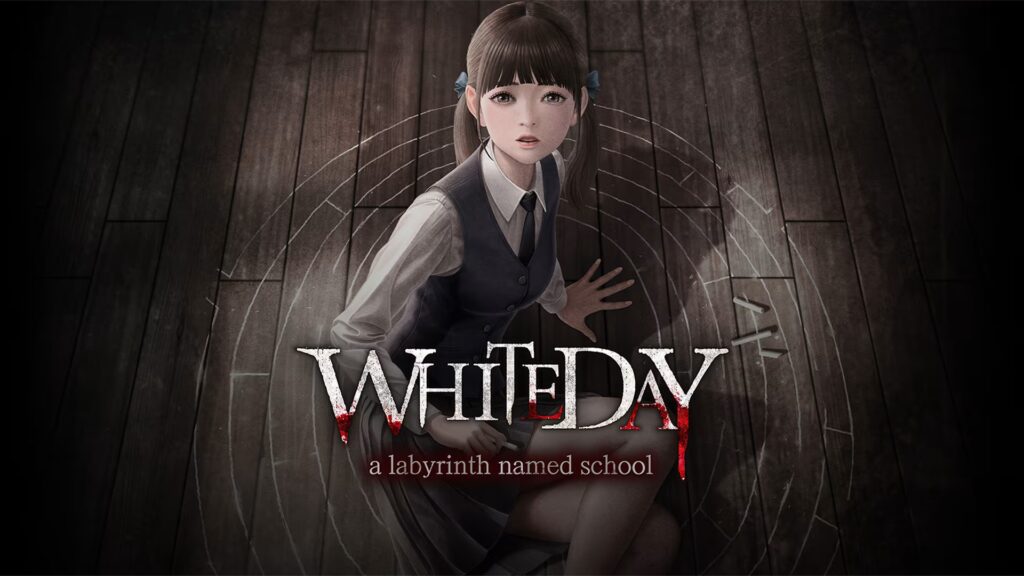
White Day: A Labyrinth Named School has a story that is both unique and interesting.Set against the backdrop of the eve of White Day in South Korea. The story follows a transfer student named Lee Hui-min who makes the fateful decision to sneak into Yeondu High School after hours. The reason for this is because he intends to return a diary to his crush, Han So-young, and leave a box of candy as a surprise.
What he finds however is that the school transforms into a claustrophobic death trap the moment he steps inside. What begins as a simple teen romance plot quickly spirals into a dark, multi-layered occult mystery involving restless spirits, a cursed history, and a legacy of tragedy. The story in White Day: A Labyrinth Named School is one that is very dark, creepy, and can really make the player feel rather uneasy, but in a good way!
What helps to make the story of White Day so captivating and strong are the multiple branching paths. While I won’t give too much away, depending on your interactions with other students like Seong-a and Ji-hyeon, the plot can diverge significantly which will lead to one of eight distinct endings. As you uncover hidden notes and documents, you piece together the gruesome urban legends of the school, which makes the entire experience very eerie and unsettling.

In terms of mechanics, White Day is a pure survival horror experience that strictly adheres to the “hide, don’t fight” philosophy popularized by titles like Amnesia and Outlast. You are completely defenseless, forced to rely on your lighter and your wits to navigate the labyrinthine corridors. The primary source of tension comes from the school’s janitors. These possessed, limping figures patrol the halls of the school with flashlights and baseball bats. Hearing the jingle of their keys or the heavy thud of their footsteps creates a genuine sense of panic, as getting spotted usually results in a frantic sprint toward a bathroom stall or a dark classroom.
Complementing the stealth is a heavy emphasis on classic, Resident Evil style puzzle solving. These puzzles are often intricate and require you to analyze documents, collect specific items, and manage a limited inventory. On higher difficulties, the solutions are randomized and the stakes are raised with additional supernatural encounters. This helps to ensure that even veterans of the original game will be kept guessing.

The transition to the Nintendo Switch is a bit of a mixed bag visually. While this version is a remake with significantly improved models and lighting compared to the original release, it still carries the aesthetic of a mid budget title. On the Switch, the game generally holds a stable frame rate with some slight dips and noticeable jagged textures when playing in handheld mode. though there is some noticeable softening of textures in handheld mode.
The most significant issue when it comes to graphics and performance is how dark the game is when playing on the original Switch or Switch Lite. The game is so dark that you have to max out the in game brightness level to really see much of anything. This is due to the true black textures and shadows being something that the aging hardware (new at the time) can’t handle well.
When you max out the brightness, this gives the game a very washed out look and it really breaks the immersion quite a bit. Thankfully if you play the game using either an OLED or even a Switch 2, both systems are able to handle the true black textures and shadows significantly better.

Audio design is where White Day truly excels in building its suffocating atmosphere. The soundscape is deliberately sparse, emphasizing the ambient creaks of an old building, the howling wind outside, and the unnerving whispers of ghosts that may or may not be right behind you. The janitors’ footsteps are directional and distinct, serving as a vital mechanical cue for survival. The voice acting is good, with the Korean voice track providing a more authentic experience that fits the cultural setting of the game. However, certain sound effects do sound a bit flat which can be a slight break in the immersion, but isn’t necessarily a surprise given the Switch hardware.
Even despite the somewhat flat sound effects, the sudden screams and the jarring music that will play while you’re spotted is still enough to make you jump out of your seat. Thus proving that the game’s sound designers understand the fundamentals of psychological horror.

White Day: A Labyrinth Named School on the Switch is a fascinating relic of horror history that offers a refreshing alternative to the action heavy horror games of the modern era. Its strengths lie in its deep, culturally rich lore. Its relentless and oppressive atmosphere makes every hallway feel dangerous. While the gameplay loop of being chased by the janitor can occasionally border on tedious, and the technical hurdles of the Switch port…particularly the crushing darkness require a degree of patience, the overall experience remains a must play for fans of Asian horror.
Even with the issues this game has, White Day: A Labyrinth Named School manages to provide one of the most unique and genuinely frightening experiences available on a handheld console. If you are looking for a game that prioritizes atmosphere and story driven dread over combat, this haunted high school is well worth the visit. I would definitely recommend picking this game up, definitely worth it!
Disclaimer: A review key was provided

In addition to writing articles, Ryan Byers also creates content for his YouTube channel called "Obscure Games and Consoles", collects video games, and dabbles in video game development.