

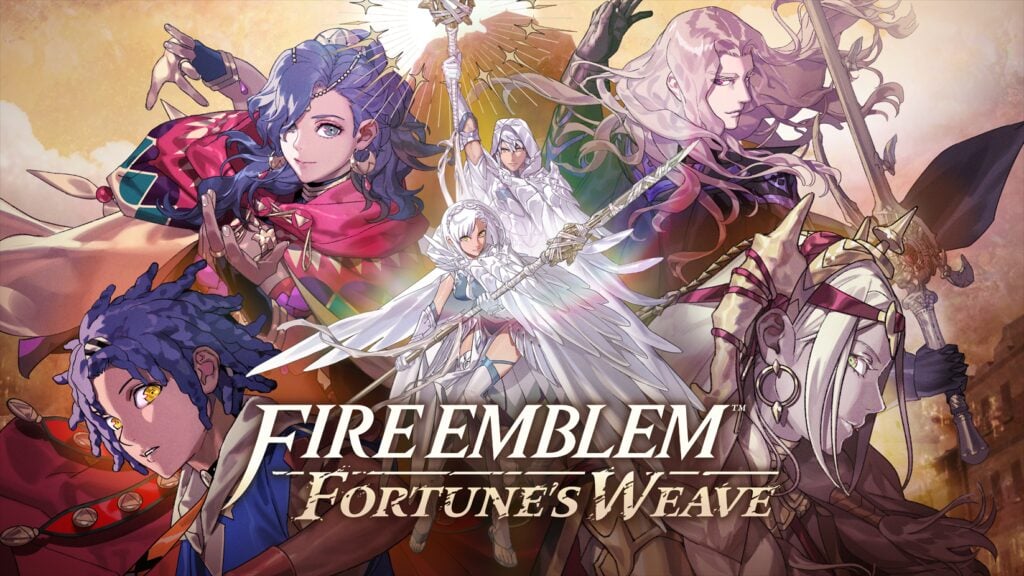
Fire Emblem Fortune’s Weave is the newest entry in a well-loved tactical series, and it plays like a game made by a team that remembers every era of that series. It builds on the newer style of Fire Emblem while pulling from the older games, and the result is big, ambitious, and easy to recommend. It will test the player’s fortitude at times, but clearing the four paths is deeply satisfying.
The story begins in a future where everything has gone wrong. The hero, originally called Eshmel, is created by the player and can be renamed. It’s appreciated that Fire Emblem continues to let players build their own protagonist. Players jump into a brief battle in this ruined future and meet a few characters, then travel back to the past. Those early characters might be strong, but by the time the player returns to the future, the roster will be far stronger. It’s cool to see another time jump like the one in Three Houses.

In the past, Eshmel meets the goddess Fortuna, who shows him a room that is crucial to the world’s future. Inside are four obelisks, and each one is linked to a Flame Lord. The Flame Lords are heroes lost to time, but through time travel they can be saved. She can rewrite what happened to them, and they will need to if the future is going to change.
Fortune’s Weave is built around a tournament. The first arc has players follow each of the four heroes through it, watching what happens to them as they fight through a series of battles. Each hero has a path, and every path is a different way into the same event.
Cai is the youngest of the heroes and the starter hero. Players new to the series should choose him first. He’s young and inexperienced in many things, but he’s been trained to fight since he was a child. It’s useful to see how his skills reach beyond combat. Cai can trap mounts for his characters to ride, which adds an extra layer to an already robust experience. He can also farm, which matters because certain ingredients are needed to evolve characters and their relationships.
Leda is a young woman out for revenge. She wants to kill the man who murdered her father, and she has lost a part of herself in the hunt. She may seem irredeemable, but there are many moments where she shines, and players will want nothing more than to see her overcome the darkness. Leda plays the Vuhela, and her instrument can turn the tide of battle. Her music strengthens her teammates so they can deal more damage or take more hits, and it’s a tool worth using.
Theodora is the queen of a nearby nation, and she doesn’t play around. This warrior will unleash hell on anyone who hurts her people and is ready for war. She can throw a boulder across long distances and smash her opponents with it.

Dietrich hails from Fodlan, which players of Three Houses will remember. He loves battle, might not have all his marbles, and is a loose cannon, though he’s charming in his own way. Of course, plenty of fans are assuming Dietrich is inspired by Alucard. That isn’t the case. Like Alucard, he draws from Elric of Melniboné, and Elric has inspired a long line of characters over the years. Dietrich searches for the greatest fights and will do whatever it takes to win. His path is not for the faint of heart and will challenge players with tough battles. His ability to teleport in combat helps, and he will need it if he’s going to win the tournament.
The game is divided into days, and managing them takes time, but it’s all in service of training allies. Players level up characters through simple training, battles on the map, and a wide range of activities. It’s refreshing that the game lets players do things their own way. That said, it can feel overwhelming at times. Between quests, training, gifts, bonds, and exploring, there is a lot going on, and it takes some getting used to.
Quests are plentiful. Many just send players to a new activity, and many require a trip to a specific spot on the map. Completing one of the character routes clears the quests instantly, which is a good option for players with less time.
Recruiting is another big piece. By raising their renown, completing quests, and doing well in battle, players make different characters recruitable. Gifts and conversations deepen those relationships, and the roster grows slowly but surely. Recruiting everyone isn’t necessary, but it is possible. When players finish a section of the game, any recruited character can be carried forward into the future, so the strongest team members come along. It’s brilliant how much freedom this gives.
Eshmel is also part of the bond system. In the first chapter, he takes on the form of a bird, and players can feed them and then answer questions from the characters to grow the bond between Eshmel and the cast. It’s a nice way to see who the characters are, and they all love Eshmel, whichever form she takes.

The gods matter too. Talking with them and getting to know them earns new boons, and cleaning temples raises bonds with the characters. Before every major battle, the player is free to do as they please. They can feed their characters to grow bonds, train at the arena to upgrade classes, or explore the map for weapons and other goodies.
The map is large, with plenty of new ingredients to find and a lot to learn about the world. This being said, days can fly by while exploring, so time management becomes a real skill. Each of the four heroes also has a map ability. Dietrich can see enemies ahead of him, Theodora can find battalions and send them to do her bidding, Leda performs concerts to raise her renown across the region, and Cai captures mounts and farms. Each one is helpful on the road ahead.
Dungeons are another welcome piece. They draw on the dungeons from the second game in the series and its remake, Shadows of Valentia, with the addition of turn-based combat. It can throw players off at first, since it’s a shift from the usual flow of a Fire Emblem battle, but it ends up playing well. Players delve in and take on enemies while collecting treasure. The characters they bring set how much health and magic they have for exploration. In battle, each side takes turns striking, and players can link attacks to increase damage and build familiarity between characters.

Link attacks use a percentage of a meter, and when it’s empty, players can’t link until they gather energy or heal. Every dungeon has one spot to heal with food the player has collected, so it pays to be careful, as food runs out fast if it’s used carelessly. Dungeons can be revisited for more levels and more bonds. The system might not be super in depth, but it’s worth exploring.
After clearing any of the four routes, players move into the War Arc. It plays much more like the earlier games in the series: a run of battles where the player takes down enemies and continues to grow the team. The War Arc takes place after the tournament, so the characters have aged, and it’s great to see what they get up to over the years. There are paired endings too, which put the bond work in the spotlight just like in Three Houses.
The gameplay and the deeper RPG mechanics also feel like a nod to the Shining Force games. The tactical combat, the party management, and the emphasis on growing a team all echo that classic. Fortune’s Weave also takes from the first games in the series, with a Greco-Roman theme that gives the world its identity. It’s a real mix: an evolution of the newer style of Fire Emblem, with the older games woven in.
After the War Arc, players reach the final boss. Like Breath of the Wild, Fortune’s Weave lets players take on the final boss right from the start. It’s not recommended, since the fight is hard, and the freedom is still welcome for anyone who wants an arduous challenge. Of course, the better idea is to explore and play through the full story first.

Fortune’s Weave was originally going to have eight main characters. While the story isn’t lacking, it’s clear from the start that this is the case. It’s unclear if players will ever see the other four routes, but the prospect is exciting. These characters clearly have their own stories to tell, and they all deserve to helm them. It’s interesting to see so much of a game cut off from the rest, but four characters is still a great start. It’ll be cool to see whether DLC arrives, because the other characters are already favorites.
The visuals are some of the best on the Switch 2 and in the Fire Emblem series. The world is vibrant, the characters are full of life, and the battles look fantastic. The music is just as strong, and it’s also some of the best in the series. Each battle has its own energy, each character’s soul comes through in the themes, and the majestic swells and falls enhance the world. The vocals add extra flavor, and the game shines brighter for it.
Performance is mostly good. There’s an occasional stutter, but it’s not a big deal and never gets in the way of the game. The writing is solid. Non-player characters might say simple things, but that helps newer players, and the main stories are complex enough for anyone to enjoy as they unfold. The voice acting is well performed, with lines in cutscenes, before major battles, and even snippets while characters eat and train. They don’t talk constantly, but they talk enough for players to get to know them.

Fire Emblem Fortune’s Weave is an excellent game and a strong showing of what Fire Emblem has become. It’s recommended, especially for fans who want tactical gameplay and social systems in the same package, with the occasional overwhelming stretch as the one real cost. It shows how four characters can come together through an arduous tournament and save the world. Eshmel might just be a conduit for the player, but there’s a world to save. Will the player help rewrite the past to save the future?
Disclaimer: A review key was provided
