

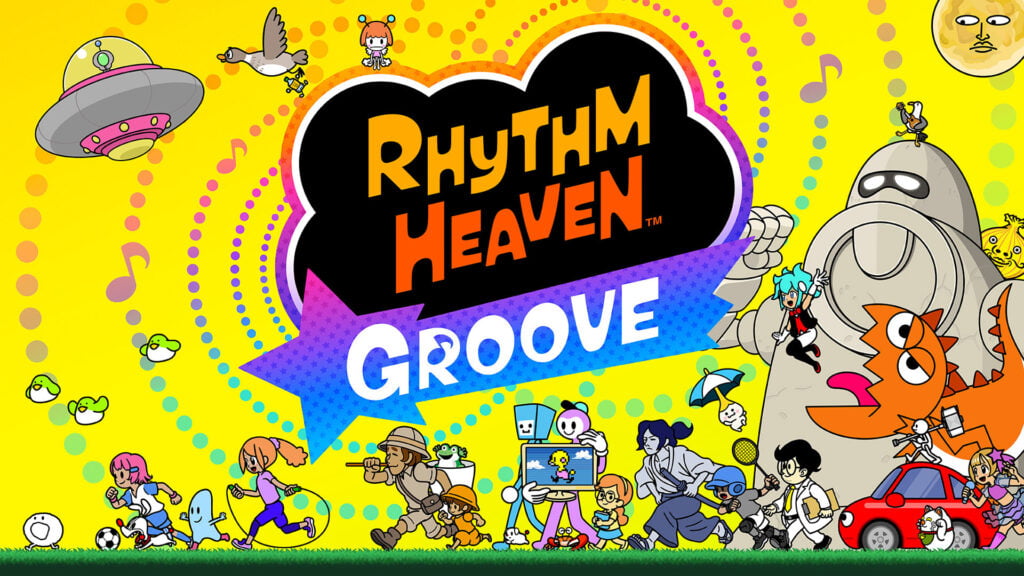
Rhythm Heaven Groove is the latest entry in Nintendo’s long-running rhythm series, delivering a collection of 80 bite-sized rhythm games built around simple controls, memorable music, and the series’ trademark sense of humour. While its mechanics remain approachable, mastering every challenge requires careful timing and plenty of practice. Between the large single-player offering and a healthy selection of multiplayer games, Groove offers plenty to keep players coming back.

At its core, Rhythm Heaven Groove is built around short, self-contained rhythm challenges. Every stage introduces a new concept, cast of characters, and musical theme, ensuring the experience rarely feels repetitive. The controls remain deliberately simple, usually asking players to press a single button or flick the control stick in time with the music. That simplicity makes each game easy to understand, but the challenge comes from maintaining perfect timing rather than memorizing complicated inputs.
The game’s short stage length works in its favor. Individual rhythm games rarely overstay their welcome, making retries quick whenever a mistake ruins an otherwise excellent performance. As players progress, familiar concepts evolve with new rhythms, visual distractions, or altered patterns that keep each challenge feeling fresh despite the limited control scheme. It’s an addictive formula that encourages “just one more try” in pursuit of a better ranking.

Progression revolves around earning medals by achieving Amazing rankings across the game’s many rhythm games. While simply clearing stages unlocks additional content, medals reward players who truly master each challenge. Earning them demands consistency, with even a handful of missed beats often preventing the highest rating. Fortunately, the game’s brisk pacing means failure is never especially frustrating, making repeated attempts feel rewarding rather than tedious.
Performance is also reflected through the player’s overall rhythm score, which rises and falls depending on how well each stage is completed. Since players can immediately restart a game without permanently damaging that overall rating, Groove encourages experimentation and practice instead of punishing mistakes.
Those willing to perfect each challenge are rewarded with additional variations of several rhythm games. Ribbit Rocket, for example, transforms into an upgraded version after earning a Perfect ranking, providing another reason to revisit earlier favorites. With so many games included, these enhanced versions give completionists another satisfying goal beyond simply clearing every stage.

Outside the main campaign, Groove includes a surprising amount of extra content. The café serves as a quiet break between rhythm games, offering hints and small interactions that add personality without interrupting the overall pace. It reinforces the game’s relaxed attitude, reminding players that taking a breather can be just as valuable as immediately jumping into another difficult challenge.
The Rhythm Toy Box expands the package with seven unlockable minigames purchased using medals. These diversions are intentionally low-pressure, existing purely for fun rather than progression. Whether identifying which rabbit is clapping in “Who’s Got Rhythm?” or experimenting with the other unlockable toys, they provide welcome variety between the more demanding rhythm challenges.
The Soundboard offers another creative diversion, allowing players to create their own rhythmic patterns. While it doesn’t contribute to progression, it’s an entertaining extra that fits naturally alongside the game’s celebration of music and rhythm.

One of Groove’s standout additions is Beatspell, a surprisingly substantial rhythm RPG. Set within its own fantasy world, players battle monsters by performing rhythmic button combinations while gradually unlocking magical abilities earned through medal progression in the main game. Rather than feeling like another novelty minigame, Beatspell has enough identity to stand comfortably alongside the main rhythm challenges, complete with its own cast, story, and collectible comics that expand its world.
Several additional unlockable modes are also hidden throughout the game, and discovering them naturally is part of the experience. Groove continually rewards curiosity, ensuring there is almost always something new waiting beyond the next medal milestone.
Multiplayer is equally well supported with 30 rhythm games designed for two to four players. Like the single-player content, these games rely on accessible controls while creating memorable moments through competition rather than complexity. Classic favorites return alongside new additions, with rapid-fire challenges like the cake-grabbing contest becoming especially entertaining when split-second reactions determine victory.

The multiplayer suite also includes convenient quality-of-life touches, such as allowing players to register names for quicker setup. The game tracks reaction speed throughout many of these challenges, adding a competitive edge that often leads to close finishes and plenty of laughs.
Outside of gameplay, Groove remains refreshingly straightforward. The menus are clean, intuitive, and designed to keep players focused on what matters most: the rhythm games themselves. Rather than overwhelming players with unnecessary layers of navigation, every mode is easy to locate and access.
Completionists will also appreciate the Rhythm Reference, an unlockable collection of comics inspired by the game’s various rhythm challenges. Beatspell benefits especially well from this feature, with comics that expand its fantasy setting chapter by chapter as players progress.

The Sound Studio functions as an in-game jukebox, allowing players to revisit the soundtrack without worrying about keeping time with the rhythm. Since many songs are packed with catchy melodies and unexpected vocal performances, it’s a welcome addition that highlights just how much care has gone into the music itself.
Equally useful is the ability to watch demonstration videos for every rhythm game. Whether returning after a long break or struggling with a particular challenge, these tutorials provide an easy way to refresh both timing and mechanics before attempting another run.
As expected from the series, the soundtrack is one of Groove’s greatest strengths. Musical styles constantly shift between stages, ensuring every new rhythm game introduces something different. Some tracks feature vocals while others rely on infectious instrumental hooks, but nearly every song leaves a lasting impression. The constant variety keeps even familiar button combinations feeling fresh thanks to entirely new musical contexts.

That same variety extends to the visuals. Every rhythm game adopts its own distinct artistic style, ranging from minimalist animation to more detailed cartoon artwork. The result is a colorful collection of memorable characters, including frogs, robots, ninjas, monsters, and countless other delightfully odd personalities. Each stage feels like its own miniature world, helping maintain a sense of surprise from beginning to end.
Rhythm Heaven Groove succeeds because it understands exactly what makes the series so enduring. Its simple controls hide satisfying depth, its enormous selection of rhythm games consistently introduces fresh ideas, and its generous assortment of unlockables ensures there is always another reward waiting just around the corner. Whether playing solo in pursuit of perfect performances or competing with friends in its lively multiplayer modes, Groove offers an endlessly charming rhythm experience that rewards practice without ever losing its welcoming personality.
Disclaimer: A review key was provided
