

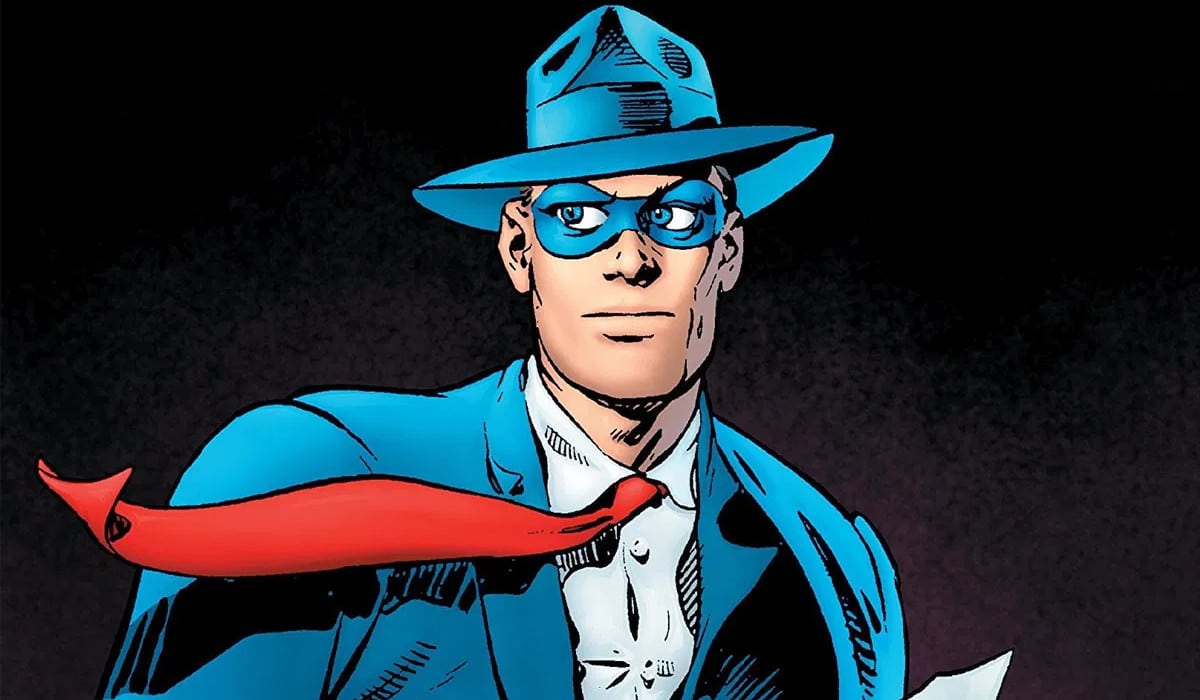
Long before graphic novels became a widely recognized form of literary storytelling, Will Eisner was demonstrating just how much could be accomplished within the pages of a comic book. With The Spirit, Eisner created something that stood apart from the superhero adventures dominating the medium, combining crime fiction, mystery, humour, romance, and human drama into a distinctive series that helped establish new possibilities for sequential art. Although its masked protagonist might initially suggest another costumed crimefighter, The Spirit was far more interested in the people and circumstances surrounding crime than in the spectacle of fighting villains. Its approach to storytelling, atmospheric artwork, and fascination with the darker corners of urban life make it an especially worthwhile subject for Noirvember.
First appearing on June 2, 1940, The Spirit was created by Eisner for a syndicated Sunday newspaper supplement. Its protagonist, Denny Colt, was a private detective and criminologist who was presumed dead after being exposed to chemicals during a confrontation with the mad scientist Dr. Cobra. Buried in Wildwood Cemetery, Colt eventually awakens and decides to abandon his former identity, making the cemetery his base of operations while adopting the name The Spirit. Working alongside Commissioner Dolan, he continues fighting crime while remaining officially dead to the rest of the world. The premise initially resembles the sort of masked crimefighter story that was becoming increasingly popular, but Eisner was less interested in developing another conventional superhero. In fact, The Spirit himself often feels like a secondary character in his own comic, serving as a familiar presence connecting stories that frequently have little to do with his personal adventures.
This becomes particularly apparent in the way Eisner approaches morality. Rather than consistently presenting crime as a straightforward conflict between good and evil, many stories examine the circumstances that lead ordinary people into terrible situations. The September 11, 1949 story “Ten Minutes,” written by Eisner and Jules Feiffer, is an excellent example. It opens by announcing that we are about to witness the last ten minutes of Freddy’s life, then spends those minutes with a young man who has decided to rob a candy store to fund an escape from his dull existence. The robbery goes wrong when he kills the shopkeeper, leaving him trying to behave normally while the crime hangs over him. The Spirit is barely present. Although Freddy’s actions are indefensible, the story takes the time to establish his frustrations, making his downfall feel like a human tragedy rather than simply another criminal being brought to justice.

“Two Lives,” published December 12, 1948, approaches this interest in human circumstances from another direction. An escaped convict and a harried husband end up exchanging identities, a setup that could easily have been played purely for laughs. Eisner instead uses the exchange to explore how confining an ordinary life can feel. The convict finds himself saddled with the husband’s miserable domestic situation, while the husband discovers that prison offers a surprisingly comfortable alternative to his unhappy marriage. It is an unusual approach to a crime story because its central irony has less to do with the criminal justice system than with the circumstances that make an ordinary life feel more punishing than incarceration.
The two-part “Sand Saref” and “Bring in Sand Saref,” published January 8 and 15, 1950, offer another compelling example of the series’ more complicated approach to its characters. Sand is a criminal and an old childhood friend of Denny Colt, with their shared history introducing an emotional dimension to what might otherwise be a conventional pursuit involving a dangerous woman and a lawman. Their relationship complicates the usual detective-versus-criminal dynamic, particularly because their feelings for one another have survived despite the very different paths their lives have taken. Sand isn’t simply another villain for The Spirit to defeat, nor is Denny entirely detached from the person he is pursuing. Their history gives the conflict an emotional weight that makes the distinction between personal feelings and professional responsibility considerably more complicated. Originally developed as material for Eisner’s unpublished John Law comic, the two installments also demonstrate how effectively he could adapt a story to fit the broader world of The Spirit.
Eisner also wasn’t afraid to experiment with perspectives that challenged the reader’s expectations of the series. “The Killer,” also known as “Henry the Veteran,” published December 8, 1946, puts the reader alongside a returning Second World War veteran whose experiences have left him increasingly disconnected from civilian life. Rather than keeping the reader at a comfortable distance from the violence, Eisner tells the story through someone who would ordinarily occupy the position of an antagonist. In some panels, the perspective is literally framed through Henry’s eyes, making the reader an uncomfortable participant in the events unfolding around him. This doesn’t excuse his actions, but it changes how the story is experienced and demonstrates how much Eisner could accomplish by changing the perspective from which a crime story was told.
Perhaps the clearest demonstration that The Spirit could move beyond its own genre conventions is “The Story of Gerhard Shnobble,” published September 5, 1948. It follows an unremarkable man who discovers that he can fly, giving him the chance to experience something extraordinary after a lifetime of feeling insignificant. Rather than turning this into a conventional superhero origin story, Eisner takes it in a much more tragic direction. Shnobble’s moment of liberation ends when he is caught in the crossfire of a shootout, dying before anybody can properly appreciate his gift. It is an unexpectedly cruel conclusion, but it reinforces the series’ fascination with ordinary people and the unpredictable nature of their lives. The story has almost nothing to do with traditional crime fiction, yet it fits comfortably within The Spirit because its real subject is human experience.

These stories also help explain why the illustrations are so important to the series. The artwork doesn’t simply provide a visual accompaniment to the writing. The composition of individual pages, the positioning of characters, the use of shadows, and even the lettering frequently contribute directly to the storytelling. Eisner understood that a comic page could communicate atmosphere and information before the reader had even reached the dialogue, and he continually experimented with ways to make the physical arrangement of images part of the narrative. Although Eisner’s vision unified the series, he also worked with a studio of assistants and collaborators, among them writer Jules Feiffer and artists Jerry Grandenetti, Jack Spranger, and Bob Palmer. Their contributions are worth acknowledging when examining the visual development of the comic.
“The Partner” offers an effective lesson in how Eisner used light to control what the reader sees. As John DiBello notes in his survey of the series’ title pages, the story opens at night with only a bus and its signage lighting the scene. The surroundings emerge gradually as the light source changes, with the appearance of a struck match illuminating both the setting and the information available to the reader. It is a relatively simple sequence, but it demonstrates how Eisner could determine what the audience sees and when, much like the deliberate lighting of a film noir scene. The use of darkness isn’t merely decorative, as the gradual revelation of the environment helps establish the mood and guide the reader through the sequence.
His approach to page composition was equally inventive. In “The Elevator,” published June 26, 1949, the title-page artwork turns the series logo into a tall building, while the elevator’s vertical shaft is represented by a column of panels running alongside it. The building becomes part of the storytelling, letting the page show movement through space in a way conventional panel grids rarely allow. The idea continues throughout the interior pages, with different floors and rooms arranged to follow the elevator’s journey through the building. It is a clever demonstration of how comics can represent simultaneous events and movement through space using the physical structure of the page itself. Jerry Grandenetti also contributed to the title-page artwork, illustrating the collaborative nature of the series’ visual experimentation.

It is also worth looking at “The Story of Gerhard Shnobble” for the way its artwork serves the story. When Shnobble discovers he can fly, the openness of the composition and the movement of the character communicate a sense of freedom and exhilaration. The contrast between these moments and the story’s devastating conclusion makes the artwork even more effective. His brief experience of something extraordinary is conveyed through the visual language of the comic rather than requiring lengthy explanations, making the eventual tragedy all the more striking.
Eisner’s title pages deserve particular attention as well. Rather than treating the opening page as a conventional introduction, he frequently incorporated the series’ logo directly into the environment, using buildings, objects, shadows, and other elements to establish the subject and atmosphere of the story. Sometimes the lettering becomes part of the architecture, while in other instances the entire composition functions as a visual summary of what is to come. The opening pages of The Spirit often feel like miniature works of art in their own right, setting the tone before the narrative has properly begun. This approach would become one of Eisner’s most recognizable contributions to comic book storytelling, demonstrating that even the title and logo could become active elements of the narrative rather than simply identifying the series.
The series also has a complicated relationship with the conventions of noir. Although it shares an interest in criminal activity, morally questionable characters, urban environments, and human weaknesses, it isn’t consistently as bleak as some of the films commonly associated with the genre. Eisner frequently incorporates comedy, romance, sentimentality, and outright adventure into his stories. This variety can occasionally make the collection feel uneven, particularly when moving between stories with considerably different tones. However, that inconsistency is also part of what makes The Spirit interesting. It isn’t restricted to one particular interpretation of crime fiction, and its willingness to experiment allows the series to explore subjects that a more conventional detective comic might overlook.
It is also important to acknowledge that The Spirit reflects the period in which it was created, including attitudes and racial caricatures that have aged poorly. Ebony White, who initially serves as The Spirit’s young assistant, is particularly difficult to reconcile with modern expectations because of his stereotypical appearance, dialect, and characterization. Although Eisner’s portrayal of the character evolved over time, the earlier material remains an uncomfortable part of the series’ history. Recognizing these shortcomings doesn’t diminish the importance of the work, but it does provide necessary context when revisiting it today.
The Spirit continued until 1952, leaving behind an influential body of work that helped expand the artistic and narrative possibilities of comics. Eisner’s approach to page composition, visual storytelling, and character-driven narratives would go on to influence generations of cartoonists. His contributions extended well beyond this particular series, but The Spirit remains one of the clearest demonstrations of his creative ambitions. Its influence can be seen in the way later crime comics and graphic novels approached their settings, characters, and visual presentation.
Frank Miller’s 2008 film adaptation is another reminder of the character’s continued cultural presence, although it offers a considerably different interpretation of Eisner’s work. The original comic’s greatest accomplishment was never simply creating another masked crimefighter. It was demonstrating that a comic could use a recurring protagonist to explore an expansive collection of stories, each with its own atmosphere, characters, and emotional concerns.
What makes The Spirit particularly fascinating is how often its most memorable moments have little to do with its masked protagonist. Whether following a desperate young criminal, examining an unhappy marriage, revisiting a complicated childhood friendship, or giving an overlooked man the extraordinary ability to fly, Eisner consistently found ways to make ordinary people the centre of extraordinary stories. The Spirit may have provided the series with its identity, but it was the people inhabiting Central City, along with the inventive visual storytelling used to bring their lives to the page, that ultimately made it so distinctive.