

Fairy tales have always had a darker side, even if their more familiar adaptations have done plenty to soften their original stories. The idea of taking characters such as the Big Bad Wolf, Snow White, and the Three Little Pigs and placing them in a modern setting might sound like the foundation for another whimsical fantasy adventure, but what happens when these characters are forced to live in a world that has little interest in their happily ever afters? What happens when the Big Bad Wolf becomes a sheriff tasked with investigating murder instead of hunting down little pigs? This is the premise behind Telltale Games’ The Wolf Among Us, an adventure that places the characters of fairy tales and folklore into a world much closer to the pages of a hard-boiled detective novel.
Based on Bill Willingham’s Fables comic book series, The Wolf Among Us is set in Fabletown, a hidden community in 1980s New York City where characters from fairy tales, legends, and folklore have built new lives after being driven from their homelands by a mysterious conqueror known as the Adversary. The game is a prequel, taking place before the events of the comics. Rather than living in grand castles or enchanted forests, these characters deal with the realities of the modern world, often struggling to make ends meet while keeping their existence secret from ordinary humans. What makes the setting so suited to noir is how little the game romanticizes it. Fabletown is not a magical paradise, and its inhabitants are not necessarily the charming characters people remember from childhood stories.
Money is a good example. Fables who do not look human have to maintain a magical disguise called a glamour, and glamours cost money. Some residents have managed to keep a degree of comfort, while others are barely getting by, and that divide creates an environment where resentment, exploitation, and criminal activity can flourish. The fantasy elements provide an unusual backdrop, but the problems facing its residents are remarkably familiar. Fabletown feels like the sort of place that would be right at home in a classic noir film, with residents carrying secrets, making questionable decisions, and finding themselves trapped by circumstances they cannot easily escape.
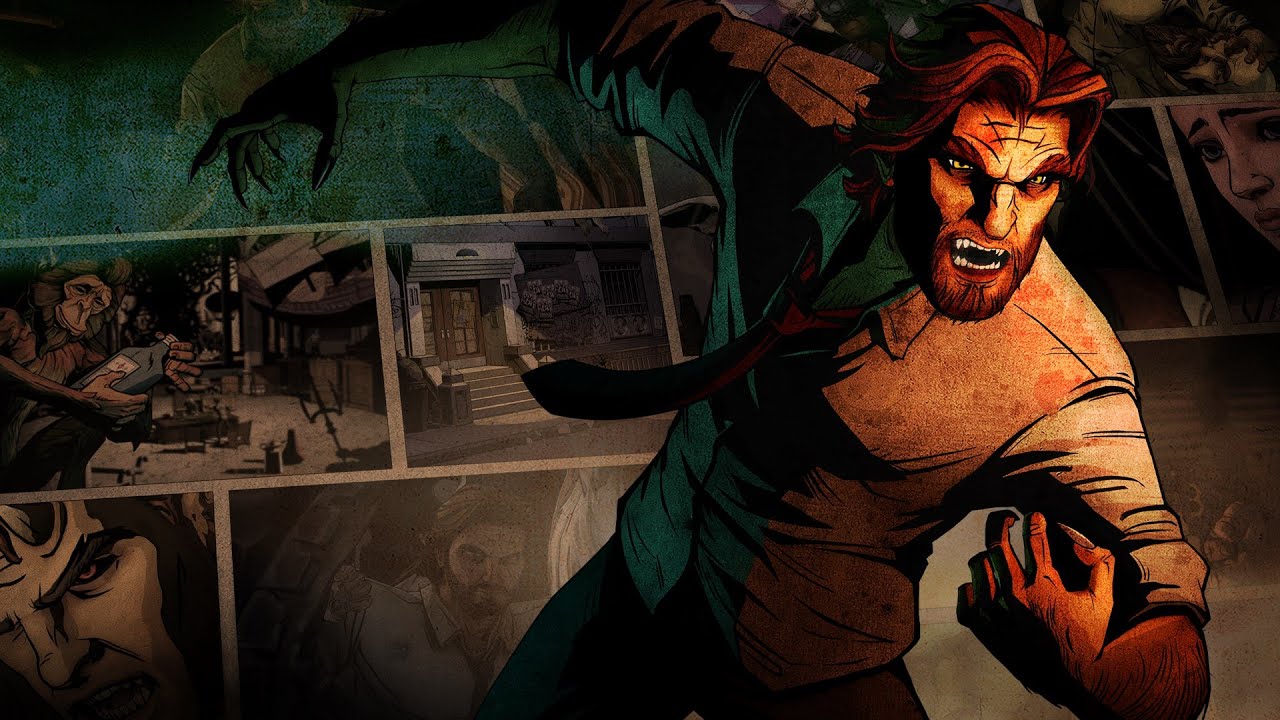
At the centre of this world is Bigby Wolf, better known as the Big Bad Wolf, who has taken on the responsibility of serving as Fabletown’s sheriff. It is a fitting role for a character whose reputation was built around being one of the most feared monsters in fairy tales. Rather than hunting the Three Little Pigs or threatening Red Riding Hood, Bigby is now responsible for keeping order among the very same types of characters he once terrorized. His past has not been forgotten, and plenty of residents still see him as the monster he used to be, regardless of how much he may have changed.
That makes him a natural fit for the hard-boiled detective tradition. He is intimidating, frequently confrontational, and not someone who can walk into a room without making people nervous. There is also an underlying question about whether he has genuinely changed or has simply learned to keep his violent tendencies under control. That uncertainty matters most when the easiest solution is to resort to intimidation or violence. A traditional detective might rely on reputation and the ability to read people, but Bigby has the added complication of being able to transform into the creature that gave him his infamous name.
The case begins when Bigby is called to break up a fight involving the Woodsman, before the situation takes a much darker turn when a woman named Faith is found murdered, her head left on the doorstep of the Woodlands apartment building. Snow White, who works as Ichabod Crane’s assistant and keeps much of the community running, becomes an important figure in the investigation, and Bigby is forced to question residents who are not interested in cooperating with the sheriff. What initially appears to be a disturbing murder soon leads into a much larger investigation, drawing Bigby into the criminal underworld of the Crooked Mile and bringing him closer to a crime boss known as the Crooked Man.
This is where The Wolf Among Us draws most heavily from film noir. Its characters are rarely entirely innocent or entirely guilty, and the line between right and wrong blurs as the investigation progresses. People make mistakes, take advantage of others, and sometimes take part in terrible situations because they believe they have no other options. Even those who initially look suspicious can have understandable reasons for their actions, while characters in positions of authority are not necessarily interested in doing what is right. Ichabod Crane, Fabletown’s acting mayor, is a particularly good example of how questionable leadership can make an already difficult situation considerably worse.
Snow White is another example of this complexity. Rather than simply serving as the familiar princess from the fairy tale, she is someone who has adapted to a difficult environment and taken responsibility for keeping an entire community functioning. Her relationship with Bigby contrasts two characters trying to move beyond the identities that have defined them. Their interactions are not built around a traditional romantic fantasy, but reflect the complications of working together in a world where trust is difficult to establish.
The visual presentation reinforces these themes, with Telltale taking advantage of the comic-book origins to create an environment that feels like a living graphic novel. The heavy shadows, exaggerated character designs, and striking use of colour give Fabletown a distinctive look, while its rundown apartments, seedy establishments, and rain-soaked streets establish the atmosphere associated with classic detective fiction. The original never needed the black-and-white cinematography of 1940s films to communicate its influences. It used its comic-book aesthetic to build a world where every location seems to have a story of its own, and where even the most colourful characters can be hiding something unpleasant.
Comic-book storytelling is a fitting vehicle for modern noir. The medium has a long history with crime fiction, from hard-boiled detective strips to the darker superhero stories that helped establish a different side of the genre. The Wolf Among Us brings these influences together by presenting characters that are already familiar through a considerably more cynical lens. Fairy tales might seem like an unusual match for noir, but the two traditions have more in common than expected. Both are filled with stories about temptation, betrayal, greed, punishment, and the consequences of making the wrong decisions. Bigby’s world-weary journey through a corrupt city might be quite different from Philip Marlowe’s investigations in Raymond Chandler’s fiction, but both draw from a tradition of detectives navigating worlds where the truth is rarely as straightforward as it first appears.
The way the story unfolds also owes a great deal to the interactive storytelling Telltale became known for. Bigby is not simply following clues and questioning suspects, but deciding how to approach the people he meets. He can be sympathetic, threatening, aggressive, or surprisingly understanding, and these decisions shape how other characters perceive him. There is a tension between his responsibility to protect Fabletown and the reputation of the monster he once was. Being feared can make his job easier, but it can also make it much harder to earn the trust of those he is supposed to protect.
Noir detectives are often defined by their complicated relationships with the worlds they inhabit. They may work within the law without having much faith in the institutions around them. Bigby is both an outsider and an authority figure, responsible for maintaining order in a community that does not entirely accept him while confronting the possibility that his own nature makes him part of the problem. His ability to become the Big Bad Wolf is more than a gameplay mechanic. It represents the temptation to embrace the very identity he is trying to leave behind.
The episodic structure also suits detective fiction. The game originally released across five episodes between October 2013 and July 2014, with each chapter bringing another piece of the mystery into focus and revealing more about the people involved. Like chapters in a crime novel, each episode introduces new complications while allowing its characters to develop. The result is a narrative less concerned with a straightforward battle between good and evil and more interested in what happens when people are pushed into desperate situations.
That is what makes The Wolf Among Us such a good pick for Noirvember. It understands how to use its fantasy elements without letting them overshadow the crime story. Its greatest strength is how it uses the expectations attached to familiar fairy-tale characters to explore ideas of identity, reputation, and whether people can ever escape their past. The Big Bad Wolf might seem like an obvious protagonist, but making him a detective lets the story examine the character in ways traditional adaptations rarely attempt. Rather than asking whether a monster can become good, it asks whether someone can ever truly escape the reputation and history that follow them.
The game’s staying power is reflected in The Wolf Among Us Remastered, which released on October 29, 2026. Alongside enhanced visuals, improved character models, updated lighting and animation, and upgraded audio, the new edition introduces a dedicated Noir Mode that presents the entire story in black and white. Players can switch between the original colour presentation and Noir Mode at any point, making it an especially appropriate addition for a game whose identity has always been so closely connected to the genre. The remaster includes five playable deleted scenes, an art gallery featuring more than 100 pieces of artwork, and over an hour of behind-the-scenes developer interviews. It arrives ahead of the long-awaited sequel, The Wolf Among Us 2, which is targeting a 2027 release.
Fairy tales might traditionally promise that everyone lives happily ever after, but there is no such guarantee in Fabletown. Its residents have lost their original homes, many are struggling to survive in a world that does not understand them, and some have become the very things their stories once warned against. Bigby Wolf is left trying to maintain order in a community where almost everyone has something to hide, and where finding the truth does not necessarily mean finding justice. It is this combination of hard-boiled detective fiction, morally complicated characters, and familiar folklore that makes The Wolf Among Us such a worthy addition to the world of noir. Sometimes the monsters are not hiding under the bed, but walking around in broad daylight, trying to make a living just like everyone else.


