

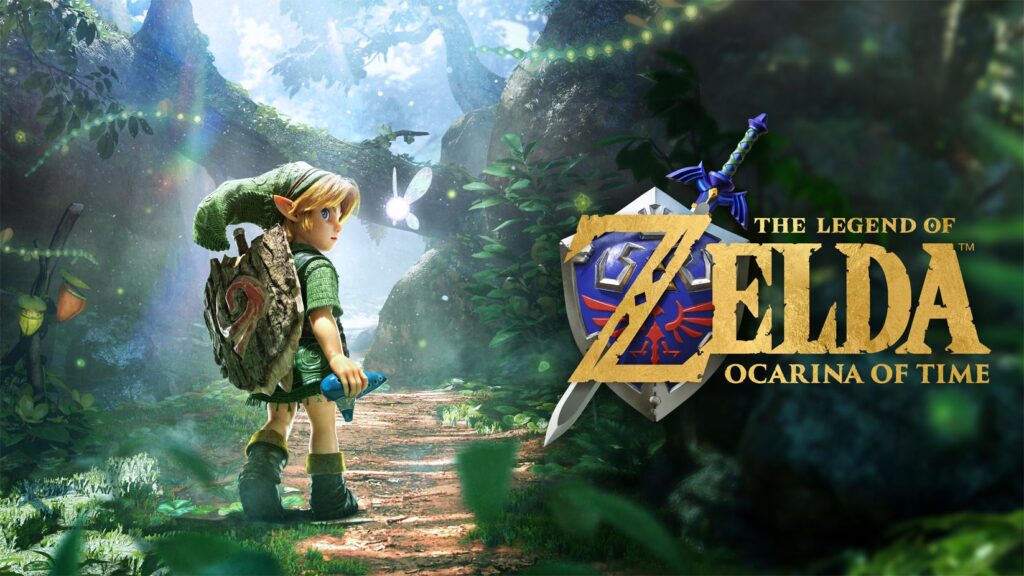
Remaking a game as influential as The Legend of Zelda: Ocarina of Time is a considerably more complicated undertaking than simply giving it a fresh coat of paint. Few adventures have had such a lasting impact on the medium, and its approach to three-dimensional exploration, combat, puzzles, and storytelling helped establish conventions that developers continue to follow today. There is always a risk when revisiting something so beloved, particularly when the original has spent decades earning its place among gaming’s most celebrated achievements. Change too much, and the experience risks losing its identity. Change too little, and there is little reason to rebuild it in the first place.
Nintendo’s answer is a remake that understands precisely where that balance needs to be struck. Rather than attempting to reinvent Ocarina of Time, the company has rebuilt its world, modernized its mechanics, expanded portions of its storytelling, and addressed many of the limitations that came with its original hardware. The underlying adventure remains remarkably familiar, but practically everything surrounding it has been reconsidered. More importantly, these changes rarely feel like compromises or unnecessary departures from the original vision. Instead, they demonstrate just how much potential was always there, waiting for the technology to catch up.

For anyone unfamiliar with the adventure, Ocarina of Time follows Link, a young boy raised among the Kokiri who becomes embroiled in a conflict involving the kingdom of Hyrule and the Gerudo king Ganondorf. What begins as a journey to protect the Great Deku Tree eventually grows into something much larger, with the Ocarina of Time sending Link seven years into a future where Ganondorf has taken control of the kingdom. Hyrule has been transformed into a much darker place, leaving Link to travel across the land, awaken the Sages, and find a way to restore peace.
The story itself has not been fundamentally changed, although Nintendo has given several important moments considerably more room to breathe. Certain scenes have been extended, additional dialogue provides more characterization, and familiar faces receive opportunities to contribute beyond their original roles. Voice acting has also been introduced during key sequences, an addition that will inevitably divide longtime fans. Several performances work particularly well, while others may take some getting used to, especially when compared with the voices players have imagined for these characters over the years. Link remains silent, which is absolutely the right decision. His expressions and actions continue to communicate everything necessary without compromising the character’s original appeal.
These additions work particularly well because Ocarina of Time has always been about more than defeating an evil king. Beneath its fantasy adventure is a surprisingly melancholy story about growing up, losing one’s childhood, and discovering that the world does not necessarily wait for anyone. Link’s transition from the familiar surroundings of Kokiri Forest to a Hyrule devastated during his absence has always been one of the adventure’s most effective narrative developments. The expanded storytelling reinforces those themes without fundamentally changing what made the original narrative so memorable.

Of course, the most immediately noticeable transformation is Hyrule itself. Nintendo has rebuilt the entire world with an extraordinary amount of attention to detail, turning locations that were once limited by the Nintendo 64’s hardware into fully realized environments. Emerging from Kokiri Forest and stepping into Hyrule Field is an entirely different experience when distant landmarks such as Death Mountain and Hyrule Castle are visible across the horizon. The world remains relatively compact compared to contemporary open-world adventures, but its smaller scale is hardly a disadvantage. Every region has a distinct identity, and travelling between familiar locations feels considerably more rewarding when there is so much more to appreciate along the way.
It is the smaller environmental details that really sell the transformation. Grass moves with the wind, water reflects the surrounding scenery, and atmospheric effects give dungeons a much stronger sense of place. Even something as simple as smashing a pot leaves debris scattered across the floor rather than making everything disappear immediately. These touches might seem insignificant individually, but together they make Hyrule feel considerably more tangible. Zora’s Domain finally resembles a proper home for an aquatic civilization, Kakariko Village has considerably more character, and Castle Town has gone from a collection of relatively flat backdrops to a place that can be explored in much greater detail.
The improved day and night cycle adds another dimension to the experience. Townspeople follow their own routines, lighting changes throughout the day, and familiar locations take on different personalities depending on the time. Watching Castle Town gradually illuminate as evening approaches or seeing the sunrise over Lake Hylia makes exploration feel more organic. These environments have always been memorable, but the additional detail gives them a personality that the original hardware simply could not communicate to the same extent.
The character redesigns are equally impressive, adopting a handcrafted aesthetic that resembles elaborate figurines or puppets. The exaggerated proportions of the original designs remain recognizable, but the additional detail gives everyone considerably more personality. Link’s clothing, for instance, features visible stitching, while even minor characters have received enough attention to stand apart. Not every design is equally successful, however. Some faces look a little unusual when their stylized proportions are combined with more realistic textures, and Sheik has lost some of the androgynous mystery that made the character so distinctive. These are relatively minor complaints, but they demonstrate how difficult it can be to reinterpret familiar designs without losing something along the way.
Nintendo has also been surprisingly faithful to the darker elements of the original adventure. The Deku Babas are more unsettling, while the Redeads and Dead Hand have received appropriately grotesque redesigns. The Shadow Temple is particularly effective, retaining its oppressive atmosphere while making its disturbing imagery considerably more convincing. The Forest Temple benefits from the same attention, with stained glass windows, winding corridors, and atmospheric lighting transforming it into something resembling a genuinely haunted mansion.

This is an important distinction because Ocarina of Time was never an entirely cheerful adventure. Its more disturbing encounters were part of what gave Hyrule its personality, and the remake understands that those elements should not be softened simply to make the experience more approachable. The horror has not been introduced for the sake of spectacle. It has been brought closer to the surface, allowing some of the original’s most memorable locations to become even more effective.
Longtime fans will also find plenty of familiar moments that benefit from the additional presentation. Nintendo clearly understands the importance of these sequences, and the remake frequently finds ways to make them more memorable without interrupting the adventure to draw attention to its own nostalgia. The Master Sword sequence is an especially effective example, while returning characters and familiar encounters have received enough additional attention to make their appearances worthwhile. There is plenty of fanservice throughout, but it generally feels like a natural extension of the experience rather than an attempt to constantly remind players of what they loved about the original.
The soundtrack receives a similarly thoughtful treatment. Familiar compositions have been rearranged into fuller orchestral performances, preserving the melodies while giving them considerably more depth. Hyrule Field, Kokiri Forest, Castle Town, and the various dungeon themes all benefit from the richer instrumentation, although some arrangements are more successful than others. Gerudo Valley remains a particular highlight. Music also changes throughout the day in certain locations, adding another dimension to exploration and helping familiar environments feel more alive. These are compositions that have remained recognizable for decades, and the remake gives them the presentation they deserve without losing their identity.
One of the more amusing additions involves the Switch 2’s built-in microphone, which allows players to hum melodies to play the Ocarina. Familiar songs such as Zelda’s Lullaby and Epona’s Song can be recognized without having to enter the usual button combinations. It is hardly an essential feature, and the traditional controls remain perfectly functional, but it is a charming novelty that fits the adventure surprisingly well. There is something appropriate about being able to reproduce the game’s most important melodies using one’s own voice, even if the results are occasionally less musical than intended.
The most important improvements, however, are not necessarily the ones that immediately catch the eye. Ocarina of Time helped establish many conventions for navigating three-dimensional environments, but some of its original design decisions have understandably become dated. The Nintendo 64 controller lacked a second analogue stick, meaning exploration relied heavily on fixed camera angles and the Z-targeting system. The Switch 2 remake introduces full camera control, allowing players to freely examine their surroundings while exploring and fighting.
This is an enormous improvement in terms of convenience. Being able to look around freely makes discovering hidden paths considerably easier, while combat benefits from having greater control over positioning. Z-targeting remains central to the experience, although switching between enemies can still feel somewhat awkward. There is also a trade-off in how certain scenes are presented. Some of the original’s carefully composed camera angles lose a little of their impact when players are given complete freedom to reposition the camera themselves. Nevertheless, the additional control is a worthwhile improvement overall.

Movement has received an equally substantial upgrade. Link can now jump whenever necessary rather than relying exclusively on predetermined ledges, and a dedicated sprint function makes travelling across Hyrule much less cumbersome. The days of repeatedly rolling across Hyrule Field to reach the next destination are thankfully behind us. These changes might appear relatively minor on paper, but they make the adventure feel considerably more responsive. Link no longer has quite the same stiffness associated with the original controls, and navigating the environment feels much closer to what players would expect from a contemporary three-dimensional adventure.
Naturally, introducing additional movement options requires some adjustments to the original level design. Not every platform can simply be reached by jumping, and certain obstacles still require specific equipment or solutions. Some puzzles have been reworked to account for the increased freedom, while the Hookshot and Longshot now provide clearer visual indications of which surfaces can be targeted. This makes navigating certain environments easier to understand, although it also removes a little of the experimentation that accompanied the original’s more ambiguous design.
Combat follows a similar philosophy. The familiar approach of locking onto an opponent, circling for an opening, and striking at the appropriate moment remains the foundation of most encounters. However, improved animations, sound effects, and more responsive controls give sword attacks, hammer strikes, and projectiles considerably more impact. Enemy attack patterns have also been adjusted, placing greater emphasis on positioning and timing in certain encounters. The result is a combat system that feels more satisfying without attempting to turn Ocarina of Time into an entirely different kind of action game.
The increased mobility does make certain encounters more approachable, particularly for players already familiar with the original. Avoiding attacks is easier, positioning feels more natural, and some bosses have received adjustments that make their attack patterns less punishing. Phantom Ganon, for example, is less intimidating when returning projectiles, while other encounters feature clearer attack indicators. Some bosses have also received additional attacks, helping preserve a degree of challenge, although experienced players may still find certain battles easier than they remember. This is not necessarily a problem with the remake’s overall approach, since the improved controls are among its greatest strengths, but it does make the absence of a dedicated harder difficulty more noticeable.
The dungeon redesigns are generally successful. The Water Temple, perhaps the most infamous location in the original game, has received adjustments that reduce some of its more tedious elements without sacrificing its interconnected layout. Manipulating water levels and navigating between rooms remain central to the experience, but improved controls and clearer progression make the process considerably less frustrating. The Iron Boots now have dedicated controls, eliminating the need to repeatedly navigate the inventory whenever a change in equipment is required. It is a relatively simple improvement, but one that makes a substantial difference in a dungeon that previously demanded far too much menu management.
Other locations have received smaller alterations, including redesigned rooms, adjusted puzzles, and relocated collectibles. The Ice Cavern has a more open layout, while additional puzzles during the earlier portions of the adventure help introduce mechanics that become important later. These changes are generally restrained, preserving the original progression while giving returning players a few reasons to reconsider familiar surroundings. Anyone expecting an entirely new campaign will be disappointed, but there is enough variation to make revisiting these locations worthwhile.
Nintendo has also made substantial improvements to the inventory system. Rather than repeatedly opening the traditional equipment screen, players can hold a button to access a horizontal selection menu for quickly switching between weapons, tools, and other equipment. Important items such as the Ocarina, masks, and boots can also be assigned to dedicated controls. It is a much more convenient approach, particularly during encounters that require frequent equipment changes, although the available shortcuts feel somewhat restrictive. A customizable item wheel or additional assignable slots would have made the system even more useful.

Several other additions help make the adventure easier to follow without removing the satisfaction of discovering things independently. Threads of Time acts as a quest log, tracking progress and providing hints when players become stuck. The updated map also displays collectible progress across different regions, while the Echo Gem, which replaces the original Stone of Agony, helps locate nearby Gold Skulltulas through visual and audio cues. These features are particularly welcome for anyone who wants to explore Hyrule thoroughly without constantly consulting an external guide. Importantly, they remain optional conveniences rather than intrusive systems that dictate how the adventure should be played.
The Ocarina itself has received some useful improvements as well, including a menu that records learned melodies and displays their corresponding button combinations. Zelda-themed amiibo provide additional supplies, although these bonuses are entirely optional and have no meaningful effect on progression. It is a sensible implementation that gives collectors another reason to use their figures without locking important content behind additional purchases.
The Hall of Fallen Foes is another particularly enjoyable addition. It allows players to revisit previously defeated enemies and bosses, including sequences that string multiple encounters together. Beyond providing another opportunity to test familiarity with the combat system, it is a fun way to appreciate the redesigned creatures and revisit some of the adventure’s more memorable encounters. There is certainly room to expand the concept with additional challenges, modifiers, and rewards, but what is already here makes for a worthwhile extra. It would be interesting to see Nintendo build upon this feature through future updates, potentially turning it into an even more substantial part of the overall package.
The absence of Master Quest is perhaps the one addition that feels conspicuously missing, particularly for players who have already completed the original adventure multiple times. Its rearranged dungeons and increased difficulty would complement the modernized controls exceptionally well, offering veterans something more substantial to work towards after completing the main campaign. However, its absence does not necessarily mean it is off the table. Nintendo has demonstrated with other Switch 2 releases, including Star Fox, that it is willing to revisit its games through subsequent updates. Whether that eventually means Master Quest, another challenge mode, or additional content for the Hall of Fallen Foes remains to be seen, but there is certainly potential to build upon an already impressive foundation.
One omission that is considerably harder to overlook is the limited save functionality. Despite the numerous improvements, Nintendo has provided only a single manual save slot per profile, supplemented by automatic saves. For an adventure that practically invites multiple playthroughs, this is an unnecessarily restrictive decision. Being able to preserve a completed adventure while starting another would have been useful, particularly for players interested in experimenting with different approaches or simply revisiting specific portions of the game. Having to create additional Switch profiles to maintain separate playthroughs is an awkward workaround that should not be necessary in a modern remake.
There are a few technical compromises worth mentioning, too. The game maintains a remarkably smooth 60 frames per second in both docked and handheld modes, making movement and combat consistently responsive. Handheld play does suffer from some noticeable visual reductions, however. Distant scenery can appear overly smooth, shimmering becomes apparent when moving the camera, and the lower resolution makes certain models and environmental details look considerably softer than they do on a television. These issues rarely undermine the experience, but they are difficult to overlook in a remake where so much of the appeal comes from its visual transformation.

What makes this version of Ocarina of Time particularly impressive is that Nintendo has resisted the temptation to change things simply for the sake of making the remake feel different. The story, locations, characters, and overall progression remain recognizable, but the improvements surrounding them are substantial enough to make the experience feel genuinely refreshed. This is not a reimagining that attempts to reinterpret the original’s narrative or turn its gameplay into something entirely new. It is a modernization that recognizes the strength of the original design and focuses on removing the technical and mechanical limitations that have accumulated over time.
That distinction is important. Too often, remakes seem caught between preserving every detail of their source material and introducing enough changes to justify their existence. Ocarina of Time demonstrates that these objectives do not have to conflict. The original adventure does not need to be fundamentally redesigned to feel contemporary. It needs more responsive movement, a better camera, more intuitive equipment management, improved presentation, and enough thoughtful adjustments to make its original ideas work as comfortably today as they did when they were first introduced.
Perhaps the most interesting thing about revisiting Ocarina of Time is how closely the remake’s experience reflects the themes of the original. This has always been a story about time, change, and the uncomfortable realization that the world does not remain the same while someone is away. Link leaves behind the familiar comforts of Kokiri Forest only to discover that Hyrule has moved on without him. The people he once knew have changed, familiar places have become unrecognizable, and the future is considerably less welcoming than the past.

Returning to a completely rebuilt Hyrule creates a similar feeling for anyone familiar with the original. The locations are recognizable, the melodies remain familiar, and the important moments are still where they are expected to be. Yet everything looks and feels a little different. That is arguably the most fitting way to revisit an adventure so closely associated with the passage of time.
Nintendo cannot recreate the experience of discovering Ocarina of Time for the first time, nor should that necessarily be the objective. Its original release belonged to a particular moment in gaming history, when developers were still establishing what three-dimensional adventures could become. What this remake offers instead is an opportunity to appreciate the strength of that original design without the technical limitations that once defined it. Its greatest achievement is not making Hyrule enormous or introducing an entirely new set of mechanics, but demonstrating just how much of the original foundation remains effective.
There are still a couple of things that could make this an even more complete package, particularly the absence of Master Quest and the frustratingly limited save options. However, the former is something Nintendo could potentially address in the future, while the Hall of Fallen Foes already provides a worthwhile foundation for additional content. Neither issue changes what has been accomplished here.
The Legend of Zelda: Ocarina of Time is an exceptional example of what a modern remake should accomplish. Nintendo has recognized what made the original so special and focused its efforts on bringing those qualities forward rather than attempting to replace them. The modernized controls, expanded environments, refined mechanics, and additional storytelling make this feel like a genuinely new way to experience a familiar adventure, without sacrificing the identity that made it so beloved.
This is more than a visual overhaul or a nostalgic recreation. It is a thoughtful modernization that demonstrates how much can be improved without losing sight of the original vision. Future developers looking to revisit beloved classics would do well to take note, because this is the sort of approach that should serve as a benchmark for video game remakes moving forward.

The Legend of Zelda: Ocarina of Time was already one of gaming’s most important adventures. This remake makes an exceptionally strong case for it being one of its finest remakes, too. Hyrule has never looked better, its familiar melodies remain as enchanting as ever, and the journey from Kokiri Forest to the final confrontation with Ganondorf is every bit as magical. This is what a remake should be.
Disclaimer: A review key was provided.