

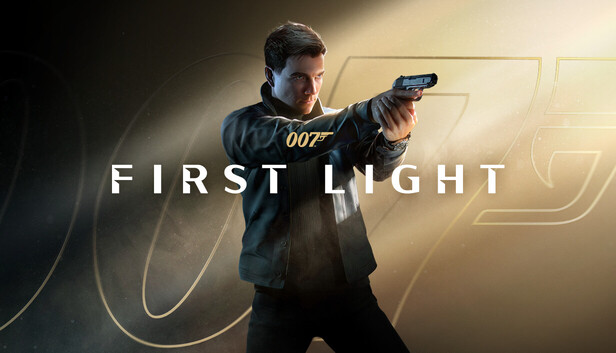
007 First Light abandons the narrative and lore of the films and games that came before it. Instead it tells a re-imagined origin story of how James Bond became the character we know today. Having been freshly recruited into MI6’s fledgling Double-0 program under the watchful eye of his boss, M, this raw version of Bond is thrust into a high stakes global manhunt.
The man they are searching for is Agent 009 whom= has gone rogue against the agency that helped make him. On top of having to deal with Agent 009 going rogue, our hero has to deal with the and stop a black arms dealer named Bawma. Bawma is the charismatic villain in the game who is actually someone I really liked, though I won’t spoil the reason why.
The story in 007 First Light is really good and one that was rather impressive compared to previous games in the franchise. In fact it feels more like an thriller action movie than a game…maybe the film will come at some point? I sure hope so because the story is that good!

When it comes to gameplay, I am kinda torn with 007 First Light. IO Interactive attempted to retrofit the sandbox and mechanics of their Hitman franchise and applied a 007 spy coat of paint.
Now I really enjoyed the Hitman series of games and I really like the 007 game series as well but it really doesn’t work when you try and throw them into a blender to see what comes out.
The gameplay loop is built on four distinct, interconnected pillars that elevate it beyond a standard action title.
The first pillar transforms players into active observers, requiring environmental awareness to navigate social spaces where eavesdropping on conversations or pickpocketing a vital keycard from an oblivious guard replaces traditional door breaching. However, even the most meticulous plans can collapse in an instant, you could instead break down a door instead of taking the stealth approach if the need arose or just because you felt like it. The second pillar introduces split-second instinctive decisions, forcing players to react dynamically when a disguise fails or an alarm sounds. This tension is beautifully balanced by the final two pillars: a nostalgic yet highly practical suite of Q-Branch tools and a fluid combat system. Rather than punishing players for breaking stealth, the mechanics seamlessly pivot to support loud aggression, allowing you to shoot, punch, and blast your way out of a compromised situation using the very same environment you just spent minutes studying.
The genius of this loop is in how it handles its gadgets. Instead of sci-fi gimmicks you’re provided a grounded, tactile inventory that feels genuinely useful. Take the hacking watch, for instance; it acts as a silent digital skeleton key, allowing you to remotely bypass a security camera or disrupt a fuse box from across a crowded casino floor without drawing a glance. For physical barriers, the laser lighter provides a gritty, hands on solution. It lets you burn through padlocks or cut precise holes in glass windows. Finally, the tactical pen serves as the ultimate wolf-in-sheep’s-clothing tool. It can function as a silent syringe for non-lethal sedatives during a tense social interaction, or transition instantly into a brutal, close-quarters defensive weapon if a shootout erupts. By tying these classic Q-Branch staples directly into the core pillars of observation, split-second improvisation, and flexible combat, the game ensures that every tool in your arsenal feels like a natural extension of a master operative’s intellect rather than a flashy toy or gimmick.
As awesome and fun as these gadgets and the overall gameplay can be, this loop feels more like a Hitman game dressed up as a 007 Bond game. Instead of Agent 47, we now have Bond 0047. Allow me to dive a bit deeper into this statement.
When a game borrows the exact framework of the Hitman series while simply dressing it up with a 007 skin, the final product ends up suffering from a profound identity crisis. The gameplay loop becomes entirely about clockwork trial-and-error, social stealth, and learning AI pathfinding routines to execute flawless, unnoticed take downs or just simply avoiding enemies. While this methodical, slow burn style design works masterfully for Agent 47, it smothers the cinematic bravado that defines James Bond. Instead of feeling like a dashing, resourceful secret agent who thrives on charm, high stakes improvisation, and explosive close calls, the player is forced into the role of a meticulous, invisible ghost. You spend less time engaging in iconic spycraft and more time waiting behind corners to either take down enemies or wait for them to pass. These are mechanics that scream Hitman so loudly they completely drown out the Bond flavor.
This imbalance becomes even more glaring when analyzing how the gadgets are integrated into the experience. Even though the inventory is packed with classic Q-Branch mainstays like those I mentioned above, they ultimately feel like glorified keys for pre-determined locks rather than tools for creative expression. Because the underlying architecture is so rigidly tied to the Hitman formula, these gadgets are reduced to simple, contextual triggers to disable a specific camera or open a specific door to maintain stealth. They lack the explosive, chaotic versatility required to stage a dramatic escape or turn a firefight on its head. By tilting the scales so heavily toward silent, forensic execution, the game strips away the cinematic spectacle, the romanticism, and the desperate, adrenaline-fueled action inherent to a true 007 adventure, leaving players with a fantastic Hitman clone that just happens to be wearing a tuxedo.
Aside from the main campaign, there is a “Tactical Simulation” (TacSim) mode. The “Tactical Simulation” (TacSim) mode serves as the ultimate sandbox playground, effectively stripping away the cinematic constraints and narrative scripting of the main campaign to unleash the game’s mechanics in their purest form.
Once you complete the game and the story wraps up, TacSim repurposes the massive, intricate campaign levels into highly customizable, non-linear testing grounds designed to push your spy skills to their absolute limits. Instead of following story-driven objectives, players are dropped into these familiar sandboxes with entirely randomized target locations, altered guard patrol routes, and strict, user-defined modifiers. These modifiers could be things like “No Disguises,” “Time Attack,” or “Gadgets Only.” It transforms the game into an intense, highly replayable tactical puzzle where mastery of the environment and deep mechanical knowledge are the only keys to survival.
What truly sets TacSim apart is its focus on high stakes experimentation and progression, acting as both a training gym and a brutal endgame challenge. In this mode, the training wheels are completely removed, and the game’s “split second instinctive decisions” pillar is put to the test. This mode rewards players who can fluidly adapt when a randomized security variable throws their plan into chaos. Successfully completing these simulated operations awards tactical XP used to unlock experimental Q-Branch prototypes, rare weapon attachments, and cosmetic suits that can be carried back into the main game. By offering a shifting gauntlet of challenges that demand a perfect blend of careful environmental observation and aggressive yet improvised combat, TacSim ensures that the end of the campaign is merely the beginning of your journey as a master operative.

On the technical front, 007 First Light is an absolute showcase for the Xbox Series X and other modern platforms, running on IO’s proprietary Glacier engine with a level of visual stability that puts many recent Unreal Engine titles to shame. The game targets a native 4K resolution and runs at a flawless 60 frames per second. Instead of relying on modern post processing bloom effects, the developers utilized a software based ray tracing global illumination system. This makes everything look very clean with rather stunning contrast between light and shadow. With the ray trace system and the console’s use of its SSD for nonexistent load times makes this game feel more like a movie which is rather impressive.

The audio design plays a massive role in selling the cinematic identity of the game, treating players to an outstanding, atmospheric soundscape. The dynamic orchestral score shifts seamlessly from quiet, tense percussion while you crouch in the shadows to sweeping, brass-heavy classic Bond themes the second stealth fails and gunfire erupts. This again makes the game feel more like a film and is really a unique experience for this franchise. Sound effects carry immense physical weight, from the satisfying, muffled thwip of a silenced Walther PPK to the crunch of footsteps across snow capped ridges. The sense of immersion with the sounds and the music really puts this game in a league of its own when compared to previous entries in the series. Gibson balances vulnerability and cool confidence perfectly in his vocal performance, and the surrounding cast delivers their dialogue with precision and again make it feel more like a film.

Ultimately, 007 First Light is not just a successful return to form for the franchise; it has taken its place to be the best Bond game in the series and one that all others should look to as a standard; dethroning that of Goldeneye 007.
By prioritizing a grounded, character-driven origin narrative and pairing it with exceptional, robust stealth action mechanics, IO Interactive has perfectly captured the elusive essence of what makes playing a secret agent so rewarding. It utilizes the processing power of modern platforms to deliver an incredibly polished, visually striking, and technically flawless experience from start to finish.
As much as I really like this game I think what threw me off was the third person perspective. It really feels more like a Hitman game than a Bond game. But after spending a lot of time with it, it kinda grew on me and I have come around to appreciate the game for what it is and it’s a truly amazing experience. While mechanically it feels like Hitman with James Bond stuff tossed in, the story, voice acting, and film like experience overshadows the mechanics; for me at least.
If you have been waiting a decade for a proper James Bond game or you are simply looking for a masterfully executed action thriller, this is an absolute must play title that effortlessly earns its double-zero status!
Disclaimer: A review key was provided

In addition to writing articles, Ryan Byers also creates content for his YouTube channel called "Obscure Games and Consoles", collects video games, and dabbles in video game development.