

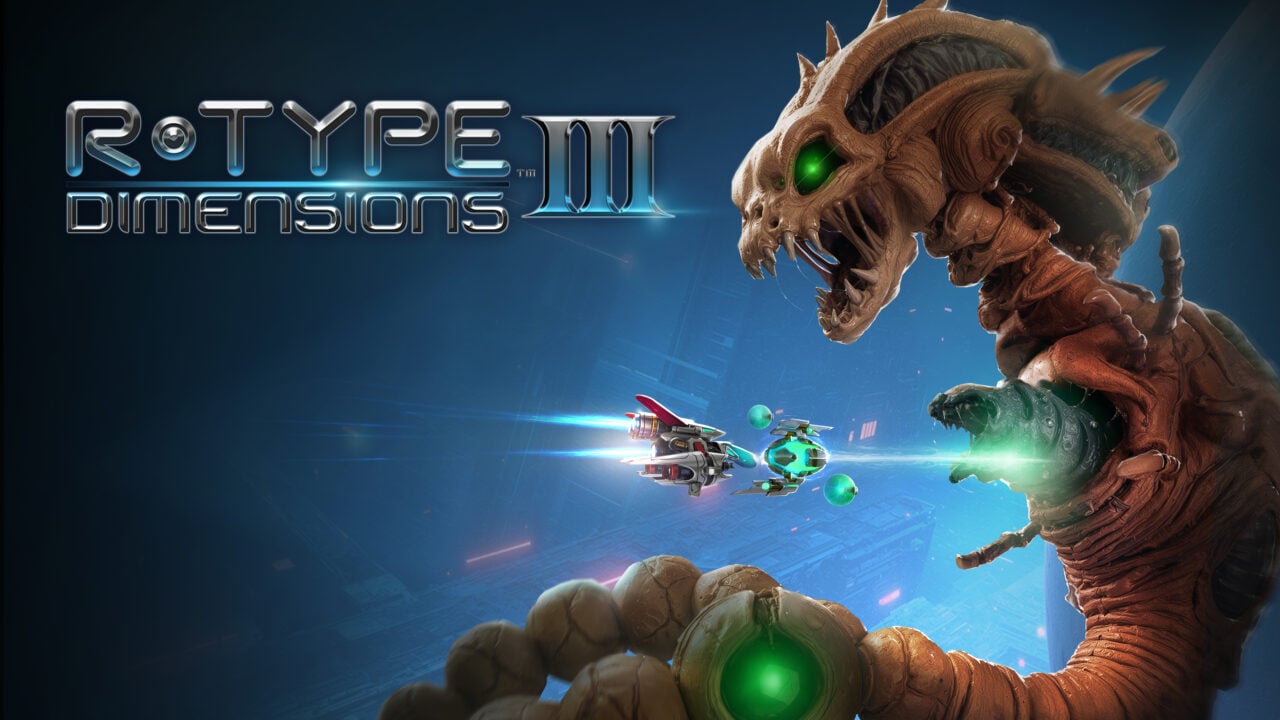
R-Type has been one of the defining names in the shoot ’em up genre since the original arcade cabinet debuted back in 1987, and R-Type III: The Third Lightning has always stood out as one of the more interesting entries in that lineage. First released for the Super NES in 1993, it holds the distinction of being the first numbered R-Type built specifically for home consoles rather than starting life in arcades. R-Type Dimensions III brings that 16-bit classic to modern hardware, complete with updated visuals, new features, and a version tuned specifically for Nintendo Switch 2.
The foundation here is the same formula the series has always leaned on, though R-Type III does expand things with the addition of the R-90 Ragnarok fighter and two new Force pod variants, the Cyclone and the Shadow. These give players more room to work with the franchise’s signature detachable weapon system, and the different configurations encourage some real experimentation with how the Force gets positioned during a run.

The launch, unfortunately, was considerably messier than it needed to be. Broken collision boundaries and moments where the ship could be destroyed mid cutscene were among the more glaring issues at release. Thankfully, a string of post launch patches has cleaned most of that up, and the game now runs in a far more stable state. On Nintendo Switch 2 specifically, the technical side of things is genuinely strong, holding a consistent 60 frames per second at native resolution whether docked or handheld.
Where the remaster tries hardest to impress is presentation, and here it offers a choice between the original 1993 Super NES look and a fully reworked 3D style, with the ability to swap between the two instantly. That alone is a nice touch, especially for anyone curious to see how the original artwork gets reinterpreted. The 3D option brings detailed models, brighter lighting, and a lot more visual flair, but more is not automatically better here.

The trouble is that all those extra effects make the action considerably harder to parse. Transparent polygons and busy backgrounds end up competing with enemy fire and hazards for attention, and in a game that demands split second reactions, that clutter becomes a genuine problem rather than a cosmetic quibble. The original 2D presentation, by comparison, is far cleaner and makes it much easier to tell enemies, projectiles, and collision boundaries apart at a glance.
Audio fares better across the board. Players get a choice between the original Super NES soundtrack and a newly arranged version, and the sound effects still carry that punchy character longtime fans of the series will recognise. Being able to fall back on the 1993 soundtrack is a small thing, but it goes a long way for anyone chasing that original feel.
The bigger issues with R-Type Dimensions III, though, have nothing to do with presentation. They live in the gameplay itself.
R-Type III was never an easy game, and success has always hinged on memorising enemy patterns, learning environmental hazards, and positioning the ship with real precision. The three weapon loadouts give solid tactical variety, from spread shots to bouncing lasers to homing missiles, and the charge shot can hit hard when it lands. Lean on it too much, though, and it overheats, which forces some genuine thought about when to actually cut loose with it.

Level design leans heavily into punishing anyone who does not already know what is coming. Narrow corridors fill up with debris, acid, and plasma geysers, while other stretches throw in rotating structures or walls that slowly close in. Once memorised, these sections can be genuinely satisfying to clear, though at times they feel less like tests of reflexes and more like exercises in remembering exactly where the game wants the ship to be at any given second.
All of that would be perfectly fine if the remaster had kept the original’s mechanics fully intact. It has not.
Hitboxes and collision behaviour have been changed in ways that anyone who spent real time with the Super NES version will notice almost immediately. The ship seems to carry a larger effective hitbox, while enemies can be oddly hard to hit unless shots land on very specific parts of their models. Weapon damage feels weaker overall too, meaning enemies often soak up more hits than expected, and some projectiles appear to move faster, cutting down reaction time even further.

None of these changes sound like much taken individually, but stacked together they have a real effect. R-Type has always depended on extremely precise movement, and even small shifts to collision or damage output can throw off how an entire section needs to be approached. Series veterans who remember exactly how the original played may find that old habits and strategies simply do not hold up the same way here.
A handful of smaller visual and mechanical details from the original have quietly disappeared as well, including certain collision effects and animation frames. Individually, none of these omissions would matter much, but collectively they reinforce the sense that this is not quite a faithful recreation underneath its modern coat of paint.

To its credit, the remaster does add real conveniences. Local two player co-op lets a second player jump in using individual Joy-Con controllers on Switch 2, and while having a second ship on screen adds to the fun, it also makes the already cramped sections even harder to read.
Online leaderboards, stage select, and Infinite Mode round out the package. Infinite Mode in particular is handy for practice, offering unlimited lives and letting the ship respawn right where it was destroyed, which strips away the usual punishment for dying repeatedly on a tough section. It is a genuinely useful learning tool, though anyone chasing the traditional R-Type experience will probably want to leave it switched off.

In the end, R-Type Dimensions III is an odd case where the technical work behind the remaster clearly outpaces its fidelity to the original design. The Switch 2 version runs much better after its post launch fixes, and the added features make it a bit more approachable than the 1993 release at times. Being able to flip between classic and modern visuals, and between the original and rearranged score, is appreciated too.
The problem is that R-Type III has always been a game where mechanical precision matters more than how it looks. Altered hitboxes, softer weapon damage, faster projectiles, and busier visuals all combine to change how the game actually plays, and the result is something that looks the part without consistently behaving like the 1993 classic it is meant to honour.

Newcomers will likely still find a challenging and occasionally rewarding shoot ’em up here, particularly with the modern conveniences and Infinite Mode smoothing the rougher edges. Longtime fans, on the other hand, will have a much harder time looking past the changes. This remains a worthwhile way to experience a significant slice of 16-bit shoot ’em up history, but it is better understood as a reinterpretation of R-Type III than a definitive recreation of it.
Disclaimer: A review key was provided