

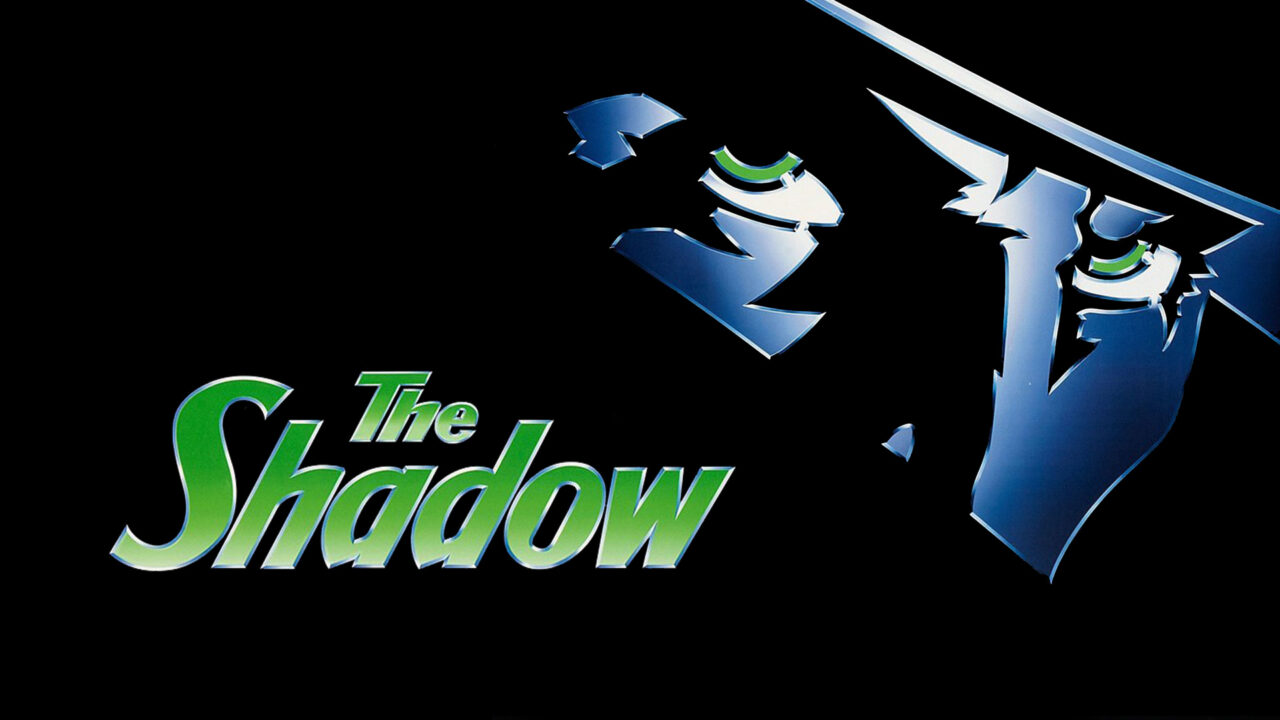
Long before masked vigilantes became a staple of comic books and superhero cinema, one mysterious crime fighter was already making criminals fear the darkness. The Shadow emerged from the pages of pulp fiction and the airwaves of radio, becoming one of the most recognizable figures of the era. With a mysterious identity, a distinctive appearance, and a willingness to operate beyond the boundaries of conventional law enforcement, he helped establish many of the conventions that would eventually become associated with masked heroes. However, The Shadow’s history is considerably more complicated than it might initially appear, with his identity, abilities, and personality changing as he moved between different mediums.
For Noirvember, The Shadow is an especially interesting figure to revisit. Although he is not strictly a noir character, his stories share many of the genre’s defining interests, including criminal underworlds, moral ambiguity, corruption, and the uneasy relationship between justice and vengeance. Even the stark contrasts between light and darkness in the original pulp illustrations feel right at home alongside hardboiled fiction and film noir, a connection that academic Erik Mortenson explores in his study of the character. The Shadow’s evolution also offers a fascinating look at how pulp fiction helped shape the crime-fighting heroes who followed.
The interesting thing about The Shadow is that he did not begin as a crime fighter at all. The character first appeared on July 31, 1930, as the mysterious narrator of the CBS radio program Detective Story Hour, which Street & Smith created to promote its Detective Story Magazine, according to Britannica. Listeners became so interested in the narrator that they began asking newsstands for a Shadow magazine rather than the publication the program was actually promoting, as Wikipedia’s account of the character’s history recounts. Street & Smith eventually recognized the opportunity and hired writer and magician Walter B. Gibson to develop a character around the mysterious voice. The first issue of The Shadow Magazine arrived on April 1, 1931, featuring the novel The Living Shadow, credited to the house name Maxwell Grant. Britannica notes that Gibson wrote 282 of the magazine’s 325 stories, making him the primary creative force behind the character’s original pulp adventures.
The Shadow of the magazines was a master of disguise who relied on his intelligence, resources, and a pair of .45 automatics. His ability to move through the criminal underworld undetected came from his training and disguises rather than supernatural invisibility. He was also a considerably darker figure than many of the heroes who followed, confronting criminals through intimidation, deception, and violence. The Shadow operated outside conventional law enforcement, and his methods were often as frightening as the criminals he pursued.
His identity was another important part of the character’s appeal. Early readers knew very little about who The Shadow really was, and Lamont Cranston was initially one of several identities he assumed. Cranston was a wealthy globetrotter whose identity The Shadow borrowed while he was abroad. The truth was eventually revealed in 1937, when the novel The Shadow Unmasks identified The Shadow as Kent Allard, a famed aviator who had disappeared years earlier. This revelation established a backstory that would become an important part of the original pulp interpretation, although it would not survive every subsequent adaptation.
Radio is where things changed again, and it is one of the reasons The Shadow can be difficult to pin down. When the weekly series launched on September 26, 1937, a 22-year-old Orson Welles voiced the lead during its first season, with Bill Johnstone taking over in 1938. The radio version simplified the character’s identity, making Lamont Cranston The Shadow’s true identity and abandoning the Kent Allard backstory. It also introduced the ability to cloud people’s minds, allowing The Shadow to remain unseen without relying on disguises or a costume.
The change worked particularly well for radio, where supernatural abilities could be conveyed through narration, sound effects, and the listener’s imagination. The famous opening, “Who knows what evil lurks in the hearts of men? The Shadow knows!” became one of the medium’s most recognizable lines. Radio also introduced Margo Lane, who knew The Shadow’s secret identity and became an important companion in his adventures. The program continued until December 26, 1954, leaving behind an interpretation of the character that would influence many later adaptations. The pulp and radio versions were not identical, and subsequent films and comics frequently borrowed from one while ignoring the other.
Comics and film offered their own interpretations. Street & Smith launched Shadow Comics in 1940, with the title continuing until 1949 alongside a newspaper strip. One of the more notable later comic-book adaptations came from DC in the 1970s, when writer Denny O’Neil and artist Michael Kaluta began a series in 1973 that returned to the darker pulp interpretation rather than the radio version. The series lasted 12 issues, although Kaluta only illustrated five of them.
On screen, The Shadow appeared in B pictures beginning with The Shadow Strikes in 1937 and International Crime in 1938, followed by a 1940 Columbia serial starring Victor Jory and additional features through 1946. These adaptations varied considerably in how closely they followed the magazine and radio versions, demonstrating how difficult it could be to translate the character’s particular appeal between mediums. The Shadow’s identity, abilities, and personality were flexible enough to accommodate different interpretations, but that flexibility also meant there was no single definitive version for filmmakers to follow.
The relationship between The Shadow and Batman is particularly fascinating because it goes beyond the similarities between two masked crime fighters. Batman’s debut story, “The Case of the Chemical Syndicate,” in Detective Comics #27 (May 1939), drew directly from Partners of Peril, a Shadow novel written by Theodore Tinsley and published in November 1936. Plagiarism Today examines the similarities, and they are difficult to overlook. Both stories involve murders connected to a chemical business, both heroes escape a gas-filled deathtrap using a handkerchief, and Bob Kane even traced some of the original illustrations.
Bill Finger himself acknowledged the connection to comics historian Jim Steranko, saying, “My first script was a take-off on a Shadow story,” as Anthony Tollin recounts in a ComicMix interview. Finger also said he patterned his Batman writing style after The Shadow. Even the yellow boomerang featured in the 1935 Shadow novel Lingo has been identified by its publisher as a possible forerunner of the Batarang.
Of course, Batman would eventually become something very different, and The Shadow was far from his only influence. Kane also pointed to Zorro, among others, and the character developed into a distinct crime-fighting hero over the decades that followed. The two characters eventually crossed paths in comics during the 1970s, appearing together in Batman #253 and #259, as documented by File 770. It is an interesting acknowledgment of the relationship between the two characters, particularly considering how much Batman’s early development borrowed from the world of pulp fiction. Readers interested in examining the similarities for themselves can find Partners of Peril reprinted alongside Lingo in The Shadow #9, which also includes essays by Tollin and Will Murray exploring the Batman connection.
Batman might be the most recognizable example of The Shadow’s influence, but he was far from the only character to follow in his footsteps. The Shadow Magazine was the first pulp to receive its own ongoing title, and Britannica credits the character with inspiring numerous other pulp heroes. PulpFest notes that The Phantom Detective, which debuted in February 1933, was the first of the hero pulps inspired by Gibson’s dark avenger, with other characters such as The Spider arriving that same year. The Phantom Detective’s name alone reflects how closely these characters remained connected to detective fiction, even as their adventures became increasingly sensational.
The influence also extended into radio and comic books. Dennis O’Neil once identified The Shadow’s descendants as The Spider and The Black Bat in pulp fiction, The Green Hornet on radio, and numerous masked comic-book vigilantes, including The Black Terror, The Crimson Avenger, The Hangman, Dr. Mid-Nite, and The Sandman. O’Neil believed these characters probably owed some debt to The Shadow, as quoted by CGC Comics. Fans and commentators have also drawn comparisons between The Shadow and later characters such as The Question, Daredevil, The Punisher, and Moon Knight, although these connections become more difficult to establish as the superhero genre continued to evolve.
Still, the basic ingredients of The Shadow’s adventures helped establish a recognizable archetype. A dark costume, a secret identity, supporting characters, dangerous villains, and a vigilante who answers to no one became familiar elements of crime-fighting fiction. The character’s broader history illustrates how these conventions helped bridge the gap between pulp adventure and the superhero genre, even as later characters developed their own identities and motivations.
The 1994 film The Shadow, directed by Russell Mulcahy and starring Alec Baldwin, is another interesting example of how the character has been reinterpreted. The film attempted to bring together elements of the pulp and radio versions, giving Lamont Cranston a Tibetan backstory as a former warlord who becomes a crime fighter. Its villain, Shiwan Khan, is a psychic descendant of Genghis Khan, bringing a supernatural element to the character’s adventures. The film received mixed reviews and failed at the box office, preventing the planned cinematic franchise from materializing.
Despite its commercial failure, the film remains an interesting adaptation because it recognizes that The Shadow’s appeal extends beyond his ability to fight criminals. The character is built around the tension between the man and the frightening figure he presents to the world. Becoming The Shadow is not simply a matter of putting on a costume. It is a transformation that allows Lamont Cranston to turn fear into a weapon against those who prey on others, while also embracing the darker aspects of his own identity.
That tension is also what makes The Shadow such a compelling figure for Noirvember. His stories repeatedly return to the darker corners of society, and his methods are never comfortably removed from the violence and corruption he is fighting. Even when his objectives are straightforward, a crime fighter who relies on intimidation, secrecy, and deception remains a complicated figure. The Shadow’s relationship with justice is not always clean, and his willingness to operate beyond conventional law enforcement places him in an interesting position between the traditional hero and the darker figures of noir.
For a character who began as a way to promote a detective magazine, The Shadow has enjoyed an unusually long life in popular culture. He has been a mysterious narrator, a master of disguise, a hypnotic crime fighter, and a masked adventurer, with each version emphasizing different aspects of his personality. His evolution across pulp fiction, radio, comics, and film demonstrates how a single character can change considerably while retaining the qualities that made him memorable in the first place. The Shadow’s legacy is not simply that he helped inspire later superheroes, but that he represents a darker tradition of crime fiction in which the line between justice and vengeance is rarely as clear as it might appear.
Feature Image: Charles Coll Cover Art For The Shadow