
TRIGGER WARNING: Silent Hill: Townfall contains disturbing medical procedure visuals and mass casualty visuals that may be disturbing for some players. The visuals in this review reflect the game and may be disturbing for some readers.
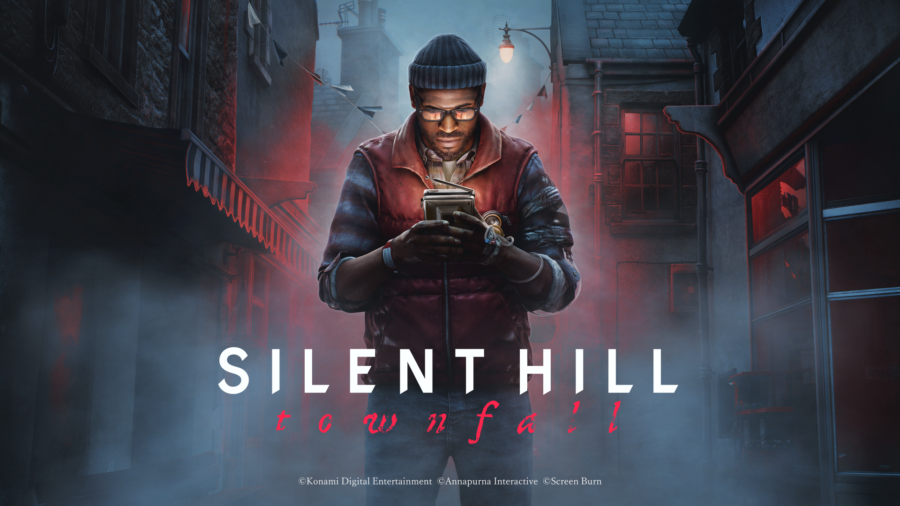
Hot on the heels of Silent Hill f (review here), the Silent Hill 2 remake, and Silent Hill: The Short Message, Konami is back with a new entry in the long running horror series courtesy of developer Screen Burn Interactive. This time around, we’ve moved countries yet again and the new game takes place in 1996 in an isolated Scottish island fishing village, St. Amelia where you play Simon, a man who literally washes up on the docks in town.

Silent Hill: Townfall is not your typical Silent Hill game and it’s a radical departure from Silent Hill f from only a year ago. Instead of a traditional 3rd person horror game, which every main entry in the series has previously used, Townfall takes its lead from The Short Message and tosses you into a first person horror experience much like Resident Evil VIII. Unlike The Short Message, Townfall incorporates plenty of direct combat with monsters as well as stealth and hiding mechanics to create a uniquely tense experience.

Just like Simon, you have no idea what’s going on when you arrive in St. Amelia. Walking into town, everything is covered in a thick fog, there are no other people around, and everything feels abandoned and locked down. It’s clear something has happened in town from the street signs, protest signs, shuttered stores, and barricades, but what that event might have been is unknown. Walking further into town, you’ll slowly find the central square of the town, littered with graffiti and signs and make your way into buildings in town to start piecing together what’s going on. But while you’re struggling to make sense of this weird world, there are…things…walking around in the gloom. Huge things. Monstrous things. Unimaginable things. There is definitely a Lovecraft nod here and there in this iteration of Silent Hill and a number of other inspirations that bind together to make a game that surpasses its inspirations to become a unique experience.

Silent Hill: Townfall makes you paranoid and nervous in a way that the last couple of entries in the series haven’t managed. The first person perspective brings the horrors closer and makes you feel like you’re experiencing them, especially when things shift to closer quarters. While there are equal parts puzzle solving and stealth/combat here, it’s the monsters that will stick with you while you’re playing and the themes that will hang on in your psyche long after the game’s credits have rolled.

What Townfall really manages to do well, especially at first, is immersion. It feels like you’re in St. Amelia walking around and the signature Silent Hill soundscape is in full display here with deeply unsettling noises everywhere, masking other sounds and making you uncomfortable at all times. You’re not just searching for answers, but you’re also following the trail of Zoe, a woman who appears to be associated with you. There’s been some sort of event on the island with a number of casualties and injuries and both of you are embroiled in what happened, but that will only become more clear after you progress in the game.

To figure out what’s going on, you’ll have to use clues provided to you in the form of answering machine messages, notes, and jumbled video clips on the portable hand-held TV that Simon finds. Signals appear on TV tuner and you’ll have to use the shoulder buttons to home in on them, allowing you to see video clips which you’ll have to decipher in order to progress. You’ll also need that TV to survive at all because it doubles as a monster detector. In Townfall, once monsters start appearing, a burst of static pops up from the TV’s speaker. Once that happens, there’s a new channel you can tune into that is marked in red. Each enemy that appears shows up as a separate tuneable channel and you can use that channel to see them, even through walls, almost like X-ray vision.

Those monsters are utterly terrifying in Townfall too. They are unexpectedly fast, vicious, and strong and throughout the entire game, both weapons and healing items are extremely limited. The standard difficulty that made Silent Hill f so easy is gone and you’ll have to work a lot harder to survive here. While there aren’t as many monsters as you might expect, it doesn’t really matter because the window to sneak past them is rather small and their movement patterns shift if they hear noise or sense you when you’re close. There’s a shift in the background noise of the game when they start to spot you which gives you a head’s up, but you’ll have to be bold if you want to get by without combat.

For much of the game, that combat is mostly hand weapons. While there are other weapons, they’re noisy and will draw every enemy to your area fast, making things exponentially more dangerous. You can sneak up on enemies and do some damage early, but they’ll whip around and attack rapidly and they take quite a few hits unless you’re playing on easy. That makes blocking essential and you’ll have to learn the movement patterns of the enemies in order to block them effectively and then attack when they’re momentarily off balance. It’s challenging enough that the slightest slip-up results in loss of health or potentially your life unless you’ve got some healing items to keep you going.

It’s always much better to avoid combat or run through and make it to an area the enemies can’t get to, but as soon as they see you, the chase is on and you’ll have to outrun the monsters and get to a safe point before they can catch you so you’d better know where you’re going. You know, in the dark. When the doors have all changed. And the enemies can hear you open and close doors. If you’ve played Outlast, think about some of the scariest moments during that game and you’ll have an idea of where things stand in combat. You’re underpowered, the enemies are nasty and powerful, and there are only a few routes to safety…usually through the monsters. Some of those monsters are utterly invulnerable to your attacks too, so the best you can do is stun them, get out of their sight, and hide. Otherwise it’s an up close and personal doom for you.

When you’re not dodging death that’s literally right in your face, you’ll be trying desperately to figure out what’s going on. That means exploring areas looking for notes, clues, and videos, and piecing everything together. There are tons of puzzles in Silent Hill: Townfall and solving them can be a bit frustrating, though the answers are right in front of you once you learn to recognize them. While the combat provides ample tension, the puzzle-solving can be downright frustrating, not because the puzzles are generally all that hard, but because there are noticeable artificial walls between you and your goal. It’s usually clear exactly what to do, but it’s also usually apparent when something is likely to be a trap and by the third chapter or so, the formula for puzzle and enemy balance seems a little more predictable than it should. Items are widely separated and to Townfall’s credit, you’ll often find more story elements by exploring all of the areas along the way, but it’s still frustrating to know that last piece of the puzzle is guaranteed to have you sweating to gather it.

What might surprise some people is that Simon isn’t the only playable character in Silent Hill: Townfall. You also play Zoe and learn a fair bit about the events in St. Amelia from her perspective as well. Unlike Simon, Zoe is more limited in her abilities and cannot fight back against the monsters. It’s run, hide, and try not to get caught for her, but there’s no getting rid of the monsters that trail after her. Her pager serves as a monster detector, but again she got shafted compared to Simon and you can only see in what direction they are in relation to you. There’s no direct view of the monsters for poor Zoe and she’ll have to time out their movements and hope for the best. That’s a lot more challenging and Zoe has her own issues of guilt and shame to deal with in addition to the dangers that both she and Simon face.

Controls are quite smooth in Silent Hill but you always feel like you could run a little faster if you were that scared. Methodical will keep you alive, but the enemies are so fast that you’re going to have to fight occasionally. Getting disoriented in the darkened rooms while trying to figure out what to do is terrifying and as you try to find your way with nothing more than a flashlight and an ambient glow. Then the sound comes up indicating you’ve been seen and you try in vain to escape or at least find out where the threat is as you flair wildly, but your doom is all but assured. It’s that foreknowledge that something is coming that provides such intense stressors in Silent Hill: Townfall. The game never really lets up and you rarely feel entirely safe with enemies that can hunt you by sound and open doors. Walk too fast? Hit the wrong button? You’re dead. Missed the button to open the door? Uh oh. There is little forgiveness here, especially on the default difficulty and honestly, it’s a refreshing change from most horror games.

Just as interesting as the shift to first person is the story itself. Silent Hill: Townfall pushes you to consider what happens in a mass casualty event, the consequences of choices, the fallout, the guilt, and the recriminations. It’s vicious, callous, and unforgiving as all hell and as events slowly piece together, the picture that arises is particularly grisly and disturbing. The journey is just as unpleasant, which is why the trigger warning at the beginning of this game is so intense. Some people will struggle, not just with the blood, but also with the abusive language and disturbing medical procedure imagery that is woven in throughout the game. Everything revolves around suffering and guilt, which is nothing new for Silent Hill but the overt medical and ethical focuses can make people particularly uncomfortable.

It probably doesn’t help that Silent Hill: Townfall is a particularly gorgeous game either. The detail level of characters, monsters, and backgrounds are absolutely gorgeous. Subtle design elements, shading, and water effects make landscapes incredibly unsettling. Lighting in particular is impressive and the low-light environments with flashlight illumination and clever lighting of maps in the dark are both effective and visually stressful. Every element in the game is designed to be unsettling in a way that few horror games manage. Character modelling is particularly expressive and the main characters look amazing when you see them in cut scenes. Monsters come at you so fast that you barely get a chance to really appreciate how terrifying they are but the detail work on every level of the game is outstanding.

That excellent work pales in comparison to the sound design here. The original Silent Hill games were heavily focused on sound in order to create a sense of dissonance for players and sound design is a key element in the enduring popularity of the series. However, iteration after iteration of the overall concepts have diluted the impact of that sound design over the years and some titles are far less terrifying as a result. That’s definitely not the case with Silent Hill: Townfall, which uses a variety of sound techniques to generate severe discomfort while playing. Even when nothing is happening, the ambient sounds in the game are distracting and disorienting, making it seem like more is going on than actually is. When enemies appear, the ambient sound ratchets up and shifts to create more tension as they approach and their search patterns overlap your movements. Even when you are aware of how the game is manipulating your sense, it’s still incredibly effective. Voice acting is top notch too, and the music is also incredibly good, par for the course with most Silent Hill games. This is one you might want the soundtrack for, depending on how traumatized you are by the time the credits roll.

While Silent Hill: Townfall is a fantastically creepy game, it isn’t without its flaws. Perhaps the most frustrating part of the game, at least for some people, will be the puzzle design. Most of the puzzles in the game are fairly straightforward, but there are a few, most notably at the end of the third and fourth areas, that are particularly opaque. Slowly crawling your way through a monster-infested hell only to get stuck at a closed door until you solve a particularly confusing puzzle is beyond frustrating and throws off the flow of the game. Even hints don’t really help on a couple of the puzzles and it’s confusing why progress would be this stymied, losing any sense of horror or unease while you struggle to open a door.

There are a few design issues in Townfall as well. While the early game is terrifying, as you progress, the fear of enemies wears off slowly as you start learning enemy patterns and mastering combat and stealth. It’s easy to get bolder and bolder as there are only a handful of enemy types in the game and only a couple present a more significant challenge. Depending on your difficulty selection, it can be fairly easy to waltz right through the enemies with life and weapons to spare. Level design also becomes more predictable as you progress and pathways lock after key events happen or items are found in very similar fashions. The sustained fear starts to wear off as patterns start to emerge and repeat from area to area and with the slowdowns from some of the puzzles and the lack of enemy variety, the pacing suffers later on. The script also seems to slow in parallel with these changes and as Simon learns less and less about his situation, it’s easy to feel less and less connected to him. It almost seems like there was so much focus on town design that the plot fell by the wayside here and there.

The final gripe that players may have with Silent Hill: Townfall is the length of the game. While it’s not a full AAA price, the quality is definitely AAA level across the board. However, the game only takes about 15 hours to complete…depending on how bold you are and how quickly you figure out the puzzles. If you hide a lot and meticulously map out what you need to do and where to go, chances are good you’re going to double that time. If you’re too bold and go in head first, weapons brandished, same problem. The optimal combination of sneaking, attacking, and running will definitely shorten the game but honestly, that’s a good thing. A focused intense experience makes for a much scarier experience than a long drawn-out one that slowly drains the player of their fear as their actions become more and more mechanical. Townfall mostly avoids that trap, even though near the end things are a bit more predictable than they should be.

Should Silent Hill be in first person? It definitely works and is spectacularly creepy. Silent Hill: Townfall manages to re-imagine the game in a way that is often blood-curdling and disturbing, and will have to tensed on the edge of your seat more often than you might expect. Despite some design missteps, the overall game is fantastic, the dialogue is well done, the plot concept is solid, and the voice acting is spectacular. Sure things slow down later on, but the game is still compelling regardless. The sound design and visuals are absolutely top notch too, and players are going to be unsettled throughout the experience. All in all, at a $50 price point, Silent Hill: Townfall is one hell of an experience and you’re not going to want to miss out on it!

This review is based on a digital copy of Silent Hill: Townfall provided by the publisher. It was played on a Playstation 5 using a 55” 1080p Sony TV. Silent Hill: Townfall is also available on PC for both Steam and Epic.

Nate Van Lindt has been a gamer since the days of yore (aka Commodore 64), and has played a bit of virtually everything out there. He's also an avid comic book collector, both vintage and current, and reads a fair amount of sci-fi and fantasy. On top of that, he watches a fair number of movies and TV shows as well. Oh, and he has a family, a full-time job, and lives somewhere in the urban wilds of Southwestern Ontario, Canada, foraging for old video cables and forgotten game soundtracks.