

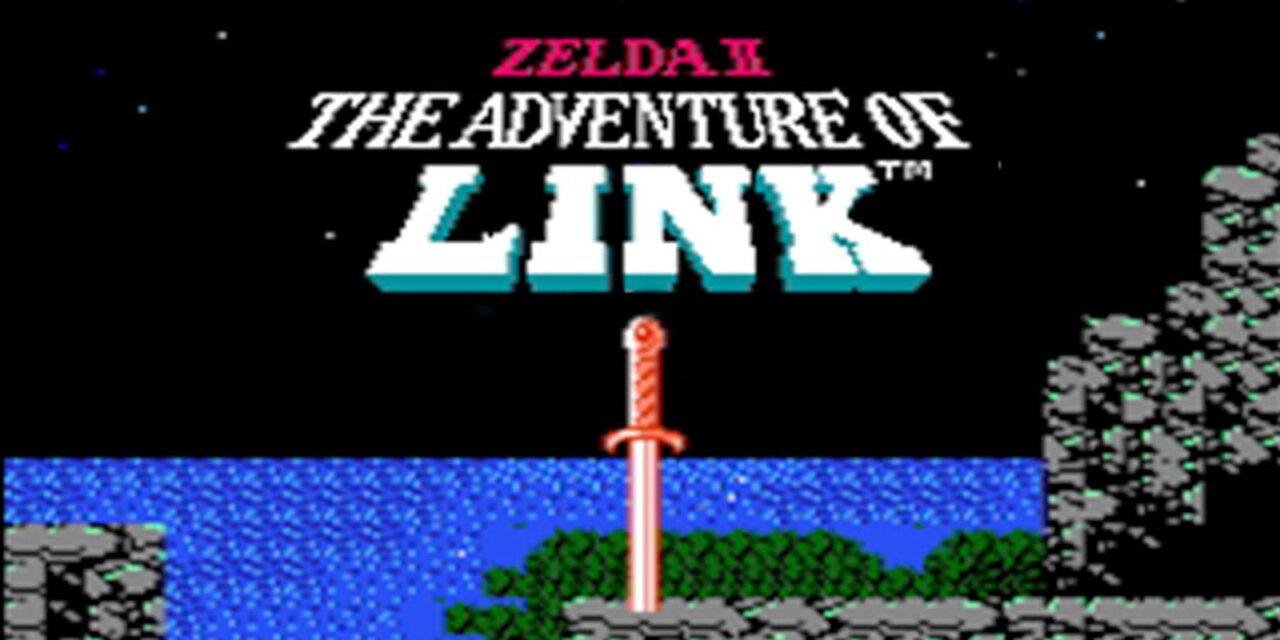
Zelda II: The Adventure of Link is still one of the strangest entries in Nintendo’s entire Zelda catalogue, and that strangeness is exactly why the game refuses to go away. Instead of following the top-down formula that the original The Legend of Zelda had already established, Nintendo pivoted hard into side-scrolling platforming, RPG-style levelling, experience points, town hubs, spell casting, and a much stricter sense of structure than anything the series had attempted before. It was a genuine experiment, and even decades on, Zelda II remains one of the most rewarding Zelda games to argue about precisely because it doesn’t behave like the rest of the franchise.
That argument almost always circles back to the same question: is Zelda II secretly one of the earliest Metroidvanias? It’s an understandable question, since a lot of the raw ingredients are technically present. That said, calling it a true Metroidvania stretches the term further than it should go. Zelda II makes much more sense as a proto-Metroidvania: a game that was already toying with concepts the genre would later formalize, but without the interconnected structure that actually defines the genre.
The Case For Zelda II Belonging to the Genre
There’s a reasonable argument to be made here, and it’s worth taking seriously before picking it apart. Zelda II ditched the original’s overhead view in favour of side-scrolling combat sections, layered in RPG-style progression through experience points, and let players pump those points into upgrades for Link’s attack, magic, and life meters. That alone puts it well outside the norm for a 1987 Nintendo game.
More importantly, progression is tied directly to items and abilities. Specific obstacles simply cannot be cleared without the right tool in hand first, and that creates a basic version of ability-gated progression, the same design pillar that Metroidvanias would later build entire worlds around. On paper, that’s a genuine link between Zelda II and the genre it supposedly predicted.
Where the Comparison Falls Apart
The trouble is that Zelda II doesn’t actually use those ideas the way a real Metroidvania does. A huge part of what makes games like Super Metroid or Castlevania: Symphony of the Night work is their interconnectedness. Players are constantly mapping out a single, unified space in their heads, running into walls they can’t get past yet, and eventually circling back once a new ability reframes the entire layout. The map itself becomes a puzzle that evolves alongside the player.
Zelda II simply doesn’t operate that way. Its overworld functions more like connective tissue linking a series of self-contained side-scrolling zones: towns, palaces, caves, and other discrete locations that don’t really bleed into one another. There’s some backtracking scattered throughout, sure, but it never produces that sensation of slowly peeling back one enormous, cohesive world the way a true Metroidvania does.
The pacing is also far more linear than genre fans might expect. Zelda II absolutely hands Link tools that unlock new options, but it generally wants those tools used in a fairly rigid sequence. That’s a meaningful departure from the open-ended, player-directed exploration Metroidvanias are known for. Even the infamous Death Mountain difficulty spike reinforces this. Zelda II can be brutal, no argument there, but it’s also extremely deliberate about exactly where it wants the player headed and exactly when it wants them to get there.
This is why Zelda II lands more convincingly as a proto-Metroidvania than as a genuine example of the genre. The DNA is visible, even if the full formula never quite comes together. It reads like a game sitting right at the starting line of a genre’s evolution, where the core concepts exist in rough, early form before later developers sanded them down into something more recognizable.
Why That Makes It Perfect Remake Material
That unfinished quality, ironically, is exactly what makes Zelda II such an interesting remake candidate.
A straightforward, faithful recreation probably isn’t the right call here. The Legend of Zelda: Link’s Awakening already proved how well a loyal, lightly modernized remake can work for this franchise. Zelda II is a different animal, though. The original always felt like it was reaching for something the NES hardware simply couldn’t support, and a modern revival finally has the tools to build that ambition out properly.
An outside studio, rather than Nintendo’s internal teams, might genuinely be the better fit for that job.
Inti Creates is an obvious name to bring up. The studio has built its reputation on exactly this style of action-platforming, and its work on Blaster Master Zero and the Bloodstained: Curse of the Moon games shows a real ability to modernize retro design without gutting what made it distinctive in the first place. Inti Creates CEO Takuya Aizu has also gone on record expressing interest in working on Zelda II, which makes this less of a hypothetical pairing than it might sound.
FDG Entertainment is another name worth floating. Its output on Monster Boy and the Cursed Kingdom and the Oceanhorn series demonstrates a solid handle on action-platforming, exploration design, and that classic Nintendo-adjacent sensibility. Lizardcube also belongs in this conversation after its work on Wonder Boy: The Dragon’s Trap, a remake that showed exactly how effective this studio can be at taking an older 2D action game and rebuilding it for modern audiences while keeping its identity intact.
Then there’s Ubisoft Montpellier. The team behind Prince of Persia: The Lost Crown has clearly demonstrated a strong grasp of modern Metroidvania design, and senior game designer Rémi Boutin has previously named Zelda II as a property he’d want to work on, alongside Castlevania. Given the studio’s recent track record, it’s not hard to picture how a team this fluent in modern exploration-focused 2D action could handle the material.
Nintendo Has Already Shown It’s Willing to Do This
This being said, none of this is unprecedented for Nintendo. Mario + Rabbids proved the company is willing to hand one of its flagship franchises to an outside studio and let that studio reinterpret it from a completely different angle. Cadence of Hyrule showed the same willingness applies specifically to Zelda, a series that isn’t strictly locked to Nintendo’s internal development teams. There’s already a clear precedent for Nintendo trusting outside developers with beloved properties.
Sega has followed a similar playbook with several of its own classic franchises, including Streets of Rage 4 and Alex Kidd in Miracle World DX. Both projects make a strong case for what can happen when developers with genre expertise are given room to bring their own perspective to an established property rather than simply recreating it wholesale.
Of course, a Zelda II revival would be an especially strong fit for this approach, since the original game already feels unusual in a way that practically invites expansion. Not unfinished in the sense of being broken or incomplete, but unfinished in the sense that several of its ideas clearly had more room to grow than the NES could ever give them.
The Arzette Precedent
This is where Arzette: The Jewel of Faramore becomes genuinely relevant to the conversation. Arzette started life as a loving tribute to the notoriously rough Zelda CD-i games, but rather than simply reproducing their shortcomings for nostalgia’s sake, it took that bizarre corner of Zelda history and built something substantial out of it. The developers clearly understood what people found compelling about those games in the first place, and constructed an actual, functional adventure around those ideas. The end result is a legitimate Metroidvania in its own right, pulling more inspiration from something like Shantae than from simply imitating the CD-i titles it was riffing on.
Arzette obviously isn’t a Zelda II remake by any stretch. What it does demonstrate, though, is the potential of this exact approach: take an odd, underdeveloped piece of Zelda history, identify which ideas are actually worth keeping, and expand those ideas into something built for a modern audience.
That’s precisely the kind of treatment Zelda II is asking for.
What an Expanded Zelda II Could Actually Look Like
The overworld could be rebuilt into a genuinely interconnected space instead of a series of loosely tethered zones. The side-scrolling combat could stay largely intact while being modernized and given more mechanical depth. The RPG progression system could remain a core pillar while making the experience curve and character growth feel more meaningful moment to moment. Most importantly, the item-gated progression that already exists could finally become the actual backbone of exploration, rather than functioning as little more than a key that unlocks the next scripted section.
An area the player stumbles into early on could stay just out of reach until Link earns a specific ability much later, sending the player back to discover an entirely different route through a space they thought they already understood. Towns could evolve into more than rest stops and NPC dialogue boxes, gaining real ties to the world surrounding them. The palaces themselves could function as sprawling, interconnected dungeons in their own right, instead of serving as checkpoints strung along a mostly straight line.
None of that requires turning Zelda II into a Super Metroid clone. It would simply give the ideas already present in the original room to actually breathe.
The Real Verdict
Ultimately, whether Zelda II technically qualifies as a Metroidvania matters less than what the game represents within that lineage. Measured against the modern definition, it comes up short. It lacks the fully interconnected map, the open-ended exploration, and the degree of backtracking that eventually came to define the genre.
Historically speaking, though, that’s almost beside the point.
Zelda II was already experimenting with item-gated progression, character upgrades, side-scrolling combat, and a world that gradually opened up as Link grew stronger, years before those pieces would be refined into what fans now recognize as the Metroidvania formula. Maybe Zelda II never fully became a Metroidvania in its own right. It may simply have been one of the games that helped point the genre toward what it would eventually turn into.
Either way, there’s a genuine opportunity sitting right there, largely untouched. Nintendo is holding onto one of the strangest entries in the entire Legend of Zelda catalogue, and multiple outside developers already have the exact 2D action, exploration, and Metroidvania expertise needed to make a revival work. A few of them have even said so publicly.
The real question was never whether Zelda II has enough substance to support a modern revival. It clearly does. The bigger question is whether Nintendo would ever actually be willing to let someone take those ideas and finally push them as far as they were always meant to go.