

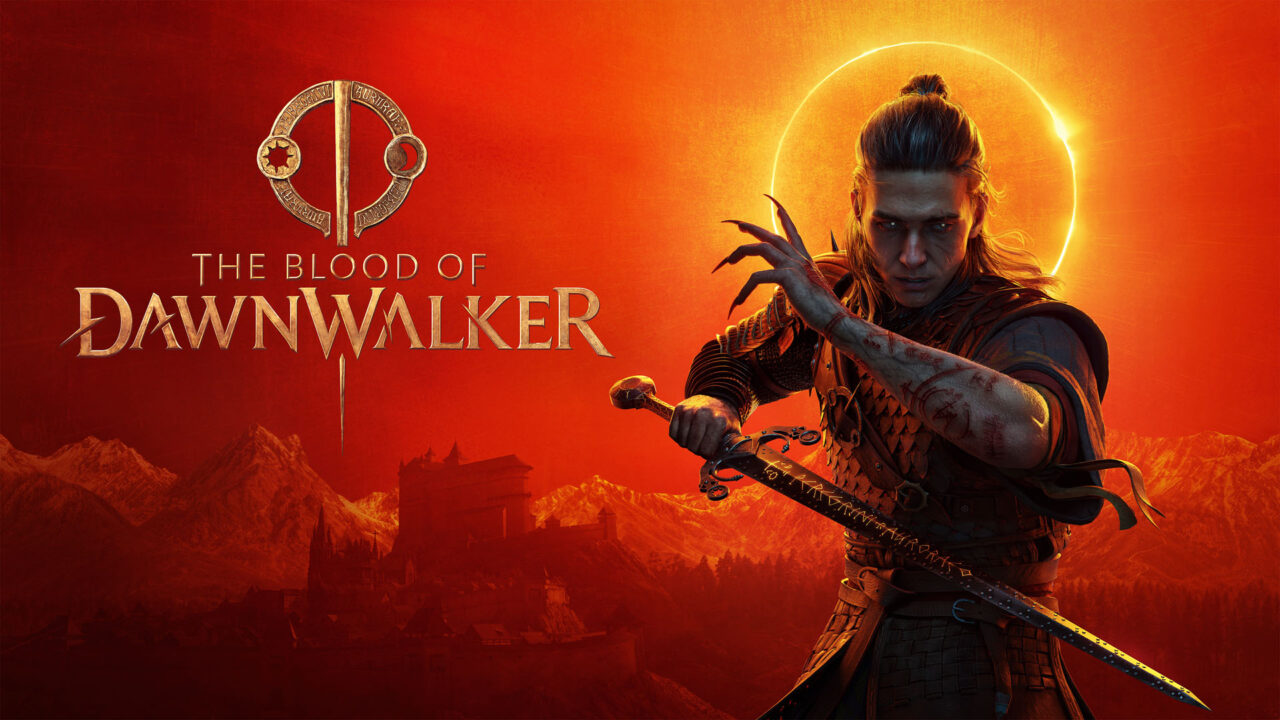
Rebel Wolves is a new studio, but The Blood of Dawnwalker does not play like a debut. It takes the bones of a story driven action RPG and drops them into a dark medieval world overrun by vampires, and the result is a game that feels surprisingly distinct from the pack. A lot of that comes down to the central hook: a story built on a ticking clock, on hard choices, and on the question of how much of yourself you are actually willing to give up to protect the people you love.
The setting is the Carpathian Mountains in the 14th century, and the story follows Coen, a young man from the isolated Vale Sangora whose quiet life ends the moment the ancient vampire Brencis seizes control of the valley and takes members of his family captive. What follows leaves Coen neither fully human nor fully vampire. By day he still looks and acts human. By night, his Vrakhiri nature takes over, along with a set of supernatural abilities that come with it.
Here is the catch. Coen only has thirty in game days to bring Brencis down.
That premise ends up shaping just about everything The Blood of Dawnwalker does. Rather than handing you an endless checklist of quests and quietly expecting you to clear it all eventually, Rebel Wolves wants you making real choices. Which characters are worth helping. Which quests are worth chasing. Which abilities are worth learning. When it makes sense to take a detour instead of pushing toward your actual goal.

Time is easily the most interesting system in the game. Each day and night splits into eight segments, and different activities eat up different amounts of that time. Starting a quest, chatting with the right character, or learning a new skill can all push the clock forward, and crucially, the game tells you upfront how much time something will cost before you commit to it. That alone makes even small decisions feel like they matter.
It also means The Blood of Dawnwalker is not built for the completionist mindset, and that can be genuinely frustrating at points. I found myself more than once weighing whether some minor bit of content was really worth burning limited time on. That said, the frustration is sort of the point. The game wants you to make peace with the fact that you are going to miss things, which is a tough ask for an RPG, but it gives The Blood of Dawnwalker a weight and sense of consequence that a lot of open world games never manage. Instead of clearing every quest and slowly becoming an unstoppable hero, you are constantly triaging. The thirty day clock can be pushed past its original deadline if you want more time to explore, but it never stops looming over the whole experience.
The day and night split matters just as much because Coen is essentially playing as two different characters. During daylight hours he is human, leaning on witchcraft taught by characters like Anca, needing food to keep himself going, and able to walk through settlements without drawing the kind of attention a supernatural predator would. Once the sun goes down, his Vrakhiri side takes over.

This being said, this is where things really open up. At night Coen gets abilities like wall walking and Shadowstep that let him move through the world in ways that are simply impossible during the day. He also needs blood, which he can take from animals or from people. Drinking from humans is a much thornier proposition, since it can strain relationships and ripple outward into the story in ways that are not always easy to predict.
This is not just a lighting gimmick either. The world genuinely plays differently depending on when you show up. Some quests are locked to daytime, others only open up after dark, and even when you have your pick of either, tackling something as a human versus as a vampire can produce completely different results. I particularly liked how this made me look twice at places I thought I already understood. A village that feels perfectly safe at noon can turn into something else entirely once the sun sets, and before long you stop just waiting out the night and start thinking about how to use it.
Combat takes a bit longer to click. Instead of a standard light attack, heavy attack setup, The Blood of Dawnwalker runs on a directional system, with attacks and blocks coming from four different directions that you have to read and react to. Parrying at the right moment opens the door to a counterattack, and there is also an Omniblock option for players who want something more forgiving, though it burns through stamina fast. It is a system built around patience rather than mashing buttons, and that can make the early hours a bit punishing. Group fights especially can spiral into chaos, and getting surrounded is usually the beginning of the end. One on one fights are a lot easier to appreciate, since they give you room to actually learn an enemy’s rhythm.
Of course, the controller layout does not do the system any favours at first. Directional inputs live on the shoulder buttons and left stick, which feels a bit odd compared to the usual action RPG control scheme, and there are moments where target lock gets confused and swaps targets mid fight, or the camera gets stuck fighting close to a wall. Once everything clicks, though, combat turns into something genuinely satisfying, and Coen’s own ability set adds real depth on top of it. Landing hits and parries builds up charges you can spend on stronger skills, and separate progression trees let you build out his swordsmanship, his witchcraft, and his vampiric side. The human side leans into heavier, more traditional combat, while the vampire side is all speed and mobility, and switching between the two never feels like a purely cosmetic swap.

Thankfully, unrestricted quicksaving is available, which takes a lot of the sting out of experimenting with combat. You can afford to screw up, learn from it, and try again without feeling like one bad fight has torched a big chunk of your progress.
Progression itself leans on exploration and knowledge more than it does on simply grinding enemies for numbers. Books, manuals, and old texts are scattered around Vale Sangora, and tracking them down unlocks new techniques and crafting options. Experience gets spent at Shrines, which double as fast travel points, and while fast travel is convenient, there is a real incentive to walk instead, since travelling on foot tends to turn up unexpected encounters, extra lore, and resources you would otherwise miss. Even learning a new skill has a cost attached, because the clock never actually stops.
There is also a corruption system tied to some of Coen’s vampiric powers, and it is another place where the game refuses to let you simply get stronger for free. Leaning into that power can cost you relationships, quest lines, or access to better gear down the line. The more power Coen picks up, the more he may have to give away, and that idea works because it loops right back into the story. Coen is not just levelling up. He is changing, and the game keeps forcing you to sit with what that actually means.

Vale Sangora itself might be the game’s biggest strength. Rebel Wolves has built a grim, grounded take on medieval Eastern Europe that still leaves plenty of room for the supernatural, and the dense forests, old settlements, and period inspired architecture give it a strong sense of identity. The shift in lighting between day and night changes the atmosphere so much that the same location can feel almost unrecognizable, and the game is honestly at its best when you are just wandering between objectives and taking it all in. Climbing to a high point and looking out over the valley reveals just how much detail Rebel Wolves has packed into the world.
The audio work backs all of this up nicely. Voice acting covers even the smaller interactions, and the sound design gives combat some real physicality, with the clash of swords and impact of hits landing with weight while the quieter moments let Vale Sangora’s atmosphere breathe.
That said, there are technical rough edges worth flagging. Performance is inconsistent depending on your hardware and settings, with some setups running smoothly and others hitting stutters and uneven frame rates. HDR is missing at launch, and animation and lip sync do not always match the polish found elsewhere in the presentation. Enemy variety could also use some work, since the more routine fights start to blend together after a while, even if the bigger encounters stay memorable. None of this sinks the experience, but it does keep The Blood of Dawnwalker from feeling as polished as its best moments suggest it could be.

What stands out most to me is how consistently every system in this game reinforces the same handful of ideas. Time matters. Knowledge matters. Relationships matter. Even getting stronger comes with strings attached. That gives The Blood of Dawnwalker a stronger sense of identity than just being another open world vampire RPG, though the Witcher comparisons are inevitable given Rebel Wolves’ history and the shared interest in morally messy characters and Eastern European folklore. Even so, the game clearly wants to carve out something of its own, and the thirty day structure is the biggest reason it succeeds at that. It forces you to accept that your version of Coen’s story is just one version, and that someone else playing the same game could walk away with an entirely different set of choices, relationships, and endings.
That also makes a second playthrough a lot more appealing than it sounds on paper. Instead of replaying the same story just to mop up a few missed collectibles, there is an actual reason to approach Vale Sangora differently the second time around.
The Blood of Dawnwalker is far from perfect. The combat takes time to click, the controls occasionally get in their own way, performance is not consistent, and the thirty day structure is going to rub players the wrong way if they came in wanting to leisurely clean out every quest before moving on. Some of the technical and presentation issues keep it from hitting the level of polish its strongest moments hint at.

Still, there is something worth celebrating about an RPG willing to tell you that you cannot have it all. Rebel Wolves has built a dark fantasy world where time carries just as much weight as health, stamina, or gear, and every decision means giving something else up, which makes Vale Sangora feel a lot more personal and reactive than it otherwise might have. More than that, The Blood of Dawnwalker feels like a first step rather than a finished statement. Rebel Wolves has taken familiar pieces and arranged them into something that already feels distinct, and the result is an ambitious, atmospheric RPG that rewards players willing to slow down, weigh their choices, and accept that some things are simply going to be left behind.
By the time the credits rolled, I was already thinking about what I would do differently on another trip through Vale Sangora, and for a game built entirely around limited time, that might be the best compliment I can give it.