

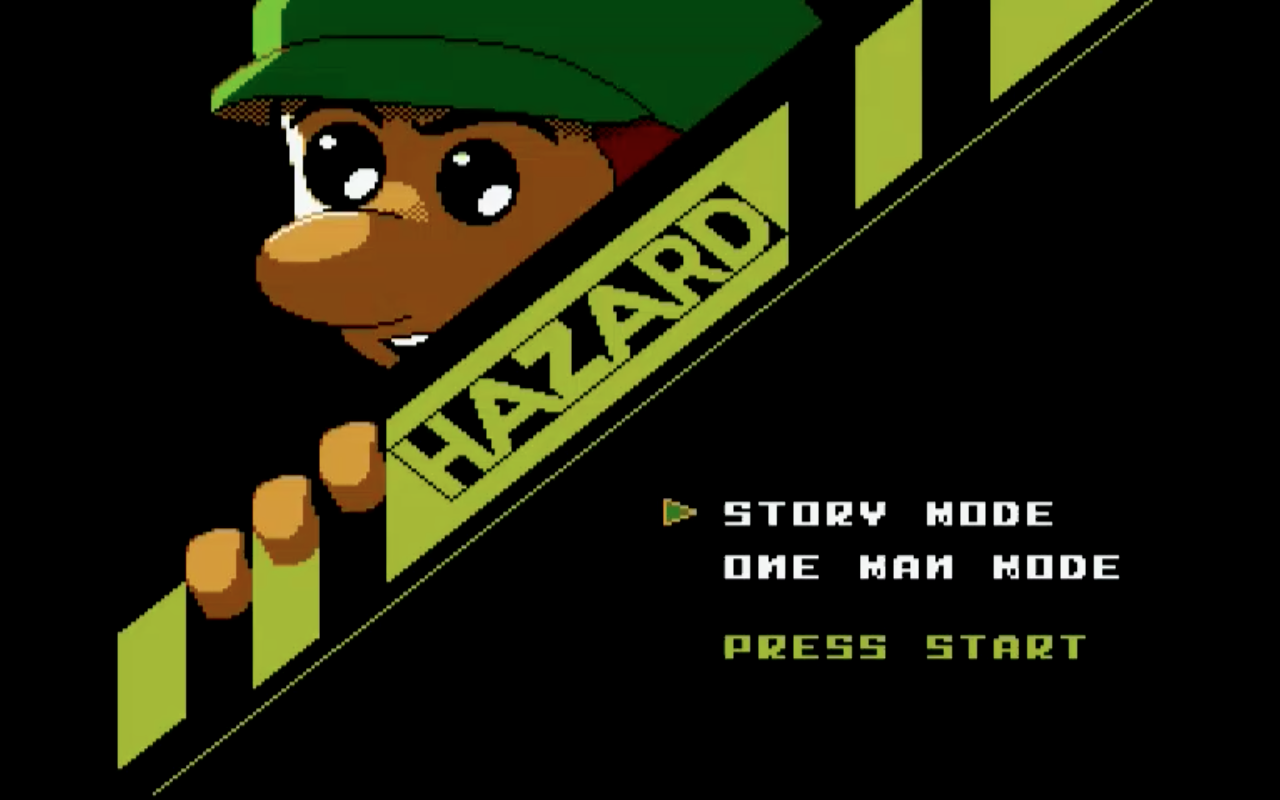
The narrative follows a dedicated (and perhaps overly-ambitious) robot technician at the Rebuild Life Robotics Factory. What was supposed to be a simple “day off” turns into a nightmare when you decide to go in and fix a minor glitch, only to find the facility overrun by malfunctioning machines. The plot isn’t just window dressing; it features branching paths and multiple endings depending on whether you prioritize saving the trapped scientists or simply saving your own skin. For an 8-bit game, the story is good and surprisingly deep. Definitely a great story for an 8-bit platformer.

At its core, the game is a “survival platformer” that balances traditional jump and shoot mechanics with light puzzle solving and resource management. You start with a basic Disassembler weapon, and as you navigate the factory’s 200+ screens, you unlock upgrades like the Missile Launcher and Shield Generator. These upgrades serve as a means to defend yourself against enemies as well as get through puzzles and navigate the environment.
The difficulty is well-tuned; it’s challenging but not overly frustrating. This is because the game offers generous respawn points and as a result, the game is rather enjoyable to play. For those up for a real challenge, there is a One Man Mode, and an HR Mode. These last modes, I won’t go into as I don’t want to spoil too much, but both are really great experiences and addition to the base game.

While the game’s DNA is rooted in the 8-bit NES aesthetic, it feels right at home on the Commander X16/OtterX. The pixel art is crisp and very clean, making great use of the system’s VERA hardware to deliver smooth scrolling and vibrant, robotic environments. Performance is rock-solid at the OtterX’s 8MHz clock speed, ensuring that the platforming remains precise and the “mechanized mayhem” never suffers from the slowdown often seen on older 8-bit consoles. The transition from the NES’s Mapper 2 architecture to the X16 has been handled with clear care, maintaining the charm of the original while benefiting from the OtterX’s superior memory and processing overhead.

The soundtrack, composed by Raftronaut (Jordan Davis), is a high point of the experience. It captures that driving, melodic energy typical of late era NES classics, perfectly fitting the industrial setting. On the Commander X16 or OtterX, the music feels punchy and atmospheric, utilizing the system’s FM synthesis capabilities to create a soundscape that is both nostalgic and technically impressive. The sound effects provide satisfying feedback for every disassembler blast and robotic explosion, grounding the player in the chaotic environment of the factory.

Hazard: Let Us Out? is more than just a simple port; it is a landmark title for the Commander X16, even holding the distinction of being the world’s first commercial game cartridge for the system. It successfully blends the charm of a homebrew passion project with the polish of a professional retail release. Whether you are a fan of challenging platformers or just want to see what your X16 hardware is truly capable of, this is a must-play! It’s a testament to the thriving modern retro-dev scene and a perfect example of how a well-crafted story and tight mechanics can make a 6502-based system shine in 2026!
We were provided with a review unit. Those interested can check out the game here

In addition to writing articles, Ryan Byers also creates content for his YouTube channel called "Obscure Games and Consoles", collects video games, and dabbles in video game development.