

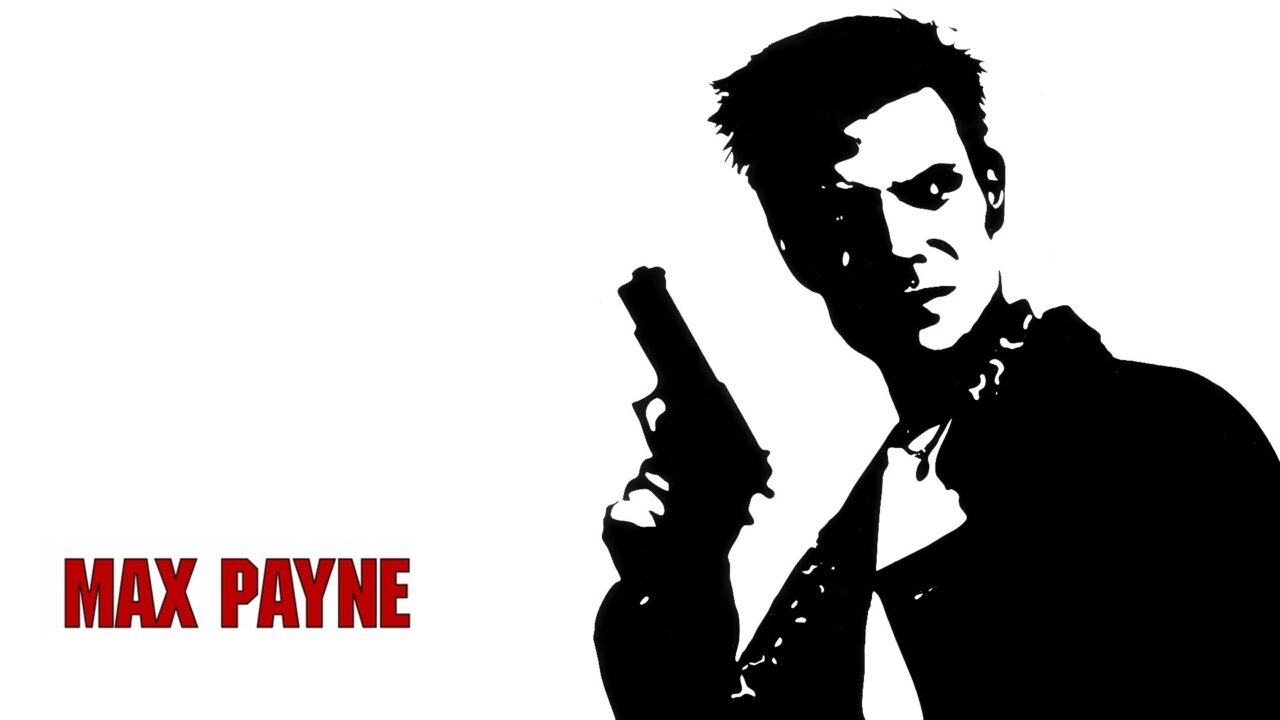
The world of Max Payne is one where tragedy has already decided the outcome before the story has properly begun. Its protagonist is a police officer whose personal life has been destroyed, whose professional identity has become a liability, and whose investigation into a new designer drug leads him into an increasingly dangerous web of criminal activity. Yet what makes Remedy Entertainment’s 2001 game particularly interesting isn’t simply its familiar revenge narrative. It is the way the Finnish developer brings together the traditions of hard-boiled crime fiction, graphic novels, film noir, and Hong Kong action movies, finding a common language between them through an interactive medium.
Originally released for PC in July 2001, Max Payne was published by Gathering of Developers and introduced players to a New York police officer whose family is murdered during a home invasion. His wife Michelle and infant daughter Rose are killed by drug addicts under the influence of Valkyr, an experimental substance that would eventually become central to the game’s larger conspiracy. Following the murders, Max accepts an offer from his friend Alex Balder to join the DEA. Three years later, he is working undercover within the Punchinello crime family, investigating the distribution of Valkyr. When Balder is killed, Max becomes the prime suspect and loses the protection of his undercover identity. With the police pursuing him and organized crime eager to silence him, his investigation takes him into a world where the apparent boundaries between criminal enterprise and respectable authority are increasingly difficult to distinguish.
There is a distinctly literary quality to the way Max experiences these events. His narration is filled with bitter observations, elaborate comparisons, and an almost compulsive tendency to turn ordinary situations into reflections on suffering. The influence of hard-boiled writers such as Raymond Chandler is apparent, particularly in the character’s tendency to interpret the world through cynicism and disappointment. However, Max is not quite the traditional private investigator who reluctantly finds himself caught in somebody else’s mess. His personal tragedy has already shaped his outlook before the investigation begins, leaving him with little interest in preserving his own well-being. Even his occasional moments of humour have a bleak quality, as though he has become so accustomed to misery that absurdity is one of the few things left capable of surprising him. This gives the writing an exaggerated personality that occasionally approaches self-parody, but it also makes Max an unusually memorable protagonist.

One of the most important decisions Remedy made was to tell much of the story through photographic comic panels rather than relying entirely on animated cinematics. The presentation gives the game a connection to illustrated crime fiction that extends beyond simply borrowing the appearance of comic books. Characters are introduced through carefully composed images, conversations unfold across panels, and Max’s narration provides a running commentary that frequently changes the meaning of what is being shown. It creates a relationship between words and imagery that feels appropriate for a story so heavily influenced by pulp literature.
The origins of this presentation are particularly interesting. In a 2016 interview with Game Informer, writer Sam Lake explained that he had previously experimented with staged photography for a university role-playing association magazine. Those photographs eventually became the starting point for a different approach to presenting the game’s story. Remedy was working with a limited budget, making traditional cinematic production difficult, so the studio developed a solution using people from its own circle as photographic models. Employees, friends, and relatives appeared throughout the sequences, including Lake’s mother, who portrayed the game’s antagonist, Nicole Horne. What began as a practical way to produce the necessary storytelling material ultimately became one of the defining characteristics of the finished game.
Lake also became closely associated with the appearance of Max himself, providing the face used for the protagonist in the original game’s visual presentation. His exaggerated expression became particularly recognizable, while James McCaffrey supplied the voice that gave the character much of his personality. McCaffrey’s performance is an important part of the experience because it balances Max’s constant stream of gloomy observations with a delivery that rarely seems particularly impressed by the horrors surrounding him. The combination of Lake’s appearance, McCaffrey’s voice, and the game’s illustrated storytelling helped establish a protagonist who could be simultaneously melodramatic, intimidating, and strangely amusing.
There is another influence running beneath the crime narrative that makes Max Payne more unusual than its basic premise might suggest. Norse mythology appears throughout the game, beginning with the name Valkyr and extending to locations such as the Ragna Rock nightclub. References to Ragnarök and the supernatural implications surrounding the drug give the story a larger sense of impending catastrophe. These elements become particularly noticeable during Max’s dream sequences, which abandon the relatively familiar environments of the criminal underworld for disturbing psychological landscapes. The player is confronted with fragmented memories, impossible spaces, and imagery associated with the loss of Max’s family. Rather than treating these sequences as incidental diversions, Remedy uses them to expose the psychological damage beneath the protagonist’s increasingly violent pursuit. The mythology consequently becomes more than an assortment of references. It contributes to a story in which personal tragedy and a seemingly unavoidable disaster become difficult to separate.

The game’s other major influence comes from a very different tradition. Although its narrative frequently resembles American crime fiction, its combat owes a considerable amount to Hong Kong action cinema, particularly the work of filmmaker John Woo. This can be seen in the exaggerated choreography of its gunfights, with Max throwing himself through the air while firing at multiple opponents. Remedy’s bullet time mechanic takes this influence and makes it something the player can control, temporarily slowing the surrounding action while allowing Max to continue fighting. Enemies, projectiles, and environmental destruction become part of a carefully staged spectacle, turning encounters that might otherwise have been ordinary third-person shooting into memorable action sequences.
It is difficult to discuss this mechanic without mentioning The Matrix, especially given how closely the two became associated in popular culture. However, Remedy was already developing its slow-motion shooting system before the film arrived in theatres in 1999. The game’s original release plans were considerably earlier than its eventual 2001 launch, although the delays meant that the finished product inevitably invited comparisons. Remedy also incorporated references to the film, while Sam Lake has spoken about how its popularity helped make Western audiences more receptive to stylized action inspired by Hong Kong cinema. The important distinction is that Max Payne made slow motion a central part of the player’s interaction with the game. Instead of simply presenting an impressive cinematic effect, it allowed players to decide when and how to use it, making the choreography of each encounter part of the experience.
The environments provide another important connection to the game’s literary and cinematic influences. New York is presented as a place that seems to have been abandoned by ordinary life, its streets buried beneath a relentless winter storm. Max moves through apartment complexes, subway stations, criminal hideouts, and nightclubs, encountering a succession of people whose lives are shaped by the city’s criminal economy. Even locations that should feel populated or lively carry an underlying sense of isolation. The snow is particularly effective as a visual element, creating an almost monochromatic setting that reinforces the emotional distance between Max and the world around him. This isn’t the familiar New York of bustling streets and recognizable landmarks. It is a city experienced almost entirely through the perspective of someone who has become disconnected from everything it once represented.
Despite the spectacle of its combat, the game never entirely loses sight of the personal circumstances driving its protagonist. Max’s journey is propelled by revenge, but the story doesn’t present violence as a meaningful solution to his grief. His investigation gradually reveals a conspiracy much larger than the crime he originally set out to confront, yet uncovering the truth cannot restore the family he lost. The deeper he becomes involved, the more his life revolves around the same violence that initially destroyed it. This is an important part of what makes the game’s noir identity convincing. Its protagonist can fight his way through an extraordinary number of enemies, but his ability to survive physical confrontations does nothing to resolve the emotional damage that defines him.
The combination of these influences is ultimately what makes Max Payne such an interesting subject for a discussion of noir. Its literary foundations are visible in the narration, its comic book influences shape the presentation, and its action sequences borrow from a style of filmmaking that approaches violence as elaborate choreography. Norse mythology adds an unexpected layer of fatalism, while the depiction of New York gives the entire adventure an atmosphere of isolation. None of these elements would necessarily be unusual on their own, but Remedy’s decision to combine them gives the game a personality that is difficult to confuse with anything else.

The series continued with Max Payne 2: The Fall of Max Payne in 2003, before Rockstar Games took the franchise in a different direction with Max Payne 3 in 2012. Remedy and Rockstar subsequently announced plans to remake the first two games together, a project that remains in development. Nevertheless, the original is particularly revealing when looking at Remedy’s early creative ambitions. Its approach to storytelling established many of the qualities that would continue to influence the studio’s later work, especially its interest in combining cinematic presentation with the possibilities of interactive storytelling.
More than a game that borrowed the appearance of crime films, Max Payne found ways to make the conventions of noir meaningful within its own medium. Its narration gives the player access to a protagonist whose thoughts are as important as his actions, its graphic novel sequences turn production limitations into a recognizable visual identity, and its combat transforms cinematic influences into something players can actively shape. Beneath the gunfights and elaborate metaphors is a story about a man who cannot recover what he has lost, regardless of how many enemies stand between him and the truth. That tension between spectacular action and personal despair is what gives Max Payne its lasting place in video game neo-noir.