

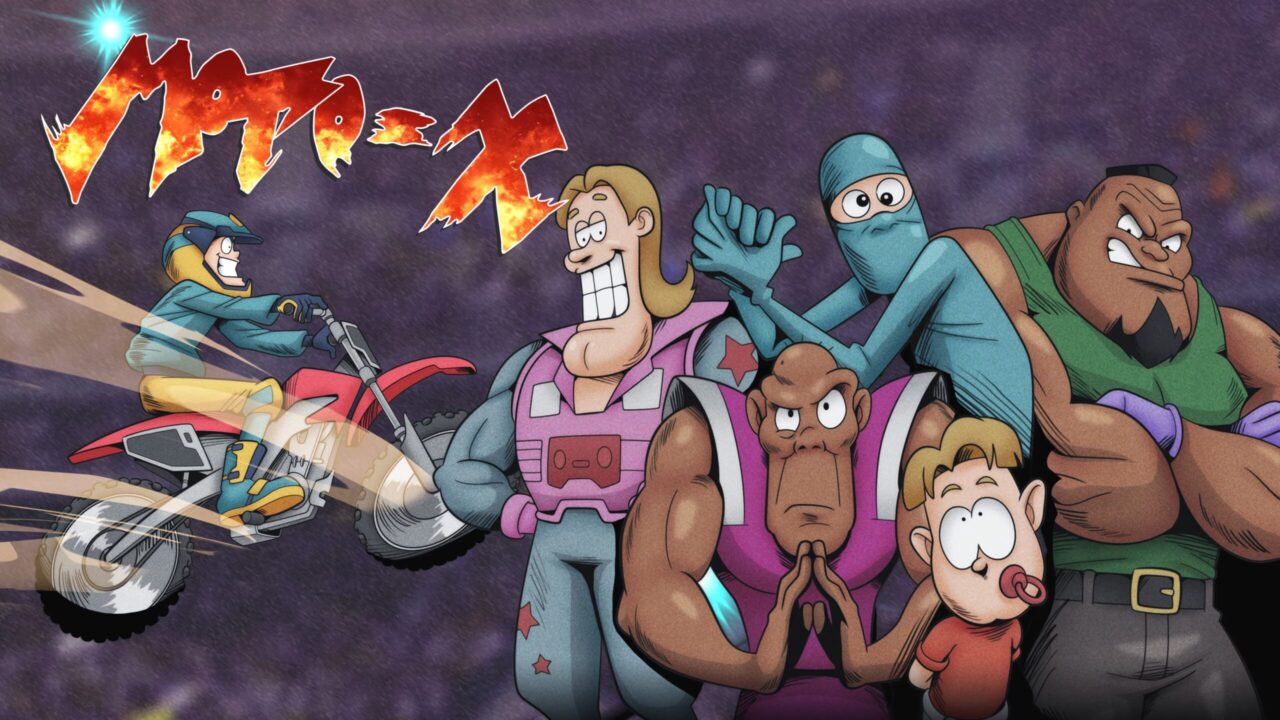
It took 32 years for Moto X to finally reach players, making it an unusual release even by the standards of retro gaming. Developed by Software Creations, the studio behind Plok!, for Trimark Interactive, the Super Nintendo motocross game was completed in 1994 but never released after its publisher lost interest in console games and shifted its attention towards interactive movies. Piko Interactive eventually brought the game to collectors with a physical SNES release in 2023, followed by a digital launch on Nintendo Switch, PlayStation 5, Xbox Series X, and PC on October 16, 2026. Published digitally by Ratalaika Games for $5.99, Moto X offers an affordable opportunity to experience a long-lost piece of gaming history, although its appeal ultimately depends on how much enjoyment players can find in its straightforward arcade racing.

Moto X is an arcade motocross game in the vein of Excitebike, with races built around jumps, track hazards, and power-ups rather than realistic motorcycle handling. Six riders compete in each event, with three engine classes available at 250cc, 550cc, and 750cc. The game features three difficulty levels, each containing five main tracks and a bonus stage, bringing the total to 18 tracks. This provides a reasonable amount of variety for such a compact release, although the basic structure means there is only so much to discover before the races begin to feel familiar. The power-ups help keep things interesting by giving players opportunities to gain an advantage, but the main attraction is learning the courses, avoiding obstacles, and finding the right moments to accelerate and make successful jumps.
The age of Moto X is apparent in its controls and physics, which reflect the design conventions of the early 1990s rather than the expectations of a modern racing game. Its handling takes some adjustment, and players looking for a detailed motocross simulation will find little here to satisfy them. However, that simplicity is also part of the game’s appeal. Moto X focuses on short races and straightforward objectives, making it easy to pick up without demanding much of the player’s time. The experience is more about mastering the limitations of its mechanics and improving through repetition than finding sophisticated racing systems. Although the relatively small selection of tracks and uncomplicated gameplay limit its longevity, the game captures the accessible arcade sensibilities that made many 16-bit racers enjoyable in the first place.

Local multiplayer is one of Moto X’s more appealing features, allowing two players to compete using split-screen play on a single system. This gives the game an advantage over a purely single-player retro curiosity, since racing against another person can add some much-needed unpredictability to its otherwise familiar courses. Unfortunately, the available feature information only identifies local multiplayer, so players looking for online competition or modern matchmaking should not expect those options. Nevertheless, the ability to race against a friend makes Moto X a better fit for casual gaming sessions, particularly for anyone who enjoys revisiting the kind of competitive experiences that defined many classic console games.
Beyond its merits as a racer, Moto X is an interesting example of how unreleased games can find a second life through preservation efforts and modern distribution. Its delayed arrival gives players an opportunity to experience a game that might otherwise have remained confined to development history, while the availability of both a physical cartridge and an inexpensive digital version makes it accessible to different types of retro enthusiasts. That historical significance is worth appreciating, but it does not automatically make the game essential playing. Moto X is a relatively modest motocross racer, and its decades-long journey to release is arguably more remarkable than the content itself.

Moto X is worth considering for fans of classic arcade racers, particularly those who enjoy Excitebike-style gameplay and want to explore an overlooked part of the Super Nintendo era. Its $5.99 price makes it an inexpensive curiosity, and the two-player mode provides an extra reason to return after the novelty of playing a previously unreleased game wears off. However, its limited scope, dated handling, and lack of confirmed online features mean it is unlikely to hold the attention of players looking for a deeper racing experience. Moto X may not be a lost classic, but it is a welcome release for retro gaming enthusiasts who appreciate the chance to play games that history nearly left behind.
Disclaimer: A review key was provided.