

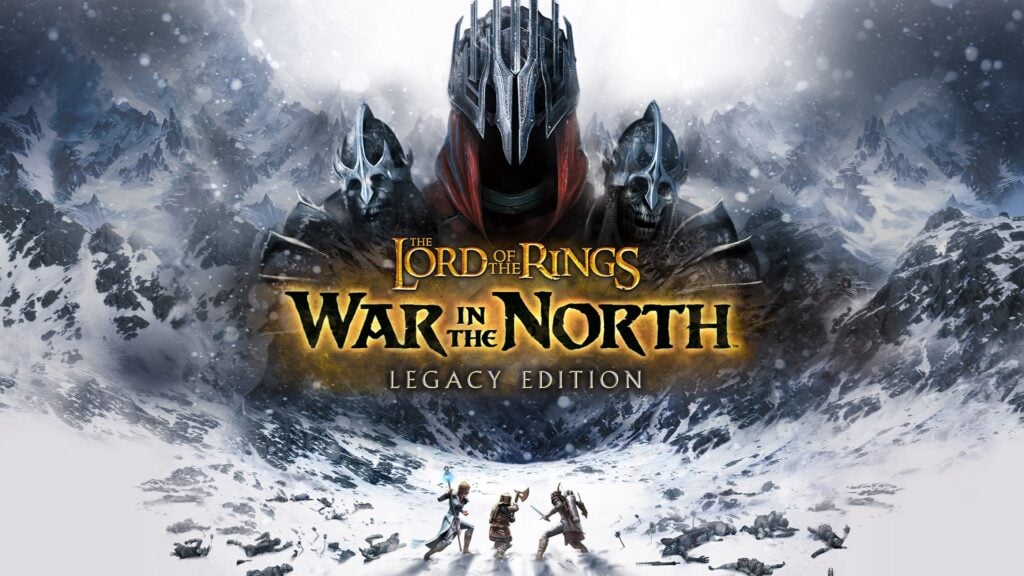
Middle-earth games have had a strange history, with some becoming beloved classics while others get forgotten almost as soon as they hit shelves. The Lord of the Rings: War in the North falls somewhere in between those two extremes. Released back in 2011, the same year as juggernauts like The Elder Skyrim, Snowblind Studios’ co-op focused action RPG never had a real chance to become a mainstream hit, but it built a small and loyal fanbase who liked its grittier approach to Tolkien’s world.
Fifteen years on, THQ Nordic is giving the game a second life with The Lord of the Rings: War in the North Legacy Edition, a Switch 2 focused overhaul that cleans up performance, adds new control schemes, and improves the co-op experience. This is still very recognizably a game built in the early 2010s, but the improvements are substantial enough to make a strong case for revisiting, or discovering, this overlooked corner of Middle-earth.
Instead of walking players through the same events as The Fellowship of the Ring, War in the North runs parallel to it, following three original characters dispatched north by Aragorn from the Prancing Pony. Eradan is a Dúnedain ranger, Andriel an elven lore master, and Farin a dwarven champion, and together they are tasked with stopping Agandaûr, a Black Númenórean who commands Sauron’s forces across the northern reaches. The trio crosses paths with familiar faces like Elrond and Gandalf along the way, and while the plot itself is not going to win any awards for originality, that is honestly fine by me. It knows its place within the wider story and does not try to overwrite anything Tolkien himself established, and I appreciate that restraint.

Mechanically, this is a third person hack and slash built entirely around its three character party, and the biggest quality of life addition in the Legacy Edition is the ability to swap between all three heroes on the fly during single player, which was not possible in the original release. It makes a noticeable difference to how the combat flows, letting you lean into whichever character suits the situation instead of being locked into one playstyle for an entire mission.
Each character earns their keep too. Eradan blends swordplay with stealth and archery and is easily the most flexible of the bunch, Andriel handles elemental magic alongside healing and protective barriers, and Farin is your tank, someone who can absorb punishment, smash through armoured enemies, and clear out groups with heavy melee swings. Chaining light and heavy attacks builds up a focus meter that unlocks brutal execution finishers, and there is a deterministic critical system that flags vulnerable enemies so you can follow up with a guaranteed heavy hit. None of this reinvents the wheel, but it works.
The RPG side of things is fairly light by today’s standards. Skill trees exist for melee, defense, and ranged abilities, and there is some additional stat tweaking on top of that, but do not go in expecting anything approaching Baldur’s Gate levels of depth. What you get instead is a linear adventure with the occasional bit of character specific exploration, where certain paths or secrets only open up depending on who you are controlling, which is a nice enough incentive to poke around rather than beeline for the next objective.

On the technical side, the Switch 2 version brings a genuinely useful list of upgrades. Autosaving has been reworked to feel far less punishing, dead zone customization gives you more control over how the sticks respond, and gyro aiming makes Eradan’s ranged combat noticeably more precise than it ever was on the original hardware. The camera, unfortunately, has not aged as gracefully, and its acceleration can feel loose and hard to wrangle once a fight gets chaotic. Inventory management is another sore spot, since each character keeps a separate loadout and things get unwieldy fast if you are not diligent about managing your gear.
Visually, this is a remaster rather than a ground up remake, and it shows. The bump in resolution makes everything look noticeably cleaner than the 2011 release, but the bones underneath are unmistakably last generation, with soft textures and rough edges around character models that no amount of polish fully hides. The game targets 1080p at 60 frames per second whether docked or handheld, and it mostly holds that line, though busier fights and online sessions can introduce the odd stutter. Even with those hiccups, this feels like a meaningfully smoother experience than the console version most people remember.

Audio is a mixed bag as well. Combat sounds punchy, with satisfying weapon impacts and the kind of booming war horns that suit a Tolkien battle, but the voice acting has not aged particularly well and can come across stiff in places. There was also a launch issue where handheld audio came through muffled and quiet, though a patch has since fixed that, so make sure your copy is updated before you dive in.
Multiplayer remains the game’s biggest strength, and honestly the main reason to pick this up in 2026. Two player local split screen is here, and the full campaign supports up to three players online, and playing this with friends elevates the whole experience considerably. Switch 2’s hardware handles split screen surprisingly well too, without the kind of performance hit you might expect from running two viewports at once.
Expect roughly 10 to 13 hours to finish the main campaign, with extra time on offer if you chase higher difficulties, gear up properly, or tackle the challenge arenas. It is not a sprawling RPG by any stretch, but its length suits the linear, co-op focused design just fine.

One thing worth flagging before you buy is that this is treated as a completely separate purchase from the original Switch release, with no discount or upgrade path for existing owners. That stings a bit given how much of the core game is unchanged, and it is the kind of decision that will understandably frustrate anyone who already owns the previous version.
Even with that caveat, The Lord of the Rings: War in the North Legacy Edition is a solid way to bring back a game that has spent far too long overshadowed by flashier Middle-earth releases. The combat is simple but satisfying, the story stays comfortably in its lane, and the RPG systems will not blow anyone away, but the cooperative core still holds up. Add in 60 frames per second, gyro aiming, real time character switching, a better autosave system, and proper split screen support, and you have got a package that feels far more comfortable on modern hardware than it has any right to.

This will never be remembered as the definitive Lord of the Rings game, and it does not need to be. For fans who want something darker and more combat focused than the usual Middle-earth fare, or for anyone with fond memories of the original, War in the North still has something worth offering, and the Legacy Edition is a fair way to experience it again.
Disclaimer: A review key was provided