

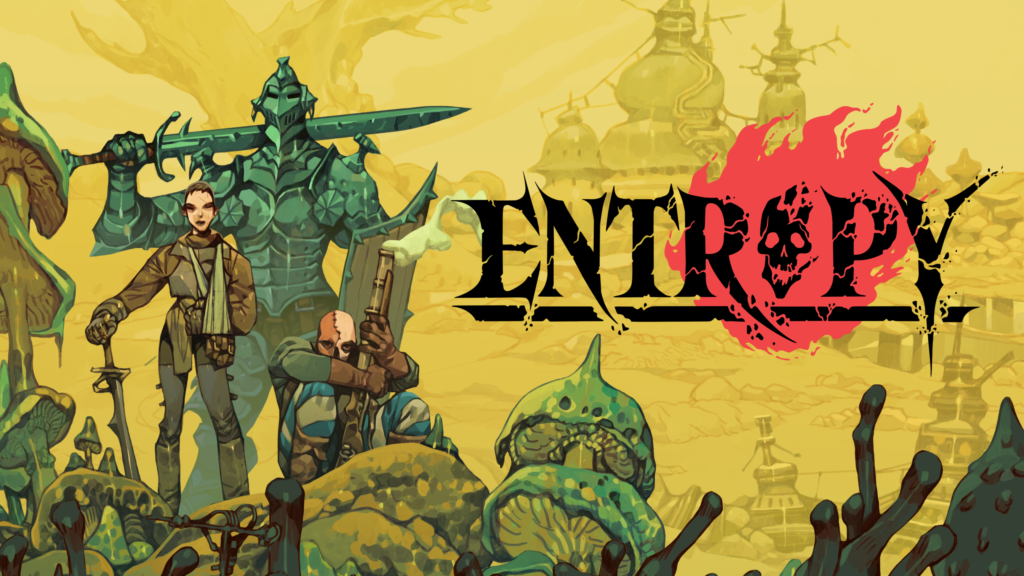
Lovely Hellplace made a name for itself with Dread Delusion, a studio clearly drawn to the strange, the unsettling, and the deliberately ugly corners of retro game design. Entropy carries that same sensibility forward, this time as a dark fantasy tactical RPG built to feel like a PlayStation One JRPG that someone dug out of a bargain bin and twisted into something considerably grimmer. The pitch alone was intriguing, and thankfully, the execution mostly backs it up.

The setting is the Gloaming Isles, and from the outset, nothing here feels comfortable. Low poly environments, deliberately crude character models, and creature designs that lean hard into body horror combine into something nostalgic and unpleasant at the same time. The Early Access build covers the whole of Act I, and while the seams show in a few spots, there is already a surprising amount of game packed into this first chapter.
Character creation deserves particular mention, since it skips the usual stat sliders entirely. Instead, the story opens with the protagonist as a member of a travelling theatre troupe performing in Draenog Town, and the choices made during that performance shape starting stats and equipment. It folds tutorial and narrative into one package, and it works well enough that neither side feels shortchanged.
That performance does not end well.

A demon horde tears through the town, the show collapses into a bloodbath, and the protagonist dies and gets dragged back by an unexplained spirit. From there, the goal is simple on paper: gather whoever survived, escape the wreckage, and reach the neighbouring city of Cuvas before the same threat catches up. It is a blunt opening, but an effective one, and it wastes no time establishing just how bleak things are going to get.
Things get more interesting once the amount of variation in the early stages becomes clear. Companion availability shifts depending on the character built at the start, with options ranging from a Shaper built around magic to a squire haunted by guilt and desperate to make up for it. None of these characters feel like filler. Each comes with distinct flaws and personality quirks that carry real weight once combat starts.
Arrival in Cuvas complicates matters considerably. What looks at first like a straightforward survival story turns out to be something else entirely, once it comes out that the theatre troupe was a front for an espionage network working for the city’s ruler, known only as the Peacekeeper. Suddenly there is a lot more at stake than a handful of survivors and an urgent warning.

The side content follows a similar willingness to dig into uncomfortable territory. One investigation into the “Sudden Silence,” a past disaster tied to a hijacked magical broadcast network, raises real questions about censorship, public safety, and how much freedom people are willing to trade away when they are frightened enough. It gives the Gloaming Isles a sense of history, rather than treating the setting as scenery between fights.
Combat is where Entropy separates itself from the genre it is riffing on. Battles are turn based, with positioning, formation, and resource management doing most of the heavy lifting. Up to six characters can be fielded at once, split across front and back rows depending on role and range. Instead of settling into a comfortable rotation of attacks and heals, the game keeps forcing a reassessment of the party’s condition and whatever new threat has just shown up.
The magic system backs that up nicely. Shaping lets characters manipulate matter directly through codices, while Channeling works by communicating with spirits to influence living creatures. These are not reskinned versions of the usual spell schools, either. They are tied directly into the lore, and that groundwork shows in how distinct the two systems feel from one another.

Targeting adds another layer worth mentioning. Rather than simply whittling down health bars, players can aim for specific body parts, eyes and limbs included, in an attempt to cripple an enemy outright. Accuracy takes a hit in exchange, so going for a maiming blow instead of a straightforward attack is a real gamble. Against tougher opponents, that gamble often ends up being the smarter play.
That same sense of risk carries well past individual battles, and this is where Entropy really earns its reputation for being unforgiving. Characters can walk away from fights with permanent injuries, including missing limbs and lasting concussions, and death can remove them from the roster entirely. A frontline bruiser who loses an arm is simply not the same fighter afterward, and the game does not pretend otherwise.
Reloading an old save is discouraged at every turn, and adaptation is the expected response instead. An injured warrior can be shuffled to the back row and repurposed as support, forcing a rethink of formation on the fly. Mercenaries hired from local inns can patch gaps in the roster, though they show up with their own quirks and limitations attached. Success ends up depending less on assembling a flawless six person party and more on making the best of whoever happens to still be standing after the last expedition.

Character progression sticks to that same philosophy. Levelling grants stat points and the occasional perk, giving enough room to build characters in different directions, but the permanent fallout of combat keeps every decision feeling like it actually matters.
Exploration breaks from convention too. Alongside standard RPG traversal, the game occasionally drops into text based adventure segments where a single choice can pay off handsomely or blow up badly. These sections fit the overall aesthetic well and lean further into Entropy’s fascination with older styles of role playing.
Visually, there is no interest here in being conventionally appealing, and that is clearly the point. The pixelated 3D environments and intentionally crude models will not land for everyone, but they are doing real work. This is not an attempt to recreate an early 3D RPG for nostalgia’s sake. It uses those rough edges to build something alien and unsettling, and a cursed forest full of grotesque human snail hybrids hits a lot harder when the whole scene looks pulled from a corrupted disc.

There is a strange appeal to how ugly the whole package is. The world feels rotted, abandoned, and quietly hostile, and both the environmental design and creature work are carrying most of that atmosphere. Retro visuals here are doing more than triggering nostalgia. Used the way Entropy uses them, they make familiar fantasy tropes feel genuinely off.
Now for the negatives, and to be fair, there are not many. The Early Access build has its rough patches, with camera handling occasionally stumbling during perspective shifts, and dialogue boxes sometimes showing up empty. Neither issue derails the experience, and both are reasonable to expect at this stage of development.

Even with those wrinkles, what is already on offer shows real promise. Entropy takes the bones of a classic JRPG and runs them through a much harsher tactical framework. The setting is strange, the combat shows no mercy, and the characters carry the scars of their own mistakes quite literally. Lovely Hellplace has taken familiar PlayStation era ideas and twisted them into something noticeably darker, rather than simply paying tribute to them.
There is clearly more work ahead, but the foundation already laid down is hard to overlook. Entropy blends old school JRPG sensibilities with unforgiving tactical combat, disturbing fantasy, and character progression with real teeth. If the rest of the game holds to the standard set by Act I, this could turn into one of the more distinctive retro inspired RPGs to come along in a while.
Disclaimer: A review key was provided