

Guest Review By The Glorious Dianna
Brigandine Abyss has an interesting problem, and it is one I did not expect going in. On paper, this is exactly the kind of strategy RPG that should be an easy recommendation for genre fans, since it combines large-scale territorial conquest with turn-based tactical battles, offers a generous selection of factions, and builds on a series that has always left room for experimentation. There is genuinely a lot to like here, especially if you enjoy managing armies, expanding across a world map, and then dropping into individual battles where positioning and terrain actually matter. That said, some of the changes made to the formula work against the very things that made Brigandine compelling in the first place. Abyss piles on more content along with several welcome quality-of-life touches, but it also strips out or waters down some of the strategic systems that used to give these games their sense of long-term progression.
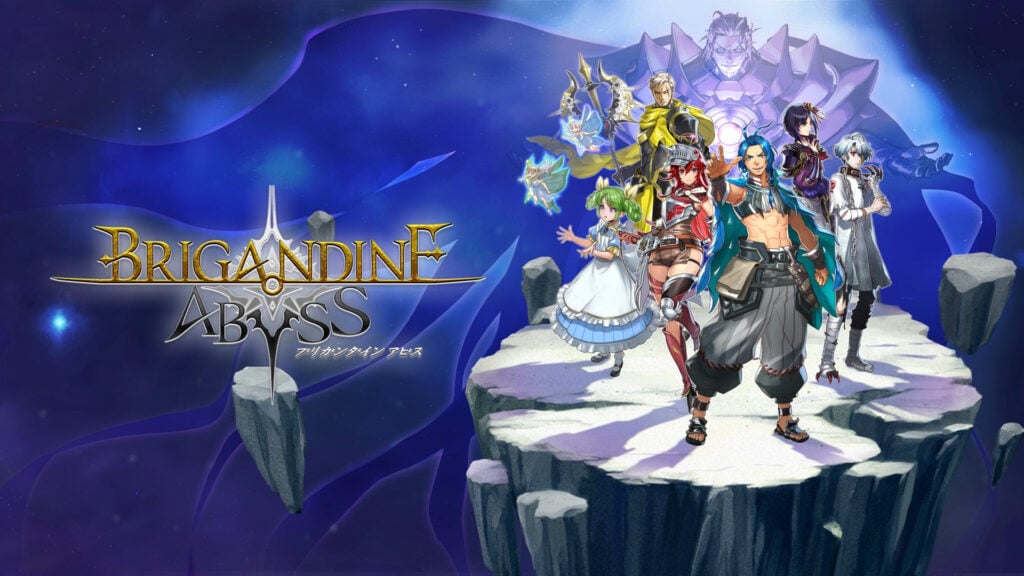
The setting this time is the continent of Meltitea, where Brigandine Abyss centres on the conflict between the Neo Abyssola Empire and the assorted nations and factions trying to resist it. You get the dragon-allied kingdom of Gran Dragnica, the mercenary group Scarlet Will, the Queendom of Mysteine, the fairy village of Purifanoe, the isolated Samura Village, and the chimera-focused Pandemyuon, each with its own flavour, roster, and set of objectives. None of this will surprise anyone who has played a Brigandine game before, but the sheer number of factions and scenarios on offer gives Abyss a serious amount of content to chew through.

Of course, the basic structure is still the strongest part of the whole package. You spend your time on the world map managing territories and armies before pushing your forces into neighbouring regions, and once an invasion kicks off, the game drops you onto a grid-based tactical battlefield where Rune Knights and monsters fight it out. Elevation, terrain, and choke points can all swing a fight, and things get genuinely tense when several powerful units are scrapping over the same patch of ground. There is a satisfying rhythm to bouncing between the big-picture strategy layer and these smaller engagements, particularly on the occasions when a carefully planned invasion goes exactly the way you drew it up.
This being said, Abyss does bring some worthwhile new ideas to the table. The Rally mechanic stands out in particular, letting units that have burned through their magic points keep contributing to a fight in a different way rather than just standing around waiting for their next turn to roll around. Certain leaders also carry unique traits, and specific castles can hand out faction-wide bonuses, both of which give you more to think about when deciding where to fight and which territories are worth holding onto.
Mission Mode is another addition I appreciated. Instead of locking you into the main story campaigns, it opens up a much wider spread of factions and scenarios, many of which come with their own distinct win conditions, and that gives you room to approach the strategic layer in ways that do not just boil down to repeating the same conquest loop with a different cast. Considering how much of Brigandine Abyss leans on replayability to begin with, having extra scenarios that push different approaches is a real point in its favour.

There are also several quality-of-life changes worth calling out, since equipment is now much easier to come by through regular purchases and monster revival has been simplified and backed by a steadier income. Being able to save mid-battle is a genuine relief given how long some of these encounters can drag on, and the generous number of save slots makes it far easier to juggle multiple campaigns without losing track of things. None of these additions are flashy, exactly, but together they make the whole experience noticeably more approachable.
Of course, this is also where the trouble starts, because some of Abyss’s biggest changes end up undercutting the strategic planning that made earlier entries so satisfying. One of the more frustrating examples is how the game handles defeated enemy forces, since Rune Knights and monsters on the opposing side can simply come back after a battle, sometimes gaining levels automatically rather than earning them through actual combat experience. That means beating a dangerous enemy army does not always feel like the meaningful victory it should, and you can end up facing essentially the same force again just a short while later instead of permanently weakening an opponent and forcing them to rethink their strategy.

This problem only gets more noticeable once you factor in the artificial intelligence, which can make baffling decisions such as throwing status effects at units that are flat out immune to them or shoving a vulnerable leader into danger before their supporting units have even caught up. Battles can still be challenging, sure, but that challenge does not always come from the enemy actually playing well. More than once I found myself sailing through an encounter thanks to questionable AI choices, only to run into the next invasion and get frustrated all over again by how easily the enemy regenerates and replenishes its ranks.
The invasion system tends to compound this issue further. When several invasions happen at once, the game can tilt things in favour of whichever side has the higher overall power level, while defeated leaders bounce back immediately instead of staying out of action for a stretch. Story campaigns also lock you into fixed turn limits, which pushes you toward rapid expansion rather than letting you take your time developing forces and experimenting with different approaches. The end result is a system that nudges you toward aggressive play without necessarily rewarding the careful resource management I would expect from a grand strategy RPG like this one.
Character and unit progression feel like a step backwards in some respects as well. Earlier Brigandine games gave you a lot more freedom to reshape individual Rune Knights through class changes, which went a long way toward making your army feel like something you were personally building over the course of a campaign. Abyss is far more restrictive here, and monster progression has fewer branching paths to explore, which cuts into the satisfaction of watching a unit grow into something tailored specifically to your strategy.

The large cast does not fare much better on the presentation side of things, unfortunately. There are plenty of characters with distinct portraits and identities, but a good number of them share fairly generic 3D battlefield models, sometimes even sharing colour schemes with common mercenary units, which makes it harder to pick out your important characters at a glance. A lot of the character and lore content is also tucked away in biographies and gallery entries rather than woven naturally into the campaigns themselves. Given how many factions and characters are in play here, there was a real opportunity to build stronger connections between them, but most of that potential stays buried unless you go digging for it yourself.
The presentation as a whole is a bit inconsistent too. I like that the character artwork keeps things fairly straightforward and avoids the excessive visual flourish you sometimes see in modern strategy RPGs, but there simply is not enough high-quality art to carry that sense of personality all the way through the game. The animated story sequences are especially disappointing, relying heavily on motion-comic techniques layered over pretty flat artwork, and instead of making big story beats feel impactful, these scenes often come across as cheap and lifeless.

The writing does not do much to make up for any of this either. Dialogue leans on exposition far too often, and a fair number of conversations have an awkward, stilted quality that keeps the characters from feeling as natural as they should. There are interesting ideas scattered across the various factions, sure, but the campaigns rarely spend enough time actually developing them, and considering these scenarios can take dozens of hours to finish, the amount of real story content feels surprisingly thin. Some characters and faction relationships get introduced almost as if the game is expecting you to fill in the blanks yourself.
Audio is one of the more reliable parts of the presentation, at least. The music and sound effects do their job without causing any real problems, though nothing here particularly jumps out either, and the lack of a memorable opening or ending theme is a small letdown for a genre where those moments usually add a lot of personality.

Compared with The Legend of Runersia, Brigandine Abyss is unquestionably the bigger game, with more factions, more units, more maps, and more scenarios to work through, and Mission Mode gives the whole package a lot more staying power. Several of the quality-of-life changes are genuinely welcome too, particularly around managing equipment and recovering monsters, and the tactical maps themselves offer solid variety thanks to the added emphasis on terrain.
That said, bigger does not automatically mean better here. Some of the systems that got removed or simplified, especially class progression and permanent monster capture, took away exactly the kind of long-term decision-making that made the earlier games so engaging, and the enemy regeneration and automatic leveling only make that worse by draining victories of their permanence. The inconsistent AI undermines things in a completely different way on top of that. Abyss has plenty of strategy packed in, but it does not always encourage the careful planning I would expect from a game built around territorial conquest.
Brigandine Abyss ultimately feels caught between expanding the series and simplifying it, and I think that tension defines the whole experience. There is a lot of content here, and Mission Mode in particular gives dedicated players plenty of reasons to keep experimenting with different factions, while the tactical battles remain enjoyable and the world map still provides a satisfying framework for conquest. Several of the quality-of-life changes make the whole thing easier to manage too.

At the same time, the changes to progression, enemy behaviour, and long-term consequences leave Abyss feeling less refined than what came before it. Fans already invested in the series will likely find enough here to justify the time, especially once the price comes down, but anyone hoping for the deepest version of Brigandine’s strategy mechanics may be better served going back to The Legend of Runersia or earlier entries instead. Brigandine Abyss is not a bad game by any stretch, but it often feels like it traded away some of the series’ strategic depth in exchange for more content, and that is a trade that does not always pay off.
Disclaimer: A review key was provided.