

Author’s Note: This editorial reflects my personal experience managing sensory overload alongside existing health conditions and guidance from my doctor. The symptoms described are my own, and this article is not intended to diagnose their cause. Sudden or severe vertigo, weakness, difficulty moving, near-fainting, or other concerning physical symptoms warrant medical attention.
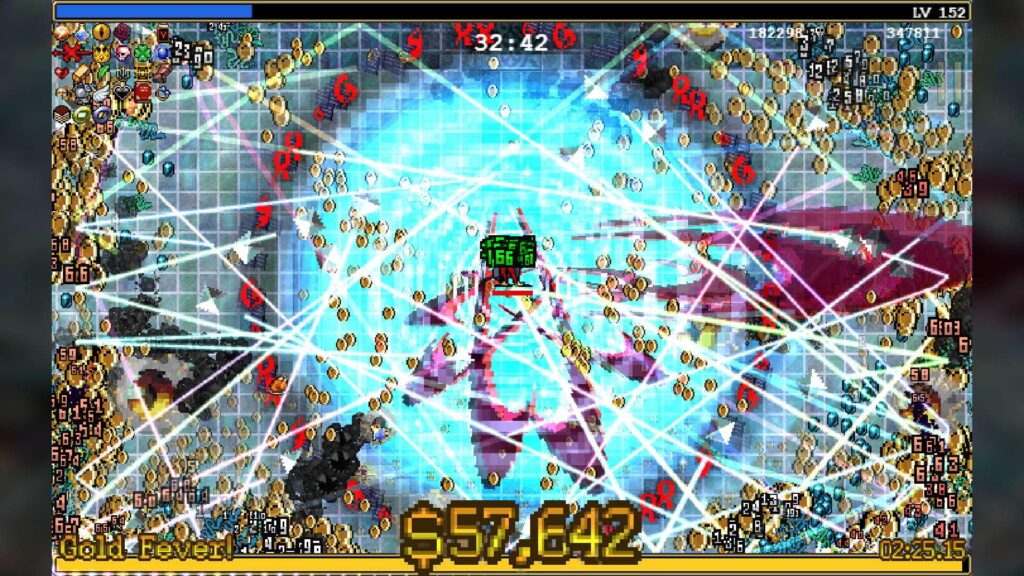
After several days of playing Warhammer Survivors, I ended up lying down, struggling to move my arms properly, nearly passing out several times, and sweating through my clothes. The vertigo attack lasted somewhere between 20 and 30 minutes, and I felt sick for roughly the week that followed. That was the moment I had to admit that survivors-likes, a genre I genuinely love, were not sitting well with me.
I should explain why that stung. I have always enjoyed games that build from a few basic abilities into a screen-filling mess of enemies, projectiles, and absurd power combinations. Turning a character into a walking arsenal while trying to survive just a little longer is a great hook, and I understand why the genre exploded in popularity.
My first real warning came from Vampire Survivors. I loved the gameplay loop, but I kept finishing sessions feeling unusually uncomfortable, and my sleep started to suffer. I didn’t think much of it at first. I have played plenty of games with busy screens and flashing effects, so I brushed it off.
Then came Warhammer Survivors. Its loop was incredibly hard to put down, and I kept playing over several days even as I increasingly suspected something wasn’t right. Given my existing health conditions, I took the episode I described seriously and talked it over with my doctor.
To be clear, I’m not claiming a particular game caused what happened, and I’m certainly not suggesting everyone who plays these titles will have a similar experience. What I can say is that it changed how I approach games that keep the screen in a near-constant state of activity.

The interesting part is that not every survivors-like hit me the same way. I can spend hours with Halls of Torment or Jotunnslayer: Hordes of Hel and feel fine. That told me it wasn’t simply a question of how many enemies were on screen or how fast things escalated. How a game presents the chaos matters just as much.
Survivors-likes thrive on overlapping attacks, particle effects, damage numbers, and huge crowds, and I don’t think that intensity is a flaw. It is the point. What differs is how well a game keeps its elements readable. Art direction, colour palettes, lighting, and contrast all influence whether the player character, enemies, environmental objects, and incoming attacks remain distinct or seem to fight for the same space.
Halls of Torment and Jotunnslayer: Hordes of Hel do this well for me. Their dark fantasy settings create a stronger separation between the characters, the enemies, and the surroundings. Of course, darker colours don’t automatically make a game easier to look at, and no art style is universally more comfortable. It’s simply what I’ve noticed in my own experience.
I’ve also wondered about perceived depth. When a game gives me a stronger sense of space, I find it easier to follow who is where and what is about to hit me. The action in Halls of Torment and Jotunnslayer: Hordes of Hel can still get hectic, but it doesn’t feel quite so compressed into one flat layer. By comparison, some survivors-likes pile sprites, projectiles, and effects on top of each other until I can’t tell what I’m looking at. That said, plenty of 2D games are perfectly comfortable for me, and a badly arranged 3D screen could be just as overwhelming.

Brotato shows that structure can matter as much as visuals. Its enclosed arena gives the action a clearly defined space, and its short, timed waves feel very different from games that never stop escalating. The gaps between rounds are natural spots to look away from the screen and take a break. It can absolutely get chaotic, but it’s far easier for me to manage my sessions. I don’t need a game to be slow or undemanding. A predictable rhythm is often enough.
Boneraiser Minions is another comparatively manageable option. Its compact arena and contained presentation give it a different visual character from the more overwhelming examples of the genre. You still get the pleasure of building an increasingly powerful character, but I find it easier to follow.
These experiences taught me I don’t have to abandon survivors-likes altogether. I just have to be more selective.

None of this is a complaint about the genre itself. I understand why developers embrace visual excess. The escalating effects and growing enemy counts are central to the genre’s identity, and I’m not asking anyone to redesign their game around my preferences. Part of the fun is seeing how different developers interpret the same basic formula.
So the more useful approach has been adjusting my own habits. That means paying attention to brightness, the distance between me and the display, and the room I’m playing in. On PC, monitor size and position, room lighting, and time spent staring at the screen all matter. On the Nintendo Switch 2, handheld mode puts the display closer to my eyes, so I have to watch brightness and session length even more carefully. Above all, I take breaks, especially when I notice I’m getting uncomfortable rather than pushing through for one more round.
Some games let you reduce certain visual effects or adjust the presentation, and I appreciate those options when they’re there. That said, I don’t write a game off for lacking them. There are plenty of other titles to play.

Thankfully, there are alternatives. If you like the broader appeal of survivors-likes but want a different approach to action and progression, Deep Rock Galactic: Survivor and Army of Ruin offer their own takes on the formula. If you’re willing to step further away from the survivors-like formula, Curse of the Dead Gods and Ravenswatch offer action-focused alternatives built around a different structure. Hades II is worth a look too, especially for players who appreciate its additional settings, including God Mode. None of these are direct replacements, and their visuals won’t work equally well for everyone, but they show there is more than one way to enjoy combat, progression, and escalating challenge.
Sometimes the best move is to step away from the genre entirely. Unpacking, Dorfromantik, A Little to the Left, TOEM, Spiritfarer, and Cozy Grove: Camp Spirit aren’t chasing the same rush, but they make a welcome change of pace when I want something less visually demanding.
I’m curious to see how upcoming releases handle the genre. Temtem: Swarm has already launched on other platforms, with its Nintendo Switch version still to come. Hellforged is currently confirmed for PC, with console versions expected later. I’ll be keeping an eye on both , though now I’ll think twice before committing to long play sessions.

My time with Vampire Survivors and Warhammer Survivors hasn’t made me dislike the genre. If anything, it pushed me to look harder at what makes one game comfortable and another difficult. I still love an increasingly chaotic screen, a ridiculous pile of stacked abilities, and the simple pleasure of surviving one more wave. I just know my limits better now.
Gaming should be something I look forward to, not something I feel compelled to endure because I can’t put a game down. Sometimes that means taking a break, sometimes it means picking a different game, and sometimes it means admitting a particular experience isn’t right for me. There are more than enough great games out there that I don’t need to force the issue.


