

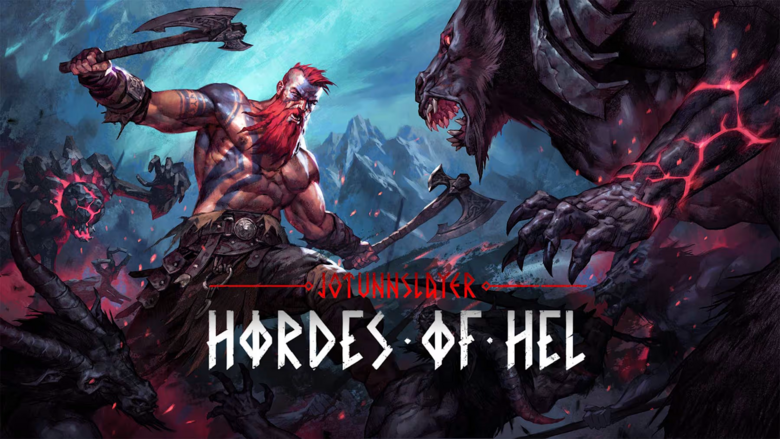
Survivors-like games are not going anywhere, and honestly, I do not think anyone expected them to. Every few months another developer takes a crack at the genre and tries to stand out from the pack. Jotunnslayer: Hordes of Hel is one of the better attempts I have played in a while, mixing the usual horde-clearing chaos with Norse mythology, structured objectives and a genuinely interesting system built around the gods of the pantheon. I reviewed the Conan DLC for this game on PC a while back, and coming back to the base experience on Switch 2 reminded me why I liked it in the first place.
Developed by Games Farm and published by Grindstone, Jotunnslayer: Hordes of Hel had already made a name for itself on PC before it arrived on Nintendo’s newest hardware, and I have to say, the fit makes a lot of sense. This is closer to something like Halls of Torment in that button presses actually matter alongside the auto attacks, and that kind of active engagement works great in short handheld bursts. The Switch 2 launch was rough in a few ways I will get into, but the updates since then have cleared most of that up, and what is left is a genuinely addictive roguelike that I keep coming back to.
At a glance, Jotunnslayer: Hordes of Hel looks like it is just going to be another Vampire Survivors clone, and I will admit that was my first impression too. You take control of a warrior, drop into a hostile realm, and spend the next several minutes cutting through absurd numbers of enemies while your character handles most of the attacking automatically. Defeated enemies leave behind experience, experience gets you levels, and levels get you upgrade choices. None of that is new.

There is more going on underneath that, though, and it is the part that kept me playing long after I expected to put the controller down.
Rather than just asking you to survive as long as possible, Jotunnslayer: Hordes of Hel gives every run a set of objectives. Sometimes that means destroying specific targets, sometimes it is holding a location while enemies pour in, sometimes it is surviving some nasty environmental hazard, and sometimes it is taking down a miniboss. Completing these matters because it is what eventually brings out the realm’s Jotunn, which is the actual final boss of the stage.
That objective structure changes the whole rhythm of a run. It is tempting in games like this to just plant yourself in a corner and let enemies come to you, but Jotunnslayer: Hordes of Hel keeps pushing you to move instead. Objectives drag you across the map, and chests and other rewards give you a reason to leave your comfortable spot even when you do not have to.
On top of that, every run is working against a hard timer. You are not just trying to get strong enough to clear the screen, you are trying to get everything done before the clock runs out, and that gives every run real urgency without ever feeling unfair. Once the Jotunn finally shows up, the timer stops completely, and you get to just focus on the boss fight in front of you.
Put all of that together and you get a loop that feels a lot more purposeful than most of what is out there in this genre right now. There is still all the screen-filling chaos you would want from a game like this, but every single run has a clear sense of what you are supposed to be doing and why.

The character roster is another one of the game’s strengths, honestly. Each class has its own identity and pushes you toward a different way of playing. The Berserker is a close-range powerhouse who gets more dangerous the lower his health drops, while the Revenant leans on ranged attacks with backup from a spectral wolf companion. The Flame Sister is all about fire damage and mobility, the Seeress leans into magic and crowd control, and the Kinslayer brings a spear and Valkyrie-inspired abilities to a melee style unlike anything else in the roster.
These are not just palette swaps with a different starting weapon slapped on, either. Every character has their own kit and progression options, so it is genuinely worth trying all of them. Finding the class that clicks with you is really just the first step, though, because the most interesting parts of this game come from the gods.
During a run, you can pick up blessings from members of the Norse pantheon, and Thor, Odin, Freya, Skadi and Loki are all represented, each offering abilities and bonuses that range from raw offence to defensive tools and status effects. The catch, and it is a good one, is that you cannot just grab blessings from every god you meet. You only get to lock in three per run, and once you have made those picks, the rest of the pantheon is off the table for that attempt.
That single restriction adds way more strategy than I expected going in. Picking three gods whose abilities actually work together can completely change how a character plays. You could build toward freezing enemies solid before finishing them off with lightning, or go all in on raw damage, speed, or crowd control instead. Layer that on top of a character’s own kit and their Ultimate ability, and the number of viable builds gets pretty large pretty quickly.
That is what sells the experimentation angle for me. Even when a build does not work out, and plenty of mine did not, there is almost always a reason to jump back in and try something different. The best runs turn into glorious, screen-clearing chaos, with a dozen effects going off at once while entire hordes get wiped out in seconds.
The progression does not stop when a run ends either, which is exactly what you want from a roguelike. Gold collected during a run carries over and goes toward permanent upgrades, so even a loss is not really a total loss. Hero Skill Trees give character-specific improvements, while a separate Pantheon system lets you invest directly in making the gods themselves stronger, and those upgrades apply across every character you play.

All of this adds up to that classic one more run feeling that makes this genre so hard to put down. Even a bad attempt tends to leave you with something, whether that is extra gold, a better read on a character, or just an idea for the next build you want to try. Nothing here feels wasted, and that matters a lot in a genre built entirely around repetition.
Visually, Jotunnslayer: Hordes of Hel goes for a dark fantasy look that should click with anyone who likes their action games a little grim. The take on Norse mythology fits that tone, with realms ranging from burning wastelands to frozen expanses and ruins that genuinely look ancient. There is enough enemy variety to keep things from feeling repetitive, and the Jotunn bosses are a real highlight once they finally show up.
The sheer amount of stuff happening on screen at once deserves a mention too. At the peak of a good run, you get enemies, projectiles, spell effects and status icons filling up basically every inch of the display, and that kind of glorious excess is exactly what makes this genre satisfying in the first place. Jotunnslayer: Hordes of Hel handles it well.
The soundtrack is the least memorable part of the whole package, if I am being honest, though it still does its job of supporting the mood without getting in the way. It never really reaches for the big, sweeping tone that the mythology might suggest, but the audio design overall holds up fine once things get frantic.

Now, about the Switch 2 version specifically. At launch, this port had real problems, including performance dips during dense encounters, some audio glitches, and a serious crash tied to the Alfheim realm that could stop your progress cold. That was a real letdown given how well this game is otherwise suited to Nintendo’s hardware.
Since then, updates have made a genuine difference. The major stability issues are gone, the audio bugs got fixed, and performance holds up a lot more consistently than at release. You can still get the occasional dip during a dense encounter, but nowhere near as disruptive as what I ran into early on, and none of it gets in the way of what makes this game worth playing. The screen suits the dark visuals well, and runs are short enough to fit into whatever time you have, whether that is fifteen minutes on the bus or a much longer session on the couch.
Jotunnslayer: Hordes of Hel earns its spot because it understands exactly what makes this genre addictive and then builds enough of its own ideas on top to actually stand apart from the crowd. The objective-driven structure gives every run a real sense of purpose, the three-god restriction creates genuinely interesting build decisions, and the mix of run-based and permanent progression keeps giving you reasons to dive back in.
It might look like just another entry in an increasingly crowded genre at first glance, but there is real depth once you get past that first impression. The Norse mythology setting gives it its own identity, and the range of classes, gods and abilities means there is plenty left to discover well after your first few runs. The Switch 2 launch had a rocky start, no question about that, but the patches that followed have closed most of that gap, and what is left is a highly addictive roguelike I would still recommend.

If you are looking for a darker alternative to the increasingly packed field of Survivors-like games, Jotunnslayer: Hordes of Hel is absolutely worth checking out. It works from a familiar template, sure, but its fast combat, purposeful objectives and flexible character builds give it more than enough personality to stand on its own.
Disclaimer: A review key was provided