
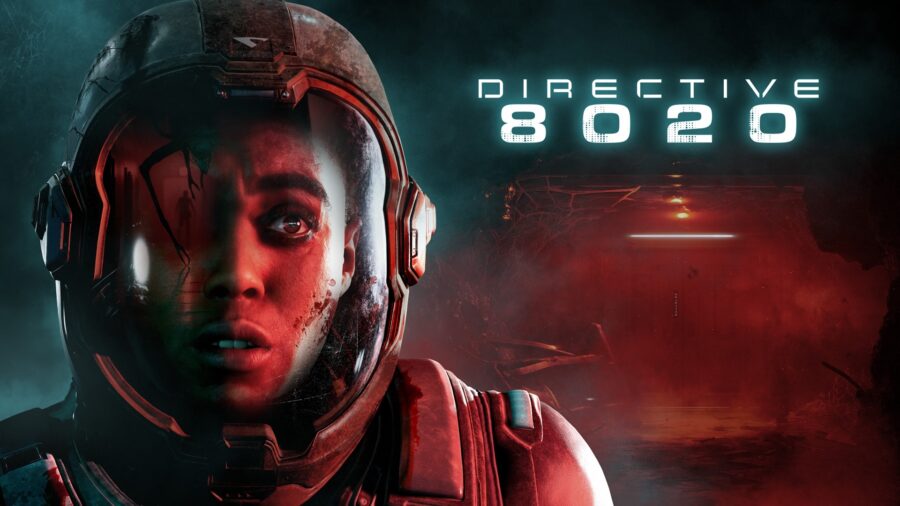
The Dark Pictures anthology is back! If you’ve never heard of this incredible survival horror series from esteemed developer and publisher Supermassive Games, you’ve been missing out. The Dark Pictures games are a series of unrelated horror games with similar playstyles. Originally billed as seasons, the Dark Pictures games moved away from that label to ensure that players understood that you can play any game in any order as they are not tied together. With that in mind, we’re here today with Directive 8020, the first game that would have originally been in Season 2 of the Dark Pictures series and the first one with a science fiction theme.

Directive 8020 drops us directly into a potential future Earth. The planet is dying and humanity’s time is ticking away rapidly. As a result, humans have planned a manned mission to an exoplanet, Tau Ceti F, in order to establish a new home for humanity. Funded by a billionaire, this mission is set to prepare Tau Ceti for colonization, eventually establishing a new home for the human race. As you might guess however, travelling to a completely new solar system almost 12 light years away means that anyone going there is cut off from the rest of humanity and well, space is vast and dangerous. It wouldn’t be called “Dark Pictures” if things were all sunshine, roses, and hope for humanity, would it?

Either way, you’re in control of the entire crew of the Cassiopeia, the advance mission ship sent to set up for the arrival of human colonists to Tau Ceti F. It’s been four years since the mission launched and the crew is just coming into the Tau Ceti system when things go *gasp* somewhat wrong. If you’ve ever watched any sci-fi movies, you’ll be aware just how many tropes they tend to use and Directive 8020 is no exception. Some of the key story elements embrace classic tropes here like a long-lost relative and while that might irritate some players, it is perfect for the approach to gameplay that the Dark Pictures anthology takes.

In Directive 8020, you’ll control various members of the crew in various situations over 8 episodes that slowly piece together events on the Cassiopeia. This is a heavily story-based game however so we’re going to be careful of spoilers. Don’t expect a bunch of plot points to be revealed or anything but there are aliens, there are poor choices made regarding aliens, and thinks don’t go well for our courageous crew. Or do they? Part of the charm of all of the games in this series are that you get to make the decisions rather than yelling at the TV that what the characters are doing is both stupid and obvious. Instead, it’s your responsibility to make key choices and explore the areas you’re in for background information that fills in the blanks in the story.

Each time there’s a key decision to be made, you can take one of two options. Sometimes those options determine traits of various characters, enabling different options in future decisions. Other times they are “turning points” which are key decisions that affect the outcome of the story. Turning points can be a major story shift or a life or death choice where someone might end up dead, and rest assured there are plenty of options to make the wrong choice and lose a key character abruptly! Once a decision has been made, that’s it too. There’s no going back in the regular game. Just like real life, you have to live with the consequences of your actions, no matter how bad they may end up. That means real consequences to your choices and often only a split second to make those decisions, adding some real stress to already stressful situations.

On top of the narrative and personality branches to the story, there are two other main components to Directive 8020. The first of these is the dreaded QTE (Quick Time Event). There are a number of QTEs strewn throughout the game that often result in immediate and disastrous consequences if failed. We’re not going to go off on a tangent about whether or not QTEs are good here, but it can certainly be frustrating to hit the wrong button by accident and change the whole course of a game. Fortunately, Supermassive thought of this and has a couple of outstanding clever solutions that modernize QTE mechanics via an accessibility menu. Instead of random buttons, you can now set QTEs to hit the same button every time. You can also get rid of button mashing QTEs, a godsend for those of us with carpal tunnel or tendon issues where repeated button mashing can cause physical pain. Instead you simply hold the correct button down for an extended period of time and the QTE resolves. You’ve still hit the correct button but now you don’t have to worry about pounding on those buttons ever again! Also eliminating the randomization makes things even friendlier, allowing you to focus on the story line more effectively and that’s really what you want anyway with this style of game.

Also included in Directive 8020 are a series of stealth challenges. Rather than simply relying on QTEs and choices, you’ll also have to actually sneak past various assailants without getting caught. That’s easier than it sounds since you have a scanner that lets you peer around obstacles in a similar way to sonar. While you’re being hunted, it’s a press of a button to watch the enemy and learn their patterns. Then it’s just a matter of patiently creeping around so as not to get caught and completing your objective, whatever it may be. That might include rewiring some conduits, hiding, or activating various electronic devices while you obtain the correct parts to open the pathway back up. While it sounds boring, enemies are fairly fast once they see you and you’ll have to either run for it, fight, or die. There’s no direct combat in Directive 8020 but if you have a door bypass tool, you can use it as a makeshift weapon. Unfortunately that won’t be in real time either and you’ll only get a single shot before enemies overcome you, but at least you have a slim chance for survival when cornered! The stealth portion of the game slows the game down a lot and once you get the hang of it, you’re mostly just waiting for the next story element but at the same time, it’s nice to have the menu-driven gameplay take a back burner to a bit more traditional fare, even if it isn’t fully realized as well as it could have been.

Anyone that’s played any of Supermassive’s games also expects a certain level of visual flair and Directive 8020 is no exception. This is an utterly beautiful game with fantastic character design, creature design, and ship design, all in gorgeous HD. Character models are particularly realistic, as has been the standard for Supermassive for a long time. These are some of the most expressive models we’ve seen. Sure they’re not quite up to Hellblade 2, but you can see the emotions across the various actors’ faces and the people are incredibly human, not weird, creepy avatars of perfection but normal people that are top in their fields in the story. Not every character is done perfectly of course but most look pretty outstanding. The worst character mapping was probably Mitchell, who looked the least realistic of any of the models, but his boyish charm and Hudson-like commentary (see Aliens) made up for the weakness in digital modelling. The background and alien effects were fantastic and have multiple callouts to one of the most classic movies in sci-fi horror (you’ll figure it out) as well and the detail work is simply exquisite. There is almost never anywhere you’ll be disappointed with the visuals here unless you’re an incel with unrealistic expectations for humans in video games.

The audio is equally stunning here with sound effects, voice work, the score, and the soundtrack all doing some extreme heavy lifting here. Sound effects are creepy and track in 3D, making it easy to pinpoint motion and scare you when you least expect it unless you’re wildly desensitized. The only thing really missing was some metal stress noises, but that’s a very minor quibble. Voice acting from the entire cast is quite excellent too, though Stafford sounded slightly odd and stilted a couple of times. Again, almost every bit of dialogue was well-delivered and interesting, building up the drama, tension and horror as things inevitably go off the rails. The soundtrack and score is where things really kicked into high gear though. Directive 8020 has strong score integration, making music a focal point for stress and action and carrying scenes which might have fallen flat without orchestral reinforcement. This is one of those rare scores that makes you immediately want to go out and buy the album…which unfortunately you can’t. That’s a shame because composer Jason Graves (Still Wakes the Deep, Swamp Thing the Series, No Rest for the Wicked) is absolutely at the top of his game here and this is a must-have album. There’s also an outstanding soundtrack here, mostly played in the transition points between each chapter and featuring Blood Red Shoes, Portishead, The People’s Thieves and more. It’s a spectacular amount of music and all of it is excellent, making this one of the best score/soundtrack combos we’ve seen in a while.

There are a few more interesting things about Directive 8020 that bear mentioning. We already talked about the accessibility changes to the series and honestly, that’s a big deal that makes a huge difference in how you experience the game. Depending on your preferences and skill level, it makes the game much easier to play for a larger audience. In addition to optionally changing the way QTEs work, you can also change the way Turning Points work, shifting from a ‘one and done’ style of play to a more open, organic approach to game choices. Choosing the alternative method of pathway selection allows you to use the pathway map of the game to go back to key decisions and replay them, selecting a different outcome if you aren’t pleased with the results. This lets you experience Directive 8020 on your own terms with the story going the way you want it to (sort of) based on your actual choices rather than incorporating accidental button presses. It’s an accessibility approach that makes the game feel more ‘yours’ while you’re playing and while you do loop some of the content in the game when rewinding, it manages to make the experience seem more organic and immersive as well.

Admittedly, this isn’t a perfect game, even if it is quite good). There are a few minor missteps with character models and dialogue that don’t significantly impact the overall game but could have been improved. The stealth in particular feels a bit too grind-y and slows the pacing of the game down a bit more than it should, but at the same time it breaks up the monotony of menu selections and QTEs, so it’s nice to have that change of pace even if it could be better implemented. It is important to remember however that Directive 8020 is a survival horror game heavily based on narrative and dialogue and not primarily an action-based survival horror so some missteps in this direction can be forgiven as part of trying to improve the overall experience. Sure it isn’t a Resident Evil by any means, but Directive 8020 has a unique personality that makes it an outstanding creative experience despite a few flaws and bumps in the road. There’s also no online co-op for the game, though it is apparently coming. Just like other entries in the Dark Pictures series, you can always play offline couch co-op if that’s your thing though.

There’s no question that Directive 8020 is a fantastic experience that will have you nervous and uncomfortable in one section and questioning your moral underpinnings in the next. Decisions have abrupt and serious ramifications and there’s are several philosophical analyses underpinning the story including some interesting thoughts about personal identity, crises, capitalism, and governmental overreach that all blend together to create a fascinating story that both horrifies and entertains in equal measure. On top of that the entire game is a social commentary in the best traditions of science fiction. It is intended to wake us up and make us think, something that only a handful of games make us do on rare occasions. While the main game is only about 10 hours for the first run-through, you’re going to want to go back and make different choices to see what happens and there are multiple pathways for the story to end. Some of the choices in the playthrough for this review resulted in pathways that only 4% of other players chose, but felt entirely natural at the time. Being able to see what other people chose adds even more to the experience once you’ve finished the game and there are so many potential branches to investigate that you could easily get 20-30 hours out of the game depending on how thorough you are and if you’re a completionist. Regardless, even if you only get a single playrhrough in, the $50 you spend is still worth every dime and Directive 8020 is one hell of a story. Go check it out!

This review was based on a digital copy of Directive 8020 provided by the publisher. It was played on a PS5 using a 55” 1080p Sony TV. Directive 8020 is also available on Xbox Series X/S and PC on Steam.

Nate Van Lindt has been a gamer since the days of yore (aka Commodore 64), and has played a bit of virtually everything out there. He's also an avid comic book collector, both vintage and current, and reads a fair amount of sci-fi and fantasy. On top of that, he watches a fair number of movies and TV shows as well. Oh, and he has a family, a full-time job, and lives somewhere in the urban wilds of Southwestern Ontario, Canada, foraging for old video cables and forgotten game soundtracks.