

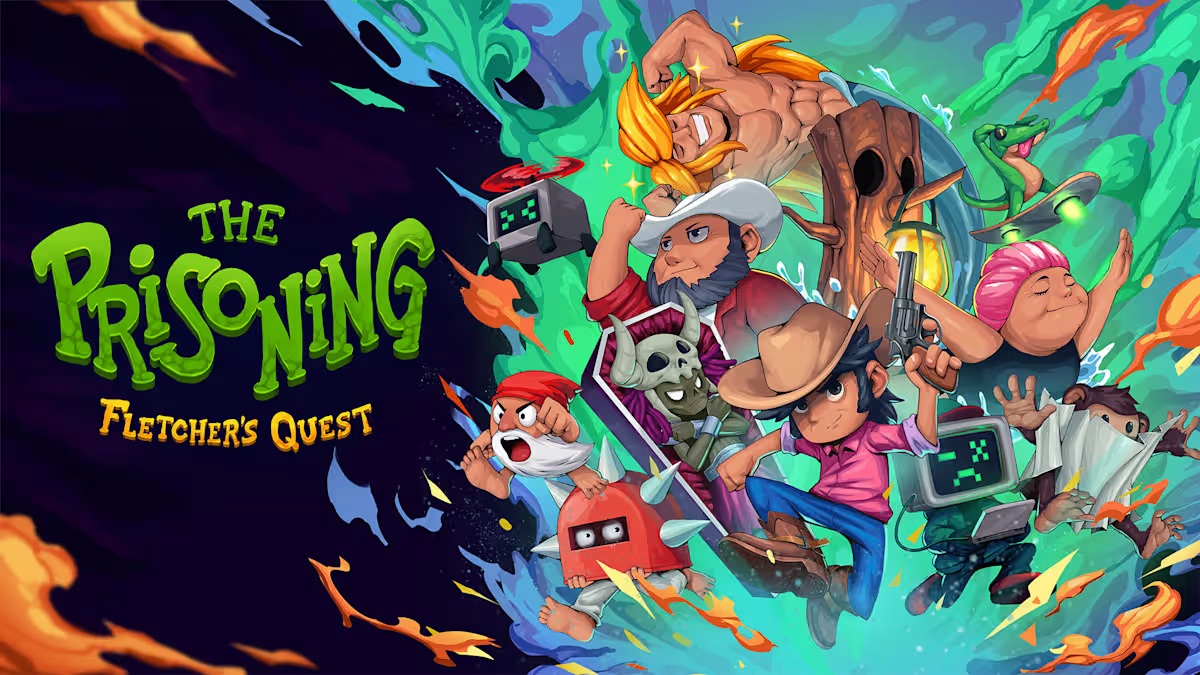
The Prisoning: Fletcher’s Quest is a uniquely personal and eccentric “Metroidvania-lite” that trades high-fantasy tropes for the messy reality of creative burnout. Developed by Elden Pixels (the team behind Alwa’s Legacy), it’s a short but sharp experience that feels like a therapy session disguised as a 2D action-platformer.
The narrative follows Fletcher Howie Jr., a 43-year-old game developer who is quite literally losing his mind during the final, grueling stages of a project. After a routine psychologist visit goes catastrophically sideways, Fletcher finds himself trapped within his own subconscious; a mental landscape where intrusive thoughts and anxieties take physical form. The story is surprisingly autobiographical and raw, yet it balances its heavy themes with a relentless, often juvenile sense of humor. Whether you’re dealing with literal “pixelated anxieties” or fourth-wall-breaking jokes about the development process, the writing manages to make Fletcher’s mid-life crisis feel both relatable and absurd.
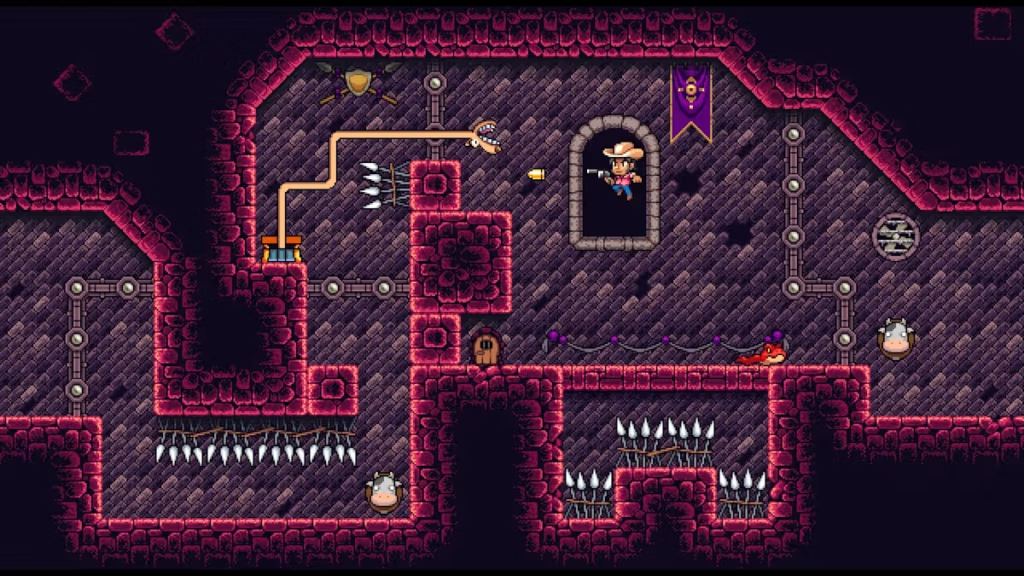
In terms of mechanics, the game plays like a precision platformer with a few genre bending twists. The standout feature is Fletcher’s handgun, which initially limits you to a single bullet on screen at a time, forcing a “risk vs. reward” approach where missing a shot leaves you vulnerable. As you navigate the semi-procedural map—which shuffles handcrafted rooms to keep layouts fresh, you’ll unlock standard abilities like double jumps and butt-stomps to overcome increasingly hostile environments. While this game is a traditional Metroidvania, it does break up the standard platforming and tosses in some shmup sections. This kind of threw me off but then given the vibe of the game, I kind of expected it I guess? I mean the game does a great job of keeping the player guessing every step of the way. The difficulty in this game is rather high, as Fletcher can only withstand two hits before being sent back to a checkpoint. This high difficulty makes the boss battles infuriating yet deeply satisfying to master. Speaking of boss battles, one of the neat things about this game it is that each boss is themed after specific mental hurdles like “deadlines” or “imposter syndrome”.

One of the highlights of this game is the inclusion of Alwa from Elden Pixels previous games. The inclusion of the character was a nice surprise that is found early on in the game. I like how both characters interact. Poking fun at not only the game they are in, but the previous works done by Elden Pixels and the gaming landscape in general. It’s a very funny and unique aspect to the game that was really a joy to experience. I feel like more games should do this. It’s fun and neat to see cameos in games; especially of this caliber.
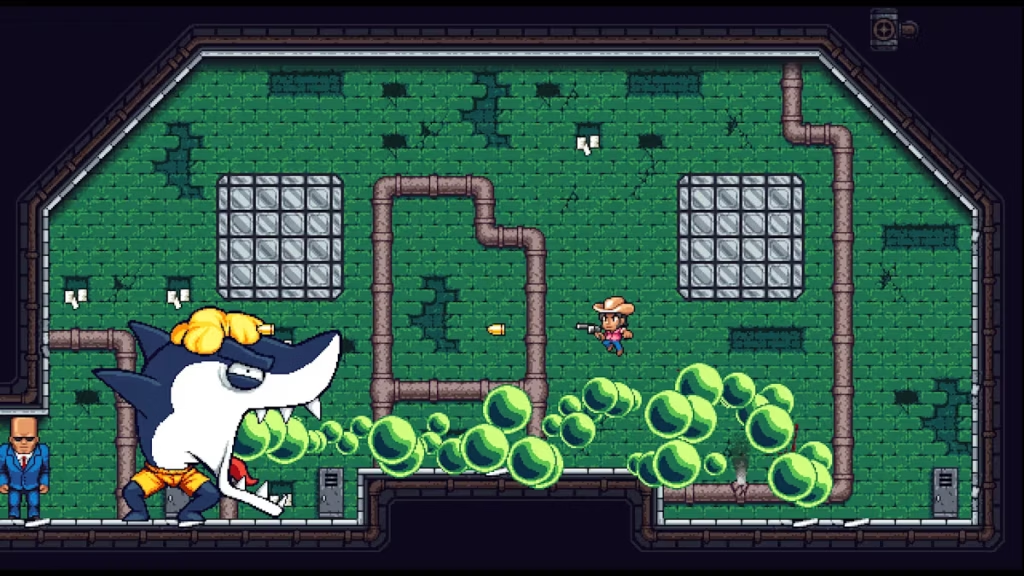
Visually, the game leans into a vibrant, polished pixel art style that feels right at home on the Nintendo Switch. The art direction shines during “glitch” sequences, where the screen distorts and color palettes shift to mirror Fletcher’s deteriorating mental state. On the Switch, performance remains exceptionally smooth and polished even when the screen is filled with projectiles and environmental hazards. The framerate stays stable in both docked and handheld modes, with it running at a perceived and constant 30FPS. The character animations are particularly expressive, giving Fletcher a frantic energy that perfectly matches the game’s stressful premise.

The audio is a major highlight, featuring a high-energy chiptune soundtrack by Dunderpatrullen. The music captures the frantic, “one-more-try” spirit of the game, blending catchy 8-bit rhythms with discordant, surreal shifts that underline the chaos of the subconscious. Sound effects are punchy and provide excellent feedback, which is crucial given the risk vs reward combat system. While some of the looping tracks can feel a bit repetitive during particularly long stretches of trial-and-error, the overall soundscape effectively reinforces the retro inspired, anxiety-driven atmosphere.

The Prisoning: Fletcher’s Quest is a compact, four hour journey that succeeds by being unapologetically weird and personal. While its procedural elements and Metroidvania structure are somewhat surface level, the tight controls and creative boss encounters make it a compelling ride for fans of challenging platformers. It doesn’t try to be a sprawling epic but instead offers a focused, humorous, and slightly stressful window into the mind of a creator. If you’re looking for a platformer with a distinct voice and don’t mind a bit of “therapy-flavored” frustration, Fletcher’s quest is well worth the trip!
Disclaimer: A review key was provided
Also available on PC

In addition to writing articles, Ryan Byers also creates content for his YouTube channel called "Obscure Games and Consoles", collects video games, and dabbles in video game development.