

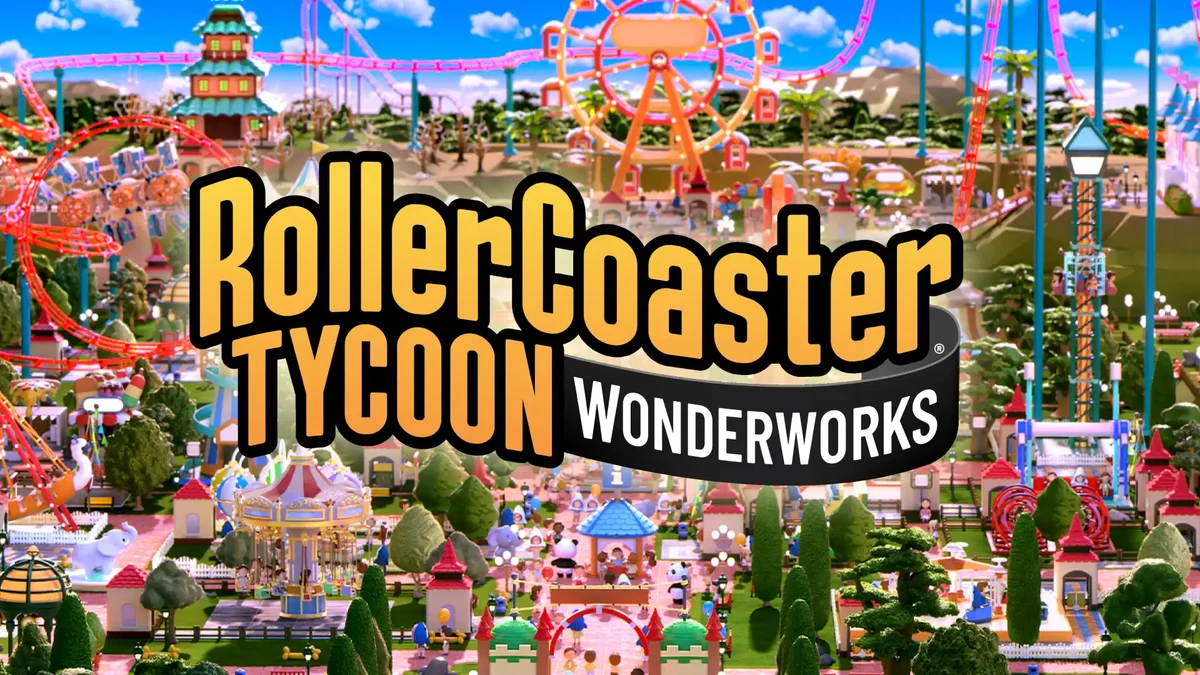
Atari and Springloaded Games are continuing to showcase what players can expect from RollerCoaster Tycoon Wonderworks, releasing a series of developer diaries that explore some of the game’s major features. Three episodes are now available, highlighting expanded park customization, more detailed control over admission prices, and a new ride simulator that allows players to experiment with coaster physics, including pushing their creations to spectacular failure.
The first diary, Color Customization, focuses on giving players greater creative freedom when designing their parks. Although every object comes with a carefully selected default palette created by the art team, players are no longer limited to those original designs. The new customization system allows them to take control of the color scheme assigned to individual attractions, opening up more possibilities for creating parks with a distinctive visual identity.
The second episode, Park Entrance Settings and Ticket Pricing, turns its attention to the business side of running an amusement park. Players can determine how much guests pay to enter, with the Park Access Histogram providing a clearer picture of how admission prices affect attendance. This should make it easier to recognize when ticket prices are discouraging visitors and when there might be room to increase them without driving guests away.
Perhaps the most interesting addition arrives in the third diary, Ride Simulator. This new physics-driven system lets players experiment with the settings of any ride, adjusting variables such as Ride Duration, Acceleration, and Max Speed. Every adjustment affects how the attraction performs, with the physics engine responding to changes and influencing the ride’s intensity and how guests react to it. Players can even watch their creations fail in spectacular fashion, although the simulator makes it possible to do so without putting any actual guests in danger.
Together, the three developer diaries offer a better idea of how RollerCoaster Tycoon Wonderworks is approaching park management, placing greater emphasis on giving players control over both the creative and operational sides of their attractions. From experimenting with visual designs to finding the right admission price and testing the limits of ride physics, there appears to be plenty of room for players to develop their own approach to building an amusement park.
All three developer diaries are available now, with more expected to follow.