

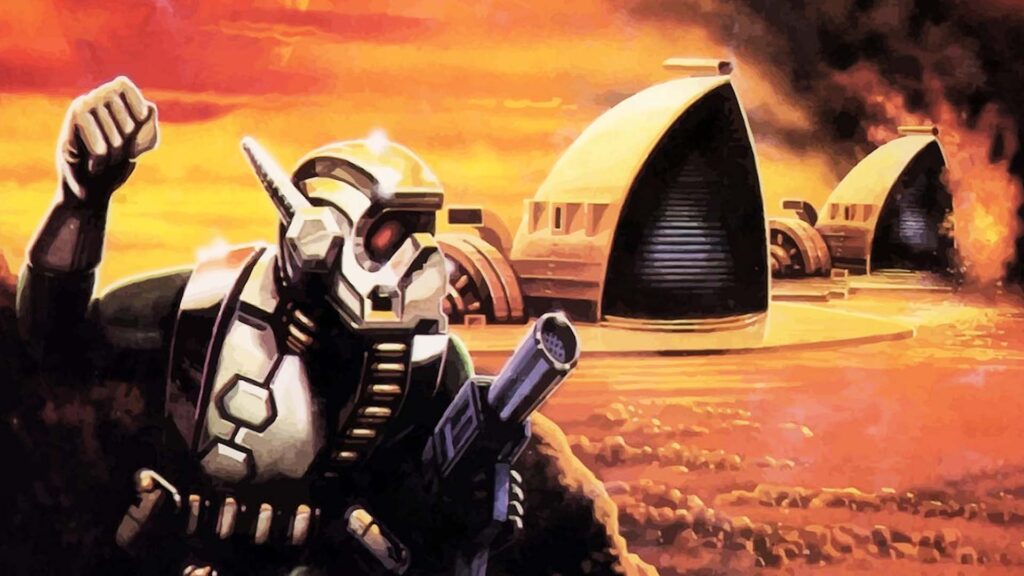
Westwood Studios’ Dune II: The Building of a Dynasty is one of the most influential strategy games ever released, helping establish the foundations of a genre that would eventually produce some of PC gaming’s biggest franchises. Unfortunately, despite its historical importance and GOG’s interest in bringing it back, the 1992 classic remains stuck in a complicated licensing situation that could prevent it from receiving an official modern re-release.
Speaking with GamesRadar+, Marcin Paczynski, GOG’s senior business development and partnerships manager, described Dune II as one of his personal priorities when it comes to game preservation. However, getting the game back onto modern storefronts is considerably more complicated than simply reaching an agreement with its original developer or publisher.
Although Dune II was developed by Westwood Studios, which Electronic Arts eventually acquired, EA does not control all the intellectual property necessary to make the game available again. The publisher owns the original game’s code, assets, and associated materials, but the licensing situation surrounding the Dune universe introduces several additional parties.
One particularly important complication is that Dune II was based on David Lynch’s 1984 Dune film rather than being licensed directly from Frank Herbert’s novels. That distinction brings Universal Pictures into the picture, alongside the rights retained by the film’s original producer, Dino De Laurentiis, whose portion of the licensing arrangements now involves his successors following his death.
The Herbert Foundation also holds rights to the broader Dune intellectual property, while Legendary Pictures controls rights associated with the more recent film adaptations. That leaves at least five different parties whose interests and agreements could become relevant to any attempt to bring the game back.
Things become even more complicated when considering Legendary Pictures’ agreement with Funcom, which received a license to develop games within the franchise. This includes Dune: Awakening, and Paczynski acknowledged that an exclusivity arrangement exists, although it remains unclear precisely how it would affect the possibility of re-releasing Westwood’s older games.
That uncertainty is particularly frustrating for anyone hoping to revisit the original Dune strategy games. Dune II was followed by other Westwood-developed entries, including Dune 2000 and Emperor: Battle for Dune, and the licensing complications could extend beyond a single game.
There is also the financial reality of bringing an older title back to market. Paczynski estimated that a re-release might sell somewhere between 50,000 and 100,000 copies at a price of US$5.99 or US$9.99. Getting several major companies involved in negotiating agreements for a relatively modest commercial return makes the entire undertaking considerably less attractive.
Nevertheless, Dune II deserves better than remaining difficult to access through official channels. Its influence on real-time strategy games is difficult to overstate, with its approach to resource gathering, base construction, and commanding armies helping establish conventions that would become familiar throughout the genre. Its influence can be seen in everything from Blizzard’s Warcraft games to Westwood’s own Command & Conquer series.
There is something especially unfortunate about a game with such an important place in PC gaming history being held back by the very licensing arrangements that once made its existence possible. GOG has demonstrated an interest in preserving older games and making them accessible on modern systems, but Dune II is a reminder that technical compatibility is only one part of the preservation process. Sometimes, the biggest obstacle is figuring out who actually has the authority to bring a game back.
For now, there is no guarantee that GOG will be able to overcome these complications. Paczynski’s comments nevertheless suggest that the company has not lost interest in the project, even if the number of parties involved makes a straightforward re-release unlikely.