

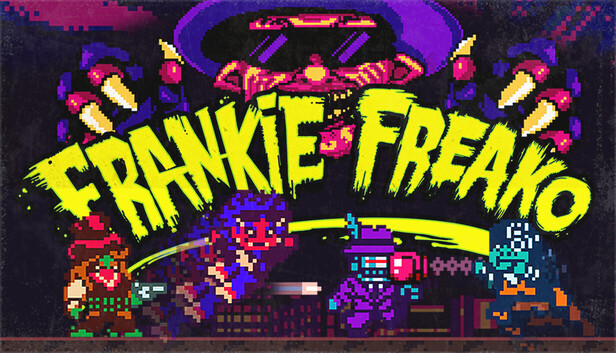
FreakZone Games has built a reputation for taking inspiration from retro gaming and giving it a distinctly irreverent spin, but Frankie Freako might be one of its strangest projects yet. Rather than simply revisiting the studio’s familiar platforming roots, this action roguelite combines the frantic movement of Super Mario Bros. 2 with the upgrade-driven progression of Hades, all wrapped in the wonderfully grotesque aesthetic of ’80s puppet horror. Based on the film of the same name, Frankie Freako is a prequel that expands upon its bizarre universe while offering an experience that stands entirely on its own. It is a welcome change of pace for FreakZone Games, and one that demonstrates how much fun can be had when the studio leans into its more unconventional inspirations.
The premise is suitably ridiculous. The Freakos, a mischievous bunch of party-loving creatures, once lived peacefully on Freak World until Munch declared himself Freak Lord and unleashed an army of mechanical Freako Killers. The surviving Freakos are forced to work the phone hotlines of Munch Industries, but Frankie, Boink and Dottie have other plans. With the help of the hacker Bingo Bongo, the trio sets out to climb Munch Tower and put an end to Munch’s reign. It is the kind of absurd setup that could easily become tiresome, but Frankie Freako understands that its appeal lies in embracing the ridiculousness rather than taking itself seriously.

FreakZone Games is no stranger to retro-inspired platforming, having previously developed games such as Angry Video Game Nerd Adventures and its sequel. Those titles leaned heavily into the challenges and frustrations associated with classic platformers, whereas Frankie Freako takes a more playful approach to its action. The platforming remains important, but the roguelite structure gives the game a different rhythm, with each run offering opportunities to experiment with new abilities and character builds.
Climbing Munch Tower is where Frankie Freako really comes together. Each run consists of randomly assembled floors filled with enemies, obstacles and destructible scenery, with players expected to make the most of their limited time. Stomping, throwing, air-dashing, dodging and wall-sliding are essential to keeping the momentum going, while stunned enemies and objects can be picked up and hurled at anything unfortunate enough to be standing nearby. The combat is satisfying, particularly when a well-timed throw clears out a group of enemies or sends a mechanical Freako Killer flying.
Destroying scenery also rewards players with loot, introducing a risk-and-reward element to the proceedings. Defeating enemies replenishes the timer, but once a floor has been cleared, players must reach the exit before time runs out. There is always the temptation to stick around and smash a few more objects for additional loot, but doing so can leave you scrambling to escape. This simple mechanic gives Frankie Freako a welcome sense of urgency, encouraging players to balance their greed against the need to survive.

The randomly generated floors can occasionally become a little maze-like, although directional indicators help keep players moving towards the next encounter. The layouts are not always particularly memorable, but the game rarely leaves players wandering long enough to become frustrating. Frankie Freako is at its best when it keeps the action moving, and its overall structure does a good job of maintaining that momentum.
The roguelite progression is another highlight. At the end of each room, players can choose from three randomly selected temporary upgrades, with the potential to dramatically change how a run develops. These boons range from the appropriately disgusting Garlic Soda to the Fart Loafers, and some are exclusive to particular characters. The upgrades are often ridiculous in their presentation, but they can make a substantial difference in combat, particularly when several complementary abilities begin to stack.

Players can also spend accumulated loot on permanent upgrades between runs, giving each attempt a sense of progression even when things go wrong. The difficulty gradually increases, but Frankie Freako remains accessible, particularly after investing in a few improvements. Some upgrades can make the experience considerably easier than intended, with automatic health restoration being a particularly noticeable example. While this can take some of the tension out of certain encounters, the progression system otherwise strikes a reasonable balance between encouraging experimentation and rewarding persistence.
Having three playable characters also gives Frankie Freako more replay value than its relatively compact scope might suggest. Frankie can clear crowds with a devil scream, Boink relies on an extendable fist, and Dottie focuses on firearms and gun-based upgrades. Each character has a distinct approach to combat, encouraging players to experiment with different builds rather than simply repeating the same run with a different appearance. Defeating Munch with all three characters also unlocks the full ending, giving completionists another reason to return to Munch Tower.

The game becomes considerably more enjoyable once its movement and combat mechanics begin to click. There is a satisfying rhythm to chaining together attacks, dodges and throws while keeping an eye on the timer, and the different characters provide enough variety to keep subsequent runs from feeling entirely repetitive. While Frankie Freako lacks the depth of Hades and the variety of some of the genre’s more ambitious releases, it makes good use of the mechanics it has.
Some of the smaller details are also worth appreciating. Anyone who remembers the stopwatch in Super Mario Bros. 2, which temporarily freezes enemies in place, will appreciate Frankie Freako’s own wonderfully ridiculous take on the idea. Rather than stopping time, a cassette tape causes nearby enemies to abandon their attacks and start dancing. It is a small addition, but one that perfectly captures the game’s sense of humour and affection for the bizarre.

Frankie Freako is a welcome addition to FreakZone Games’ catalogue, offering a different take on the studio’s familiar retro-inspired action. Its responsive controls, satisfying combat and worthwhile progression systems make for an entertaining experience, even if the randomly generated levels and occasional overpowered upgrades prevent it from reaching the same heights as the genre’s more polished offerings. At $6.99, there is plenty of freakish fun to be had here, and it would be interesting to see FreakZone Games take on another cult horror property. With the new Deathstalker bringing renewed attention to the sword-and-sorcery genre, a game inspired by that world could be a particularly interesting fit for the studio’s blend of retro action and irreverent humour.
Disclaimer: A review key was provided.