

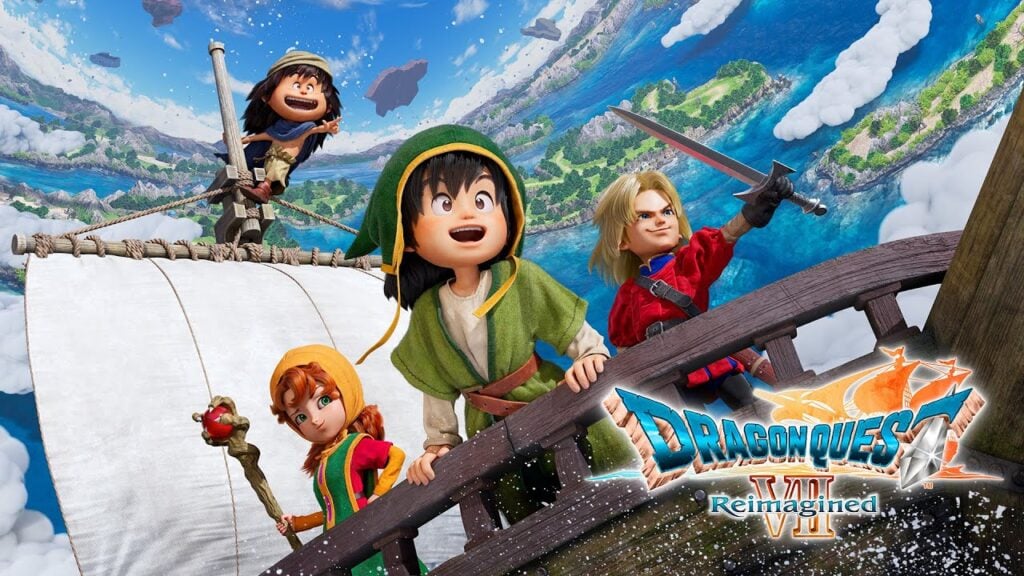
Dragon Quest stands as one of the foundational pillars of the JRPG genre. While it may not have been the absolute first, it’s undeniably among the most influential franchises in gaming, boasting enormous popularity, a massive catalog of titles, and even release-day traditions built around fan demand. A big part of its identity comes from the unmistakable art style of the late Akira Toriyama, which gives the series its timeless charm. In recent years, fans have seen multiple re-releases of the first three entries, most recently in polished HD form. Now, instead of continuing sequentially, the spotlight jumps forward with Dragon Quest VII Reimagined.
It’s a bit puzzling that Square Enix chose to bypass entries IV, V, and VI, though given the overall quality of the series, it’s not a major concern. Dragon Quest VII originally launched on the PlayStation as Dragon Warrior VII, marking the series’ early steps into 3D. It later received a remake on the Nintendo 3DS under the title Fragments of the Forgotten Past. Building on that version, this new release aims to deliver the definitive edition of the game on Nintendo Switch 2.

The premise starts simply. You play as a young boy living on what appears to be the only island in existence. Your father is a sailor, your closest companions include the mayor’s daughter and the local prince, and life seems peaceful—if a bit small. Naturally, curiosity takes hold, and it isn’t long before you and your friends begin to suspect there’s more beyond your shores. From there, the story expands dramatically, introducing supernatural forces, ancient mysteries, and a sprawling narrative that unfolds over roughly 75 hours. Early pacing is slow, but persistence pays off. Eventually, you’ll collect tablet fragments that allow you to access new lands and reshape the world itself, turning that tiny island into the gateway to something much larger.
Each region introduces its own storyline, enemies, and challenges, gradually weaving together into a cohesive and memorable adventure. The structure feels intentionally old-school, capturing the essence of classic Dragon Quest design while offering a surprising amount of depth. Mechanics remain familiar, making it easy for longtime fans to settle in, but the interface has been refined for modern audiences. Menus are smoother, navigation is quicker, and overall management feels far less cumbersome.
Combat retains its traditional turn-based structure, but quality-of-life improvements make a noticeable difference. The Tactics system allows for automation during battles, streamlining grinding and reducing repetition. The return of the Zoom spell—now free to use in most cases—also cuts down on travel time significantly compared to the original PlayStation version.

What truly elevates Dragon Quest VII, however, is how it handles consequences. The game frequently shows the ripple effects of your actions, sometimes in unexpected or even uncomfortable ways. Helping one character might inadvertently cause harm elsewhere. This layered storytelling encourages players to think more broadly about cause and effect, offering a more reflective experience than the series is typically known for. While Dragon Quest isn’t usually associated with deep narrative complexity on the level of something like Trails or Final Fantasy, this installment stands out by emphasizing character growth and human flaws.
The job system adds another layer of depth once it becomes available. Characters begin with defined roles but can gradually master them, unlocking new abilities along the way. Later, you gain the freedom to switch jobs and even combine them, opening up a wide range of customization options. Initially, this can feel punishing, as changing jobs resets your abilities. However, with smart use of automation, equipment, and MP-saving tactics, you can quickly rebuild strength and even surpass previous limits. It becomes a rewarding system once you understand how to optimize it.
Grinding is also more manageable thanks to automated combat and steady rewards. Experience and gold accumulate quickly, and while the post-battle screens aren’t automated, the process is still far less tedious than before. Equipment choices remain important, particularly when factoring in items like monster hearts, which can significantly impact performance depending on your build.
Exploration is another highlight. Beyond fast travel, you’ll eventually gain access to a ship and other, more surprising methods of traversal. The world is filled with secrets, optional areas, and hidden upgrades, including permanent stat boosts and additional tablet fragments. Venturing off the main path is consistently rewarding and helps the game feel richer and more alive.

Visually, this reimagined version is impressive. Unlike some earlier remasters, this is a full 3D overhaul. The environments are vibrant and detailed, and Toriyama’s iconic style translates beautifully into this updated presentation. Character models, environments, and cinematic sequences all benefit from the upgrade, giving the game a polished, modern feel. That said, there is a minor technical issue where textures occasionally load awkwardly within a visible square around the player, particularly in dungeons. It’s not constant, but it’s noticeable enough to momentarily break immersion.
The audio design is strong overall, featuring classic Dragon Quest compositions that capture the series’ heroic tone. However, given the game’s length, repetition becomes an issue. Certain tracks loop frequently and can feel overused, and not every piece perfectly matches the tone of the scene. It’s a small drawback, but one that becomes more apparent over time.
Voice acting is another welcome addition, with solid performances across major story moments. Not every line is voiced, but key scenes are, and the quality is generally high. The script, however, leans heavily into exaggerated regional dialects to differentiate locations. While creative, these caricatured accents may feel a bit over-the-top or even distracting to some players.

EvDragon Quest VII Reimagined remains an outstanding experience. It delivers a massive, engaging story, a satisfying progression system, and a world that rewards exploration at every turn. The visual and audio upgrades bring new life to the game, and the improvements to gameplay make it far more accessible than its original version.
At full price, it’s a significant investment, but one that offers tremendous value in return. For fans of traditional JRPGs, this is an easy recommendation. Whether you’re revisiting it or experiencing it for the first time, Dragon Quest VII Reimagined is a journey worth taking—and one that’s likely to keep you hooked until the very end.
Disclaimer: A review key was provided
Images taken from Nintendo.com