

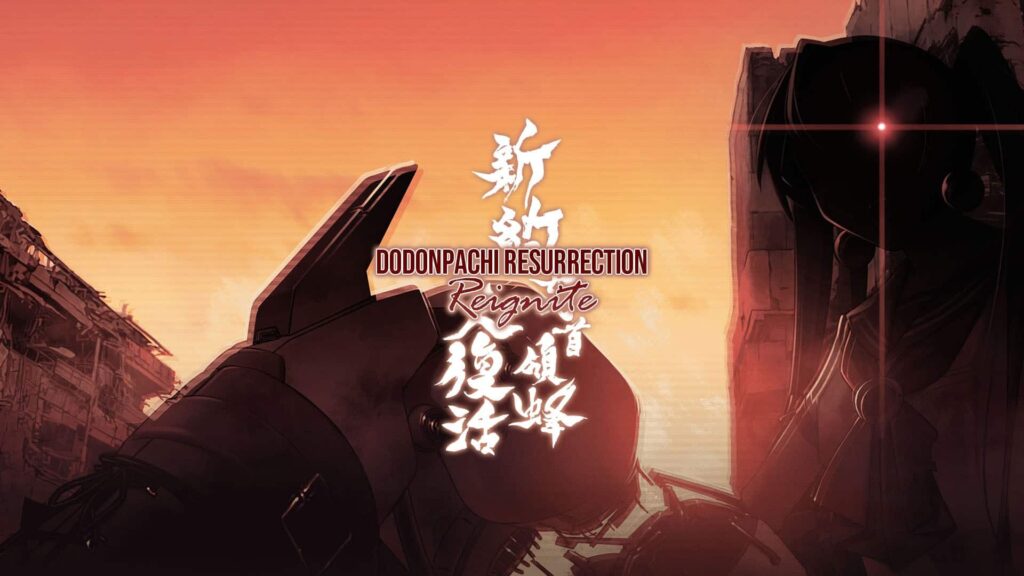
Some re-releases manage to make you wonder how an older game could possibly look worse dressed up for a modern platform than it did on hardware that is now over a decade old. DoDonPachi Resurrection Reignite is exactly that kind of release. CAVE’s shoot ’em up is still a phenomenal game underneath everything, but this particular package strips away so much of what long-time players valued that “definitive edition” feels like a stretch of a label. What we are left with instead is a release built almost entirely around a multiplayer mode that cannot make up for what has been cut.
Let’s start with the content, because that is where the frustration begins immediately. Anyone who owned DoDonPachi Resurrection on Steam or Xbox 360 will remember a genuinely healthy selection of modes, Black Label, 1.51 and a handful of arrange options among them. Reignite has none of it. Even features that have become standard for shoot ’em up re-releases are absent here. There is no training mode, no stage select and no replay function, and that leaves players with almost nothing to lean on while trying to actually improve.

This matters more in this genre than most, since practice is basically the whole point. DoDonPachi Resurrection was never meant to be picked up casually and cleared without effort. Memorizing patterns, learning your timing and figuring out how to survive screens full of bullets is the appeal, and removing the tools that make that learning process manageable feels like CAVE misunderstood what people actually come to these games for.
What remains offline has been trimmed down to Arcade 1.5 and Score Attack, and the latter is really just the former with online leaderboards attached. There is an assist option that slows bullets down, which seems intended to replace the old Novice settings, but it does not work nearly as well and becomes especially annoying whenever you restart a run, turning something meant to help beginners into more of a nuisance.
Shmup Royale, the new mode CAVE is clearly banking on, does not do enough to justify the rest of what is missing. On paper, the idea is fun. Cramming eight to ten players into a competitive take on a shoot ’em up sounds like a neat experiment, and there is something appealing about turning classic arcade mechanics into a battle royale style contest.

In execution, though, it is a mess. Once several players start flinging effects and items around the screen, everything becomes cluttered and hard to read. Bullets vanish behind text and visual noise, which is the single worst thing that can happen in a bullet hell title, since the whole genre depends on being able to see and react. Once the screen stops being legible, the mode stops being fun and starts being irritating instead.
The online side does not fare much better. Matchmaking can strand you in a lobby for what feels like forever, disconnects and crashes happen often enough to feel expected, and even leaving a lobby cleanly is not guaranteed, with some situations only resolved by shutting the whole game down. None of that resembles the smooth online experience you would hope for from a release leaning this heavily on multiplayer.
There is also a gacha system attached to Shmup Royale, locking cosmetics and avatars behind a currency you grind for through the mode. It feels wildly out of place here, especially considering how much actual game content has been stripped elsewhere. Watching development time go toward a system like this, in a release already missing features that existed a decade ago, makes the priorities behind the whole project difficult to defend.

Technically, things are not much better. Bringing this game to PC should have been fairly painless, yet the port arrives with a strange list of missing options and regressions. It still runs on an outdated DirectX 9 framework, has no proper monitor selection or resolution settings, defaults to awkward window scaling, forces bilinear filtering and, oddly, only lets you rebind movement on a keyboard.
Even the presentation feels cut corners. The interface is bland, and a lack of polish becomes more obvious the longer you spend with the game. TATE mode is a particularly baffling omission too, since vertical orientation is available in Arcade mode but does not carry over into Battle Royale, despite the whole series being built around vertical scrolling.
Performance issues compound the problem further. Micro-stutters interrupt play at odd moments, slowdown shows up where it should not, and fails to appear during the moments where the original game would naturally chug under a heavy bullet count, the Golden Disaster fight being the clearest example of performance dropping exactly when you need it not to. Audio has its own hiccups too, with music cues occasionally failing and leaving only sound effects during boss encounters.

Then there is the localization, which leans on machine translation that reads about as awkwardly as you would expect. On their own, none of these problems would be enough to sink an otherwise strong port, but stacked on top of everything else that has been cut, they add to the sense that Reignite was not treated with the care a premium release deserves. Linux and Steam Deck players should also be aware of ongoing Proton compatibility issues.
To its credit, there is one genuinely new piece of single player content here. Reignite includes a new Stage 6 and boss fight that longtime fans have not seen before. Unfortunately, the stage does not feel particularly inspired, coming across more as a patchwork of assets and ideas borrowed from other CAVE games rather than something built with real intent. The new soundtrack arrangements that go with it fare much better, but a single stage and a few new tracks are not nearly enough to offset everything else that has been taken away.
That, in the end, is the real problem with DoDonPachi Resurrection Reignite. The game buried underneath all of this is still a fantastic one, and nothing about this release changes that. What it does change is whether this specific version is worth your money.

At around $25, it is genuinely surprising to see a release offering fewer modes, fewer practice tools and fewer features than versions that have been sitting on shelves for years. A strong new multiplayer mode might have been enough to carry that weight on its own, but between the matchmaking problems, the visual clutter and the technical shortcomings, Shmup Royale ends up being just one more reason to hesitate rather than the selling point CAVE clearly wanted it to be.
DoDonPachi Resurrection Reignite is not the definitive way to play this game, whatever the marketing suggests. It plays more like a stripped down port with an unfinished multiplayer experiment tacked onto the side. If you want to experience DoDonPachi Resurrection properly, you are much better served by the existing PC release, the Xbox 360 version or even original arcade hardware than by spending money here.

That is genuinely a shame, because a re-release done right could have meant something. Instead, Reignite makes it hard to recommend supporting this version, even in the hope that doing so might eventually lead to CAVE giving similar treatment to other classics like DoDonPachi DaiFukkatsu Black Label, Mushihimesama Futari or Ketsui. Those games, like the original DoDonPachi Resurrection, deserve a lot better than this.
Images taken from Steam.