

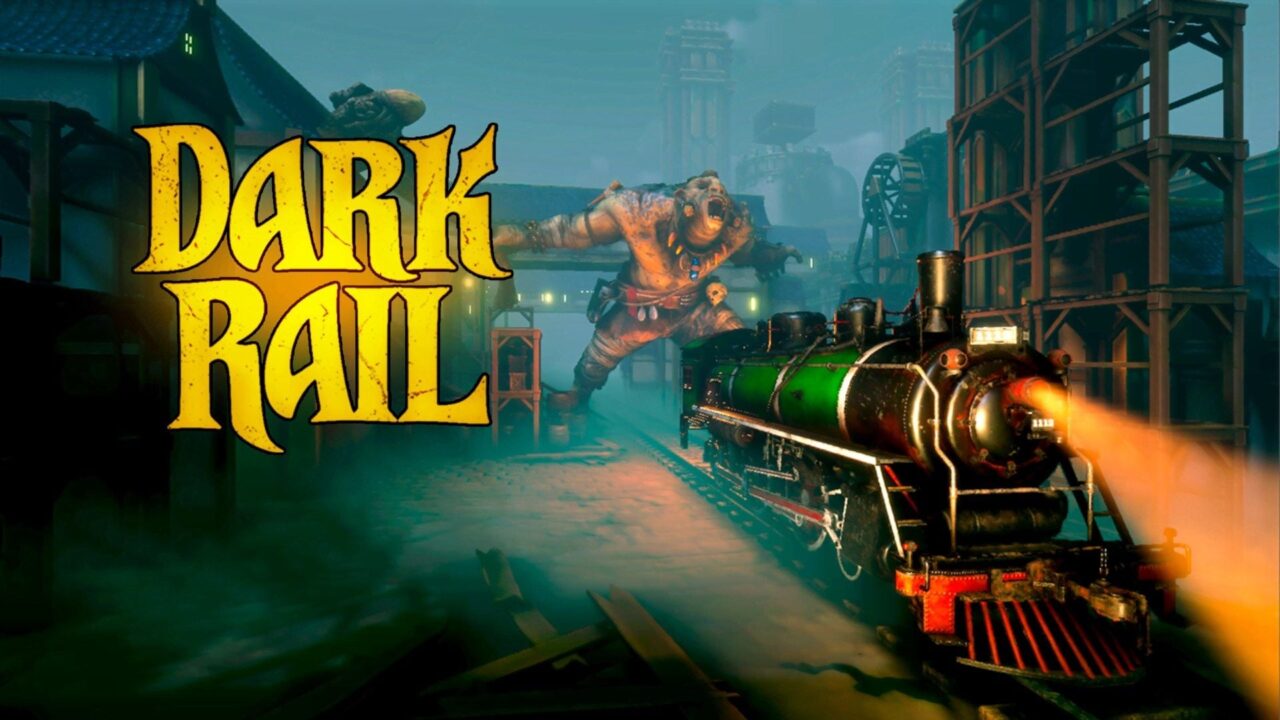
Humanity is in trouble, and keeping what remains of civilization alive requires some rather unpleasant decisions. Dark Rail, a turn-based management roguelike from solo developer Steam Veil Games and publisher JanduSoft, puts players in charge of an Inquisition outpost on the industrialized frontier of a crumbling empire. Between hunting heretics, managing increasingly scarce resources, and ensuring prisoners are delivered to meet the Church’s demands, there is plenty to keep an inquisitor occupied. Unfortunately, the supernatural forces threatening humanity are not the only things that can bring an operation to its knees.
Dark Rail takes place in a world where magical creatures have returned, overrunning settlements, destroying farmland, and threatening the remnants of human civilization. The Holy Church has consequently assumed responsibility for humanity’s survival, organizing a crusade against magic that relies on inquisitors hunting down those accused of heresy. It is an appropriately grim setting, with industrial environments, grotesque creatures, and an abundance of religious imagery helping establish the atmosphere. Rather than relying on lengthy exposition, the game communicates much of its world through brief descriptions and environmental storytelling, allowing its bleak premise to speak for itself.
The train is particularly important to this setting, serving as the means by which inquisitors travel between locations during expeditions. It is also a fitting representation of the game’s two interconnected gameplay systems. Dark Rail is as much about managing an increasingly desperate outpost as it is about venturing into dangerous territory, and neglecting either responsibility can quickly undermine the other.

Managing the outpost is the foundation of the experience, with a limited number of days available to meet an increasingly demanding prisoner quota. Expeditions are necessary to capture heretics, but every journey consumes valuable time and resources, while injured inquisitors may require several days to recover. Meanwhile, the outpost needs constant investment to remain operational. Buildings generate resources, restore health, and improve the capabilities of inquisitors, making their development essential to long-term survival.
The available buildings each have their own purpose. Taxation offices generate gold, merchants exchange money for metal, churches provide healing, and barracks allow inquisitors to gain experience. These facilities are relatively straightforward, but deciding which ones deserve investment and when to upgrade them is where things become interesting. Construction takes time, and resources are rarely plentiful enough to comfortably cover every expense. Spending a day developing the outpost might make future expeditions considerably easier, but that is another day that could have been spent hunting for prisoners.
Gold is particularly important, although generating additional income comes with its own complications. Increasing taxation can help resolve immediate financial problems, but it also breeds resentment among the population. This contributes to two additional threats, Revolt and Madness, both of which can eventually bring an entire run to an end. Revolt can be reduced by spending money to appease the population, while Madness requires sacrificing a prisoner. Neither solution is particularly appealing when both money and prisoners are already in short supply.

This is where Dark Rail’s management mechanics become especially effective. Almost every decision has consequences, and the easiest solution to an immediate problem can create an even greater one further down the line. Sacrificing prisoners might prevent Madness from reaching dangerous levels, but doing so could leave the outpost struggling to meet its next quota. Likewise, increasing taxation can provide some much-needed gold while pushing the population closer to revolt. There is rarely a completely satisfactory solution, and the game does a good job of making even seemingly minor decisions feel important.
Expeditions provide a welcome change of pace from the outpost management, taking inquisitors into locations such as farmland, alleys, and tombs. These journeys consist of a series of events that can provide resources, introduce combat encounters, or present situations that require particular attributes to overcome. Violence, intelligence, and health are the primary characteristics used to determine which approaches are available, with different situations demanding different levels of proficiency.
For example, a corrupted sapling threatening local crops might be dealt with through an intelligence check involving holy scripture, or by taking the more destructive approach of burning the affected fields. Success is partly determined by a dice roll, meaning even an otherwise sensible decision can end in failure. However, unsuccessful attempts are not necessarily a complete waste, as they can still provide resources, albeit with additional health penalties or other unfortunate consequences.
Combat uses a similarly unpredictable system. At the beginning of each round, inquisitors roll for action points, determining how many abilities they can use during that turn. Each inquisitor has access to three skills with different action point requirements, making it necessary to adapt to whatever resources are available. A particularly poor roll can leave an inquisitor unable to perform an action, forcing them to endure an enemy attack before another opportunity to fight back arrives. Thankfully, unused action points carry over between rounds, preventing an unlucky roll from completely eliminating the possibility of responding.

The combat itself is relatively straightforward, with most encounters revolving around selecting appropriate abilities and making the best use of available action points. Inquisitors have different strengths, however, making expedition preparation important. Choosing the right members for a particular journey can make a considerable difference, especially when facing more dangerous supernatural creatures. Victories provide experience and unlock further events, while successful expeditions generate the prisoners and resources needed to keep the outpost functioning.
The dice-based mechanics initially seem like they could become frustrating, particularly when an unfortunate roll threatens an expedition that has already consumed valuable supplies. However, Dark Rail generally does a reasonable job of balancing randomness with decisions that remain within the player’s control. There is a meaningful difference between losing an expedition because of an unfortunate roll and sending an already wounded inquisitor into the field simply because another prisoner is desperately needed. Learning when to accept a risk and when to prepare more carefully is an important part of mastering the game.
There is also an interesting moral dimension to the experience. The Inquisition is hardly portrayed as a particularly heroic organization, and keeping the outpost operational can involve increasingly questionable methods. Exploiting prisoners and taking a ruthless approach to certain situations can provide immediate benefits, but repeatedly doing so can increase Revolt and make an already difficult situation considerably worse. Even the supernatural threats encountered during expeditions can become more dangerous as the consequences of certain decisions accumulate. It reinforces the game’s central premise rather well, forcing players to consider just how much they are willing to sacrifice to keep humanity alive.

Unfortunately, Dark Rail is not particularly welcoming to newcomers. There are several interconnected systems to understand, and their consequences are not always immediately obvious. Finding an effective balance between building priorities, expedition schedules, taxation, and managing Revolt and Madness requires experimentation. The first run can be especially difficult, and failing to meet the initial prisoner quota is a very real possibility. While this can be part of the appeal of a roguelike, some of the game’s mechanics could benefit from clearer explanations to make the initial learning process less punishing.
Fortunately, failure is not entirely wasted. Completing expeditions and fulfilling objectives contributes to permanent progression, allowing players to unlock improvements that carry over into subsequent attempts. These include additional starting resources, improved inquisitor health, increased healing when skipping turns, and eventually another inquisitor. Having more gold or metal available from the beginning can make a substantial difference, particularly when it provides greater flexibility in deciding whether to develop the outpost or send another expedition.
The problem is that the permanent progression system is relatively limited. While the available improvements are useful, many amount to straightforward statistical enhancements rather than introducing genuinely new ways to approach subsequent runs. More starting resources and improved attributes certainly make the experience more manageable, but they do little to fundamentally change how the game is played. The abilities acquired during individual runs provide some additional variety, but there simply are not enough permanent upgrades to create the same sense of excitement as discovering an entirely new approach to the game’s systems.
This becomes increasingly noticeable the longer Dark Rail is played. The initial satisfaction of learning how its different mechanics interact eventually gives way to a familiar routine of managing resources, sending inquisitors on expeditions, and trying to keep up with increasingly demanding requirements. Locations and encounters begin to feel repetitive, while the relatively straightforward combat offers limited opportunities for experimentation. There is still an incentive to attempt another run after a failure, especially when a newly unlocked improvement might make the difference between meeting a quota and losing the outpost, but the underlying structure does not evolve enough to keep every subsequent attempt equally engaging.

More variety in its locations, encounters, enemies, and permanent upgrades would have gone a long way towards addressing this problem. The foundation is certainly there, and the combination of expedition-based gameplay and outpost management creates an enjoyable balancing act that gives every decision a sense of consequence. Its grim fantasy setting also helps distinguish it from other management roguelikes, particularly with the interesting decision to place players in control of an organization whose methods can be almost as disturbing as the creatures threatening humanity.
Dark Rail has some rough edges, particularly when it comes to its progression and the repetition that eventually sets in, but there is a compelling game underneath. Managing an increasingly desperate outpost while sending inquisitors into dangerous territory creates an engaging strategic challenge, and the resource management systems work particularly well when everything begins to fall apart at once. Steam Veil Games has delivered a promising roguelike that rewards careful planning and experimentation, even if there is room for considerably more variety in future updates.
Disclaimer: A review key was provided


