

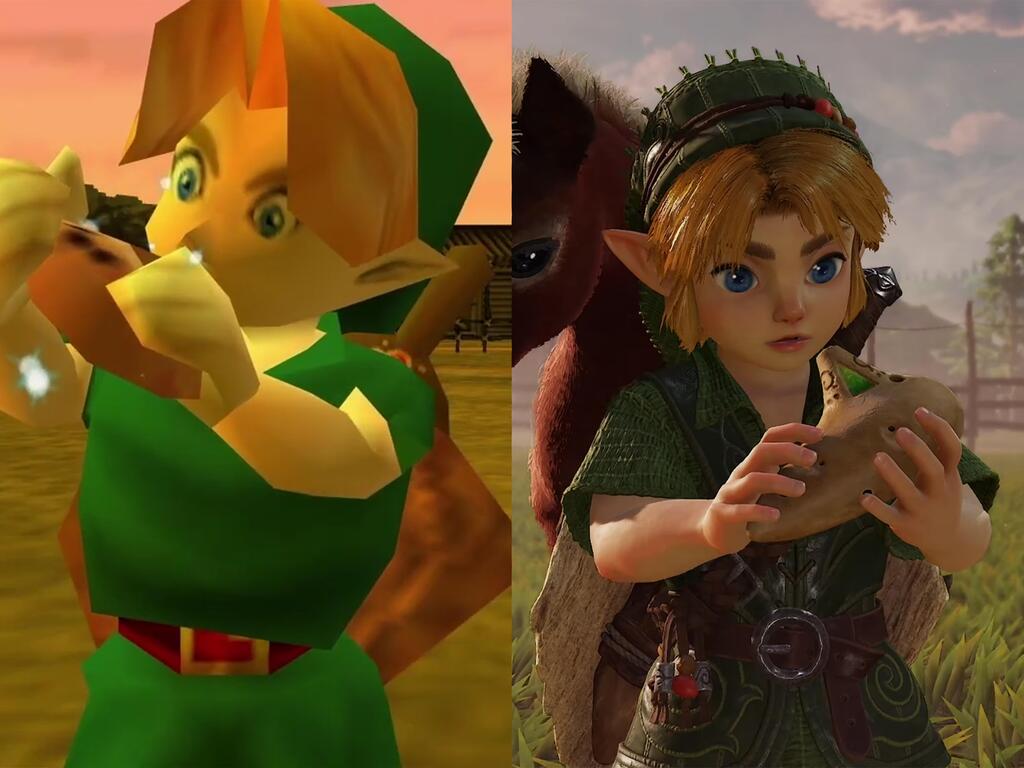
There is nothing wrong with wanting developers to make more original games. New intellectual properties, unfamiliar characters, and entirely different experiences are important to keeping the video game industry interesting. However, there is an increasingly familiar reaction whenever a remake is announced that makes it seem as though the mere existence of one somehow prevents developers from working on something new.
“I’d rather they make NEW GAMES instead of remakes.”
It’s an argument that sounds reasonable on the surface, but it doesn’t really hold up when examined more closely. Does everyone understand what the purpose of a remake actually is? The idea isn’t simply to take an old game, copy everything into a new development environment, type “update graphics” into a keyboard, and call it a day. A proper remake involves revisiting an existing experience, rebuilding it, and potentially rethinking everything from its presentation and mechanics to its level design, storytelling, and overall structure. The goal is to make something familiar feel new again, even when its foundations remain recognizable.
More importantly, why are some gamers so quick to treat a remake announcement as though it represents a lost opportunity for an entirely new game? It isn’t as if every major publisher announces remakes year after year while completely abandoning original projects. Remakes are not necessarily an annual occurrence, and even when a company announces one, that doesn’t mean it won’t have other new games in development or reveal them alongside it. Multiple projects can exist simultaneously, and the development of one doesn’t automatically mean another has been sacrificed.
There is also another reason why remakes can be worthwhile that often gets overlooked in these discussions: they can serve an important purpose within the development studios themselves. Sometimes, revisiting an older game isn’t just about introducing it to a new audience or giving longtime fans something to revisit. It can also be an opportunity for newer developers to learn from the people and creative decisions that helped shape a studio’s history.
Nintendo offered a particularly interesting example of this with its remake of The Legend of Zelda: Ocarina of Time. In an interview discussing the project, Zelda producer Eiji Aonuma explained that many members of the current development team had only worked on more recent entries in the franchise. He wanted them to understand the significance of Ocarina of Time by studying its original game structure and development style, then rebuilding it themselves. The hope was that this experience would give the younger developers new insights that could benefit future Zelda projects.
That’s a rather interesting reason to revisit an older game, and it demonstrates that remakes can have value beyond the finished product. A remake can become a learning experience, allowing newer generations of developers to understand the design philosophies, creative approaches, and development mentality that shaped earlier games. Those lessons can then influence entirely new projects. In other words, a remake could actually help contribute to the creation of future original games rather than taking away from them.
What’s particularly interesting is how selectively this criticism seems to be applied. Where is the same level of outrage whenever a remaster is announced? What about the countless re-releases of older games that continue to find their way onto modern platforms? These projects also revisit existing games rather than introduce something entirely original, yet they rarely seem to generate quite the same reaction. If the underlying concern is really about developers spending resources on older games instead of creating new experiences, shouldn’t that criticism apply to all three?
Of course, remakes aren’t automatically worthwhile. Some are unnecessary, some don’t do enough to justify their existence, and others might have been better served by leaving the original game alone. There are legitimate reasons to criticize a particular remake, especially when its asking price, creative decisions, or overall quality don’t justify its release. But that’s a different conversation from arguing that remakes shouldn’t exist in the first place.
There is room in the industry for both original games and reimagined classics. In fact, remakes can introduce older experiences to audiences who might never have played them otherwise, while giving longtime fans an opportunity to revisit something they remember in an entirely different way. Not every remake needs to reinvent its source material, either. Sometimes the appeal is seeing a beloved game rebuilt with modern technology and design sensibilities.
Wanting more new games is perfectly reasonable. Treating every remake announcement as an obstacle to that goal, however, is a much harder position to defend. Developers and publishers can work on multiple projects, and the existence of a remake doesn’t mean original games have suddenly become less important. As Nintendo’s approach to Ocarina of Time demonstrates, revisiting the past can also be a way of preparing developers for the future.
Perhaps the better question isn’t why developers keep making remakes, but why some gamers seem to believe the industry can only make room for one kind of game at a time.