

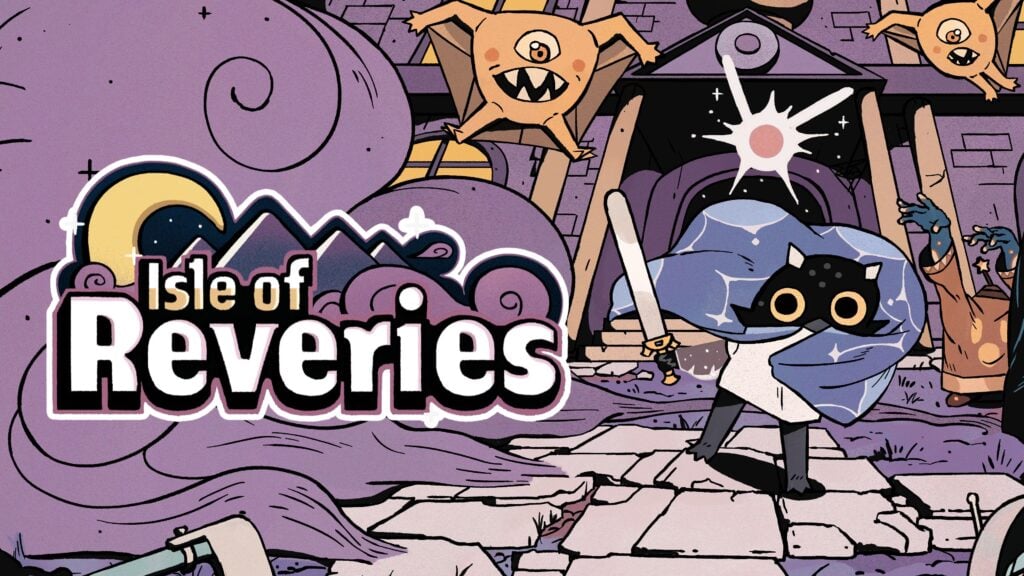
There is a certain comfort in a game that knows exactly what it wants to be, and Isle of Reveries is a clear love letter to the Game Boy Colour era of The Legend of Zelda, particularly Link’s Awakening and the Oracle games. That said, it does not simply copy the formula, and there are enough original touches to give it its own identity. Players step into the role of Lief, an owl who washes up on the mysterious Isle of Reveries while searching for a place rumoured to grant any wish. It is not a complicated setup, but it gives players plenty of reason to explore the island, work through its dungeons, and uncover a world that is colourful on the surface but carries an undercurrent of melancholy throughout.

The island is broken into eight distinct biomes, and exploration is handled through a mix of tight corridors, wider open spaces, hidden paths, and areas locked off until later in the game. New abilities open up previously visited areas in new ways, creating that familiar Zelda-style loop of noticing something out of reach and circling back once the right tool is in hand. Combat, exploration, and environmental puzzles tend to blend into one another rather than feeling like separate systems. Of course, the compact scale works against the game in places. Some sections feel more restrictive than they need to be, and a shortage of shortcuts makes backtracking a chore. Getting turned around often means retracing a long stretch of road, giving parts of the map a maze-like feel that does not match the sense of freedom found in the games that inspired it. There is no shortage of secrets to dig up, but the small footprint of the island means Isle of Reveries is more focused on guiding exploration than letting players wander the way some classic entries in the genre do.

The main structure of the adventure comes from six dungeons, each with its own environmental gimmick, puzzles, keys to track down, and a boss waiting at the end. These stick close to the expected Zelda-style formula without dragging things out, which works in the game’s favour. Puzzle difficulty ramps up gradually and rewards players who pay attention to their surroundings rather than leaning on trial and error. Combat takes a back seat, mostly acting as a speed bump between the more engaging exploration and puzzle segments. This being said, that keeps the dungeons approachable without making them a total breeze, though anyone with a long history in this style of action-adventure will likely spot where these ideas are headed well before the game gets there.

The standout addition is Lief’s fairy companion, which can duplicate and spawn objects in the environment. This opens up creative options for solving puzzles, repositioning the world, and occasionally turning the tide in combat, and it is one of the few mechanics that feels capable of pushing the formula somewhere new. Unfortunately, Isle of Reveries does not always follow through on that promise. There are flashes of clever design where the mechanic is put to good use, but more often it is applied in fairly obvious ways, leaving the sense that the concept had room to go much further.

A similar story plays out with the town-building system. Characters rescued along the way can be invited to settle into a growing community, unlocking extra quests and giving optional content more purpose. It is a nice touch that makes the island feel like it is changing alongside the player, but it never grows substantial enough to stand alongside the exploration or the dungeons. Rather than functioning as a third major pillar, it works better as a lightweight side feature that adds personality without asking too much of the player’s time.

Visually, Isle of Reveries leans fully into its retro roots, pairing colourful pixel art with a look that calls back to the Game Boy Colour without simply imitating it. The soundtrack backs this up, shifting between cheerful, strange, atmospheric, and darker tones depending on the situation. There is also a solid balance between the game’s lighter humour and its quieter, more subdued moments, coming through especially well in the smaller character details scattered around the island. The presentation is not aiming to be technically flashy, and that is clearly by design. Controls are responsive and the interface is clean enough to pick up quickly, with only occasional precision platforming causing real frustration.

Ultimately, Isle of Reveries is a solid modern take on the classic Zelda formula rather than a reinvention of it, and it does not need to be anything more than that. Its interconnected world, well-crafted dungeons, approachable puzzle design, and charming presentation add up to an enjoyable adventure, and the fairy’s object manipulation offers a glimpse of a more distinctive identity the rest of the game does not quite reach for. The issue is that several of its better ideas never get pushed as far as they could, and the cramped overworld can make exploration feel more of a hassle than it should. Anyone looking for a faithful, retro-inspired action-adventure will find plenty to enjoy here, but those hoping for something that breaks meaningfully away from its influences may come away wishing Isle of Reveries had taken a few more chances.
Disclaimer: A review key was provided