

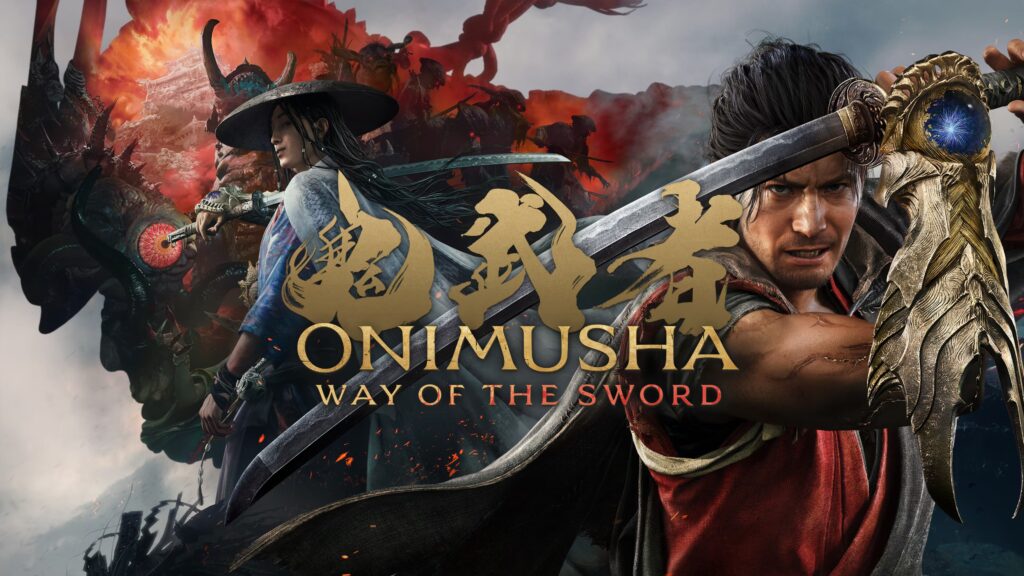
Onimusha has not felt like a series with much of a future for a very long time. Capcom has spent years digging up its older franchises in one form or another, but Onimusha consistently seemed to be left behind. Onimusha: Way of the Sword finally breaks that pattern, and rather than simply rebuilding the PlayStation 2 games brick for brick, Capcom has taken the series in a new direction with considerably more confidence than I expected going in. It still understands what made Onimusha work in the first place, but it is also clearly interested in figuring out what the series can be in a modern action game.
The Genma are still here, the Oni remain central to the mythology, and there is still a great deal of satisfaction in carving through supernatural enemies with a blade. What has changed is everything built around those ideas. The result is a much more modern action game that occasionally feels like it is trying to remind you why Onimusha mattered in the first place, while also being confident enough to establish an identity of its own.
The story centres on Miyamoto Musashi, a wandering ronin whose appearance and mannerisms clearly evoke Toshiro Mifune. He is introduced as confident to the point of being almost obnoxious, but there is more to him than the usual wandering swordsman archetype. After being killed in an ambush and brought back through the power of an Oni gauntlet, Musashi is pulled straight into another Genma invasion, setting him on a journey that takes him through a supernatural version of feudal Japan.

This is not exactly the most complex story Capcom has ever put together, but I found myself enjoying it considerably more than I expected. A lot of that comes down to the characters, with Musashi’s personality giving the story somewhere to breathe whenever things become too grim. The supporting cast also brings enough variety to keep the journey interesting, while the main villain ranks among the stronger antagonists the series has had. The game is not particularly interested in keeping everything grounded, either, and it is more than willing to let its characters become genuinely strange when the situation calls for it.
There is an almost theatrical quality to the storytelling that I really appreciated. Way of the Sword can move from dramatic scenes into comedy and then straight into something completely bizarre without much warning, yet it rarely feels as though these shifts clash with one another. The exaggerated performances and cinematic direction give the story a personality of its own, and Capcom’s facial animation deserves particular credit here. The characters are expressive enough that even smaller, quieter conversations are worth sitting through, with some of the game’s best moments coming simply from watching these people interact with one another.
As enjoyable as I found the story, though, it is not what kept me coming back to Way of the Sword. The combat is easily the game’s biggest strength, and it did not take long before I became completely hooked on it. Blocking is important, but understanding when to deflect an incoming attack and turn it into an Issen is where the real satisfaction comes from. Successfully landing one never gets old, particularly because the game gives the attack so much impact. There is a brief moment where everything seems to slow down before Musashi cuts through an enemy with an almost absurd level of precision, and the combination of animation, sound design, impact, and dismemberment makes every successful counter feel earned rather than handed to you.

The combat becomes even more interesting as Musashi acquires additional Oni weapons and abilities. There is enough flexibility to encourage experimentation instead of forcing you into a single approach, while environmental interactions provide another way of dealing with enemies when a sword alone is not quite enough. The system has a satisfying rhythm to it, particularly once you start becoming comfortable with its defensive mechanics and learn how to move between attacks, counters, abilities, and environmental hazards without constantly thinking about what you are doing.
That strength becomes particularly apparent during the boss encounters. Way of the Sword has some genuinely great fights, with Yoshitsune and Dokyo standing out among the best. These are not simply enemies with enormous health bars designed to slow you down. They introduce new attack patterns, force you to pay attention to what is happening around you, and feel like proper set pieces rather than obstacles dropped between story beats. I especially liked the way certain bosses return later with entirely different movesets, creating a genuine sense of progression. You are not simply becoming stronger because some numbers have gone up. You are becoming better at the game itself.
Unfortunately, the regular enemies do not always provide that same level of excitement. The Genma themselves look fantastic, and their designs fit the game’s dark interpretation of supernatural feudal Japan extremely well, but enemy variety is one area where Way of the Sword could have done more. Too many encounters settle into a rhythm where enemies stand around waiting for their turn to attack instead of putting genuine pressure on Musashi. That can make the combat feel oddly restrained at times, which is especially noticeable because the underlying system is clearly capable of supporting much more aggressive encounters.

When several enemies attack at once, the defensive mechanics suddenly become much more important and combat can become considerably more engaging. When those same enemies politely wait their turn, there is less reason to take advantage of everything the system has to offer. Standard difficulty also starts out fairly forgiving. It ramps up later, but anyone expecting the kind of punishment associated with the older Onimusha games may find the opening hours surprisingly easy. Higher difficulty settings and New Game Plus give experienced players something to chase, although the game never fully commits to the kind of resource scarcity that defined some of Capcom’s classic survival horror work. That is probably appropriate for the direction Way of the Sword has taken, but it also means this is a very different flavour of Onimusha from what longtime fans might expect.
The game’s structure reflects that change as well. Kyoto serves as a central hub, giving Musashi somewhere to return to between story missions while providing access to side quests, additional encounters, upgrade materials, and the Mysteries of Kyoto. These activities give you reasons to step away from the main storyline, and I particularly enjoyed the folklore-inspired detours because they allow the setting to breathe. There is more happening in this version of feudal Japan than one Genma fight after another, and the game occasionally gives you a reason to slow down and actually look around.
Unfortunately, exploration does not end up being nearly as rewarding as the combat. Way of the Sword incorporates some light Metroidvania elements, with new abilities opening up previously inaccessible areas, but the rewards for returning to those locations are often little more than upgrade materials or consumables. Some of the side quests can also begin to wear out their welcome once the game starts sending you back through areas you have already cleared. This is one of those situations where I wanted the world itself to provide a better reason to explore it, especially because the setting is strong enough that I genuinely wanted to spend more time in it.

Kyoto has a great deal of atmosphere, and the contrast between its historical backdrop and the grotesque Genma invasion gives Way of the Sword an identity that helps separate it from the many other modern takes on feudal Japan. The RE Engine does a lot of heavy lifting here, with excellent character models, detailed environments, and Genma designs that capture the disgusting body horror that has always been an important part of Onimusha. The cinematic presentation is particularly strong, with the facial animation making some scenes look considerably more expensive than you might expect.
There are moments where the difference between the game’s cutscenes and regular gameplay becomes noticeable, particularly when it comes to lighting and environmental detail, but Way of the Sword still comes together as a great-looking game overall. The audio complements that presentation nicely as well. Sword clashes have real weight, enemies sound appropriately unpleasant, and the music knows when to step forward and when to let the atmosphere carry a scene on its own.
I would recommend sticking with the Japanese voice track, for what it is worth. The English localization has some awkward phrasing and performances that do not always capture the emotional weight a scene is trying to convey. The Japanese performances fit the theatrical tone of the game considerably better and make the characters feel more natural within the setting. Given how much personality the game gets from its performances and cinematic direction, this is one area where the choice of voice track can make a noticeable difference.

For all of its strengths, Onimusha: Way of the Sword is not without its problems. Enemy variety could be better, exploration does not always feel worthwhile, some of the side content begins to repeat itself, and the opening takes a little too long to reach the point where the game truly finds its rhythm. None of these issues are enough to undermine the experience, however, largely because the combat is such a blast to play. More importantly, Way of the Sword manages to accomplish something that a lot of franchise revivals struggle with: it never spends the entire game trying to convince you that it is the Onimusha you remember.
Instead, it is comfortable being something different, and that is probably the smartest decision Capcom could have made. Trying to recreate the old games exactly would have risked leaving Way of the Sword feeling dated almost immediately. Rather than doing that, Capcom has taken the central fantasy of Onimusha and rebuilt it around modern action game design. The result is faster, more cinematic, and considerably more approachable while still holding onto the supernatural samurai identity that made the original series stand out.
There is also something refreshing about watching Capcom build an action game that does not simply feel like another variation on one of its more established franchises. Way of the Sword has a personality of its own, drawn from a strange but effective blend of Japanese history, mythology, horror, comedy, and theatrical storytelling. Not all of those elements work perfectly together, and the game has clear areas where a sequel could improve, but the combination gives Onimusha a distinctive identity rather than making it feel like a relic being dragged into the modern era.

It is not a perfect game, but I came away from Way of the Sword wanting more, and that counts for a lot. In many ways, that might be the single most important thing a revival like this can accomplish. Onimusha: Way of the Sword feels less like Capcom dusting off an old name for another nostalgic trip and more like the beginning of something that could genuinely continue.
There is plenty that could still be refined in a sequel, from enemy behaviour and exploration to the way side content is structured, but the foundation is already remarkably solid. The swordplay is excellent, the bosses are memorable, Musashi makes for an entertaining lead, and the world has enough personality to make the journey worth taking. After years of wondering whether Onimusha would ever come back at all, it is a strange feeling to finally have a new entry in hand and realize that the series still has this much life left in it. Way of the Sword is not trying to recreate the past. Instead, it is giving Onimusha a future.