

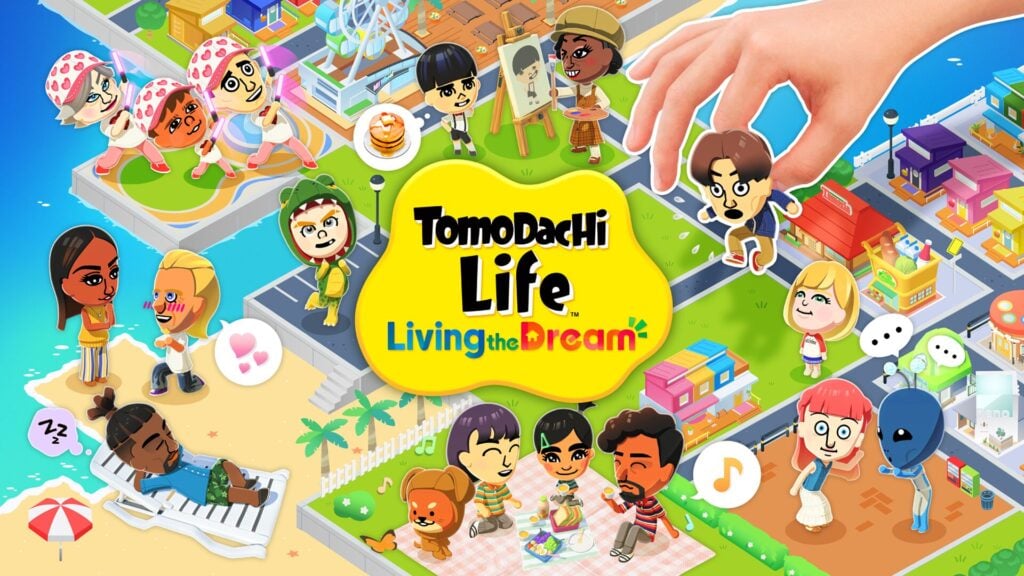
Tomodachi Life was a beloved classic on the 3DS, known as Tomodachi Collection in Japan. For years the series stayed relatively quiet, but that changed with the release of its newest entry, Tomodachi Life: Living the Dream on Nintendo Switch. This new installment successfully brings back everything that made the original so charming while adding meaningful improvements that make the experience feel fresh and more engaging.
The game begins with the creation of your first Mii, who essentially serves as the protagonist in the early stages. It even appears on the title screen. It’s a smart move to create a character you can really connect with, whether it’s a version of yourself or someone entirely different.

At its heart, Tomodachi Life: Living the Dream is all about the lives of your Miis. You can create up to 70 of them and set them loose on your very own island. The Mii creator has come a long way since the Wii days. While it may not be quite as deep as the one in Miitopia, it’s a clear step up from the older Tomodachi Life. You can customize appearances in detail, set birthdays, adjust voices, and now even apply makeup for extra personality. Seeing how far the Mii system has evolved is genuinely impressive.

Once your island starts filling up, the real fun begins. One of the biggest and most welcome upgrades is the ability to physically pick up your Miis and place them wherever you want. This simple change solves one of the original game’s biggest frustrations — waiting days or even in-game years for certain characters to interact. Now you have much more direct control over who meets whom.

Thankfully, the Miis still speak in that classic, charming gibberish. Some might have wished for full voice acting or AI-generated lines, but sticking with the traditional Mii speak was the right call. It keeps the game feeling light, timeless, and true to itself.
Tomodachi Life: Living the Dream is the definition of a cozy game. There’s no combat, no monsters, and no real fail states. You simply watch over your island like a digital ant farm, guiding your Miis as they go about their lives. You feed them, gift them clothes, answer their questions, and help solve their problems. Each Mii has its own personality, and the way these personalities bounce off each other — sometimes positively, sometimes with hilarious conflict — is where a lot of the charm comes from.

They can form friendships, argue, fall in love, get married, and even have babies (who do count toward your 70-Mii limit). You can send the kids off the island right away if you prefer, giving players plenty of choice in how they want to manage their little society.
What really sets this game apart is the sheer level of creative freedom. You can invent your own lingo, design custom food and treasures, create clothing, and even make wallpaper. The lack of a content filter is especially interesting for a Nintendo game — you can type in whatever you want, including swearing or silly phrases. This opens the game up to all kinds of wild, personal humor. The only downside is that you can’t share screenshots easily because of this freedom, but in-person sharing still works fine. For many, that trade-off is worth it to have a truly unfiltered island experience.

The randomness is another huge highlight. Mad Libs-style dialogue, unexpected events, and the Miis’ own initiative create constant funny and heartwarming moments. Sometimes they’ll do things completely on their own that leave you laughing out loud.
As your Miis grow happier by solving their problems and growing closer, you earn Happiness that can be spent at the fountain to unlock new wishes. These can range from new expressions and activities to special trips. It’s a rewarding system that feels like it has room to grow in potential future updates.
You can also fully customize the island itself, similar to terraforming in Animal Crossing. Players are already creating some incredible designs online — from Pokémon-themed islands to detailed castles and recreated character outfits. The creation tools are excellent and push the game to another level entirely.

Visually, the game is simple but effective. The Miis look clean and expressive, even if they don’t have every accessory option from Miitopia. The music is consistently pleasant — light and cheery most of the time, with a slightly more somber tone during arguments or trouble. The absence of the concert hall from previous games is a bit of a shame, but the rest of the soundtrack holds up well.

Tomodachi Life: Living the Dream is a fantastic return to form that’s easy to recommend for the right audience. It may not be for everyone — it’s slow-paced, quirky, and relies heavily on your own creativity and investment — but if you give it time and energy, it gives just as much back.

Whether you want to carefully craft the perfect island paradise or simply sit back and laugh at the chaos your Miis create, the game lets you live the dream on your own terms. And in a world full of high-stakes action games, that kind of gentle, personal freedom feels pretty special.
Disclaimer: A review key was provided
