

Guest Review By DaNoble Damonicus
Rhythm games occupy a distinctive and enduring corner of the gaming landscape. For decades, they have evolved while staying true to their fundamental appeal: synchronizing player actions with music to create moments of pure flow, satisfaction, and occasional transcendence. From arcade button-mashing classics to complex peripheral-driven experiences, the genre consistently rewards precision, timing, and immersion. GRIDbeat!, developed by Ridiculous Games and published by Acclaim, enters this space with confidence, delivering a cyberpunk-infused hacker adventure that blends familiar rhythm foundations with fresh mechanical twists and a striking visual identity.
The premise places players in the role of a hacker-for-hire who has already completed the initial infiltration of Knoss.OS, a heavily secured digital system, and extracted valuable data. The true test lies in escaping alive. This escape unfolds across a series of grid-based digital realms filled with security programs, hostile constructs, and ever-shifting hazards. An AI companion named DOT serves as the primary narrator, relaying information through intercepted emails, system logs, and environmental storytelling. The narrative lightly explores intriguing themes such as identity, corporate control, digital autonomy, and the blurred lines between user and system. While these elements add flavor and occasional depth, the story remains intentionally lightweight. It functions more as atmospheric context than a driving narrative force, ensuring the focus stays squarely on the gameplay.

At its heart, GRIDbeat! revolves around rhythm-locked movement. Every step across the grid must align perfectly with the beat. Miss the timing, and forward progress simply stops. In hazardous zones, off-beat actions result in damage or other penalties. This core concept forms the foundation for levels that function as intricate rhythm puzzles merged with action and strategy. Players must constantly plan routes, anticipate threats, and execute movements with precision while the music dictates the pace.
Progression feels carefully structured. Early stages introduce core mechanics at a manageable tempo, allowing players to grasp the fundamentals. However, the difficulty escalates steadily and without mercy. Turrets emerge to shrink available safe spaces, forcing rapid decision-making under pressure. Switches require strategic backtracking through previously cleared paths now transformed by new dangers. Persistent enemies, most notably the relentless Mino.TOR, pursue players across multiple sections, turning calculated navigation into frantic survival sequences. High-intensity escape segments—such as outrunning collapsing grid sections or evading a rapidly advancing digital firewall—heighten the tension further, creating memorable peaks of adrenaline.

One of GRIDbeat!’s smartest design choices is the inclusion of breathing room. Players can pause at any moment to observe enemy patterns, study the grid layout, and plan their next sequence without immediate punishment. This balance between high-pressure execution and thoughtful preparation keeps the experience fair even as difficulty spikes become frequent and demanding. That said, the game maintains a consistently intense pace. True “breather” levels are rare, and many stages will require multiple attempts to master. Trial and error becomes an integral part of the process, as players learn optimal paths, enemy behaviors, and precise timing windows through repetition.
Replayability stands as another major strength. Each level offers layered objectives: basic completion, thorough item collection, and the challenging pursuit of a “perfect” run under strict parameters. These goals incentivize return visits, turning initial struggles into opportunities for refinement. With each successful replay, chaotic sequences transform into fluid, choreographed performances where movement and music align seamlessly.

Complementing the gameplay is an outstanding soundtrack that ranks among the title’s greatest assets. Drawing heavily from ’80s-inspired electronic music, the tracks span synthwave, trance, house, and related genres. These compositions feature strong, infectious rhythms and energetic pulses that do more than accompany the action—they actively shape and enhance it. Every successful run feels elevated by the music’s driving force, creating that sought-after immersive state where player inputs and audio become one.
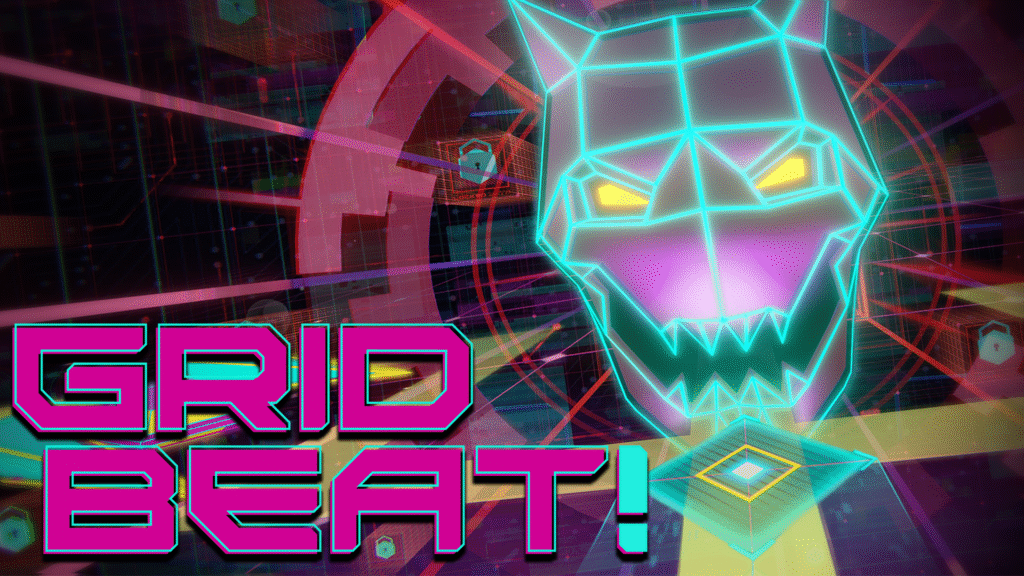
Visually, GRIDbeat! fully embraces its cyberpunk aesthetic. The game presents itself as an in-computer interface, complete with subtle details like keyboard typing sounds and faint character reflections on the screen. Neon-drenched environments, layered digital architecture, and dynamic visual effects create a striking and cohesive atmosphere. Important elements shift and highlight themselves naturally during play. However, some levels do suffer from visual repetition over extended sessions, with certain grid layouts and colour schemes blending together. Additionally, certain sound effects—such as item pickups or environmental explosions—can occasionally feel slightly out of sync with the music. Many players may benefit from lowering or disabling these effects to preserve rhythmic focus.

GRIDbeat! also incorporates supplementary mechanics to add variety. Rhythm-based hacking segments require specific multi-step inputs performed in time with the beat, while customizable loadouts allow players to equip abilities such as traps or defensive boosts. These systems introduce welcome depth, though they do sometimes feel cumbersome. While customization options exist, they rarely deliver transformative changes to core strategies, serving more as situational tools than game-changing builds. Minor frustrations also arise from lengthy stages and an occasionally inconsistent checkpoint system, which can place players back into challenging situations with limited warning.
Despite having room for improvement—particularly in polish, control flexibility, and pacing consistency—GRIDbeat! succeeds brilliantly at its primary goal. It captures the elusive magic of rhythm gaming: that moment when inputs become instinctive, challenges feel surmountable, and the player exists fully within the music. The game’s strong identity, cohesive mechanics, and commitment to blending strategy, action, and beat-driven flow make it a standout entry in the genre. Those seeking a title that demands both mental acuity and rhythmic precision will find significant value here. The grid awaits, and the beat never falters. Lock in and prepare for an unforgettable digital escape.
Disclaimer: A review key was provided