

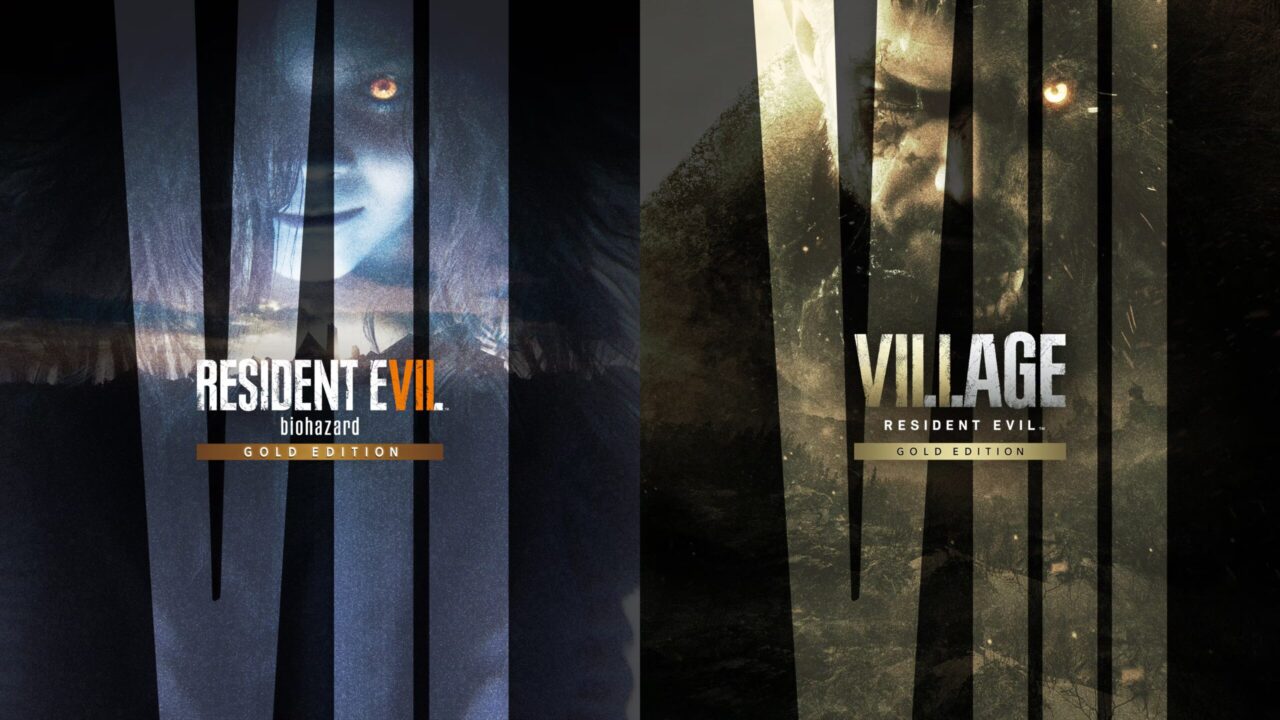
In advance of the launch of Resident Evil Requiem, Capcom has brought Resident Evil 7: Biohazard and Resident Evil Village to Switch 2. This is actually the second time these games have come to a Nintendo platform, after seeing a cloud port for the original Switch. These ports were less than ideal ways of playing the game and now Capcom has rectified this with native ports of the Gold Versions for the Switch 2, and what a difference this makes.
I will not go too much into the plot of Resident Evil 7: Biohazard, as many have played it multiple times already, but will go over the generals. Resident Evil 7: Biohazard was made to bring the series back to its survival horror roots, and this time accomplished this partly by utilizing a shift to the first-person perspective. As such, Resident Evil 7: Biohazard feels very immersive, much more than previous Resident Evil titles, and the amazing visuals of the RE Engine really helped everything stand out brilliantly. What we have as a result is a game that calls back to the original 1996 game, but with new twists and innovations that makes the experience its own.

This of course means limited ammo that you need to conserve carefully, managing your inventory consistently and knowing when to run from a fight. All this in a dilapidated mansion really helped the feeling that this was a return to the roots as the Baker Estate feels like a character in its own right. Of course, the characters are well handled such as Jack Baker who shows up repeatedly to stalk you and chase you down, and this is a terrifying experience that makes full use of what the series does best.

So how does Resident Evil 7: Biohazard play on Switch 2? Well all the content is here, including the DLCs ‘Banned Footage Vol. 1 & 2’, ‘Not A Hero’, “End of Zoe” and more, and all of it handles notably well on the system. There were no framerate drops that I noticed and loading times were extremely fast. There are no bells and whistles like ray tracing, but no real flaws either. Considering how the game played as a cloud streaming title on the Switch, this is like night and day, and playing it either portably or docked is a great experience either way. The sound worked right and there was not any real downside and I had a particular blast playing as Joe Baker in the End of Zoe DLC in portable mode while waiting for a doctor’s appointment.

I have to say that I am impressed with how Capcom managed to optimize the RE engine for use on the Switch 2. This may be an older game, but considering that some Switch 2 ports have had issues, the care and attention put into Resident Evil 7: Biohazard shows that Capcom did not treat this as a quick rush job. This is one of the better ports and I look forward to what Capcom has next. Speaking of…..
Obviously Resident Evil 7: Biohazard has been available for a long time on other platforms, but it is good that a version is available for Nintendo that is not full of problems. But what of the next game in the series? How did Resident Evil Village hold up?
Well it is a bit of a mixed bag in that regard. First some background information on the game, Resident Evil Village, is a direct sequel to Resident Evil 7: Biohazard, and continues the story of protagonist Ethan Winters, now taking him to a rural village overlooked by a vast, elegant castle while he looks for his daughter, Rose. If Resident Evil 7: Biohazard, borrowed mostly from the first entry in the series, then Resident Evil Village borrows mostly from Resident Evil 4. Well it tries to at least.

While Resident Evil 7: Biohazard focused on horror and creating a deeply immersive and claustrophobic experience that stood out as unique even for the series, Resident Evil Village goes in another direction. This time action is much more prevalent, as are open spaces, and a large variety of enemy types, as well as giving you upgradable weapons, and counterattack options. The enemies in the game definitely are unique and some have become iconic among the fandom right from the start, but honestly it feels like something is missing a bit.
The environments are a big shift from the Baker Estate as seen in Resident Evil 7: Biohazard , being much more varied with locations that all feel unique in their own right and each has a dedicated gameplay section and boss battle. Nothing ever feels like it lasts too long and this should all be great, right? Well, I am gonna be honest and note that despite how much Resident Evil Village was built up at the time of release, playing it back to back with Resident Evil 7: Biohazard just makes me realize how drastic a change it was.

Resident Evil 7: Biohazard had characters that all felt unique, and DLC that greatly expanded on the story and experience in meaningful ways. Resident Evil Village may have had characters like Lady Dimitrescu, who went viral online when the game was first released, but ultimately none of the characters have that same level of wow factor like those in Resident Evil 7: Biohazard did. It does not help that the DLC for Resident Evil Village also feels like a step back from the extensive DLC that Resident Evil 7: Biohazard received.
That is not to say there is no good DLC here, but the Mercenaries arcade mode just feels a bit meh here, while the ‘Shadows of Rose’ DLC, just kind of feels there, although it did bring the option to play through the main campaign in first or third-person. Contrasted with the “Not a Hero” DLC and the incredible “End of Zoe” DLC that Resident Evil 7: Biohazard received along with ‘Banned Footage Vol. 1 & 2’, and you see a big falloff.

That is not the only disappointment as Resident Evil Village is not the perfect port that Resident Evil 7: Biohazard was. There are no real issues when playing docked, and the framerate and visuals look great there. But when playing in handheld mode the stutters become noticeable and the visuals do take a hit in some of the exterior environments like the central hub and reservoir.
Ultimately both Resident Evil 7: Biohazard and Resident Evil 7 Village are good games and Resident Evil Village has moments that even surpass Resident Evil 7: Biohazard. Still, Resident Evil 7: Biohazard is the clearly better game and has aged surprisingly well, while Resident Evil Village does feel like it struggled to do too much at times, and I am not talking about the technical performance. I ultimately would recommend both titles as they are a lot of fun and you will enjoy them, just be aware that there is more to love in Resident Evil 7: Biohazard.
Disclaimer: Review keys were provided